
The public administration accelerates on social and digital with storytelling and new profiles
The public administration decree frames professional figures to develop the online activity of institutions and improve relations with citizens.

4' min read
4' min read
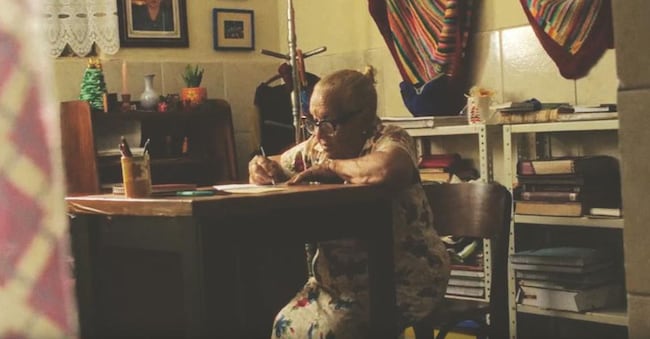
It is never too late, even to learn to write a letter, the first one in one's life. This is said by the oldest student in the world who has inspired many of her peers to go back to school to learn to read and write. Maria Edelzuita, a 95-year-old Brazilian mother of nine and a Guinness World Record holder, has become a celebrity throughout Brazil. She started studying at the age of 93, driven by her dream of learning to read and write, a right she was denied in childhood. We are in Pernambuco, a state in Brazil in the Northeast region inhabited by ten million people. An excellence in the educational landscape because it ranks third in the basic education development index among Brazil's 27 states. The My First Letter marketing campaign, which is expressed in an emotional video starring Maria Edelzuita herself, reflects the Department of Education's commitment to overcome the challenge of school dropout rates, including encouraging adults to return to school to complete their primary education. The campaign has produced tangible results: there has been an increase in enrolment in the literacy programme for older adults. Meanwhile, My First Letter, conceived by the production company Propeg, is among the finalists for the Clio Awards in New York as best advertising film.
Social media and digital manager
.A viral video, a catchy text, a winning social positioning. Today, those elements typical of the marketing campaigns of private organisations are also conquering public ones. Thus municipalities and institutions try to wink or smartphone screen at connected and distracted citizens. Even thepublic administration - made up of ministries, regions, municipalities, and public bodies of various kinds - is trying to rejuvenate itself by peeping into that social dimension that passes through impactful initiatives. Platforms and channels are evolving, languages are being updated, and innovative formats are being experimented with to try to convey initiatives of public utility or with a social implication. It is from here that the new battle to capture the attention of those professional profiles that try to break free from the legacies of the past, adopting new tools also thanks to the regulation of the figure of the social media and digital manager arrived with the approval of the amendment contained in the Pa 25/2025 decree law. Objective: improving services for citizens and businesses and encouraging more active participation in the management of public policies.
Pa marketing
."This is a historic turning point: finally after years of waiting a professionalism that has long played a central role in the everyday life of public bodies and companies is recognised. For some time now, thanks to social media, chat rooms and digital platforms in general, the public sector has made important steps forward both in the awareness of the usefulness of these tools and in the quality of the services offered and an increasingly citizen-friendly communication and dialogue. Marketing techniques are now elements of daily work even in thepublic administrations and on many occasions with experiences that can also serve as a model for the private sector,' says Francesco Di Costanzo, President of PA Social and Fondazione Italia Digitale, as well as lecturer in social media management at the University of Camerino. The turn towards the adoption of artificial intelligence models and social channels strengthens the emotional relationship with citizens. In the meantime, the first experiments on AI and virtual reality are being recorded, also thanks to the generative component. This is the case of Camilla, a virtual assistant by Csi Piemonte. In Rome there is Julia, an avatar created to help citizens and tourists explore the city in an easy and pleasant way. Meanwhile in Cagliari, the first Italian hospital in virtual reality was created by the local hospital company.
Inhabiting digital spaces
Public branding, moving beyond the mere provision of information towards new institutional marketing strategies. "Communicating well means being recognisable, accessible, relevant. An administration that adopts effective tools and strategies builds trust, promotes services, involves citizens. It is not marketing to sell, but communication to let people know, listen and participate:a garrison of democracy and transparency that requires critical thinking and strategic planning,' argues Giovanni Boccia Artieri, professor of communication sciences at the University of Urbino and co-author of 'Comunicare. Persone, relazioni, media' for Laterza. Meanwhile, for some analysts, in this way the public submits to the dictatorship of liking typical of network culture, risking the hearts-and-flowers effect to chase stylistic traits made their own by the private sector. "The risk is there if one chases models without a public soul. This is not about chasing likes, but about learning how to communicate effectively in digital contexts, bearing in mind that the ultimate purpose of public communication is to pursue the general interest, value the common good, reduce inequalities. It is a matter of combining civic sense and communication design. We need cultural design, not just technical adaptation to social media formats. This requires adequate training,' says Boccia Artieri. Thus, professional profiles must be updated to adapt messages and languages to the context. "The most effective public campaigns are those based on an integrated and inclusive communication strategy. They work when they know how to adapt language, tone of voice and channels to the different target audiences, without excluding anyone. They impress when they manage to surprise, involve even emotionally and respect the plurality of opinions, sensibilities and experiences present in society. To dialogue with citizens, digital spaces must be inhabited in a competent manner.New languages and professionalism are needed, capable of combining public ethics and contemporary communication. The university can be central, as it has always been in training public communicators,' Boccia Artieri concludes.

