
Food packaging, companies: 'Plastic supply chain at risk'
Alarm. From the first estimates, more than 60 per cent of the companies' turnover and workforce is in the balance. Among the critical issues contested is the introduction of mandatory recycled material quotas in packaging

4' min read
4' min read
The Veneto plastic packaging industry is concerned about the effects of the new packaging regulation (Ppwr), voted on 24 April by the European Parliament. Armido Marana, vice-president of Confindustria Vicenza with responsibility for sustainability and the circular economy and CEO of Ecozema, a company in Santorso (Vicenza) with a turnover of around ten million euro that produces cutlery, crockery, shopping bags, and disposable compostable plastic cups, is critical of the structure of the regulation: "They are creating additional rules without a correct strategic design. In Brussels they approved the general points while leaving the implementing and delegated acts to the next four years. This means blocking a system, scuttling an industry. Regulatory uncertainty paralyses investment. We come from years of development in very safe food products. But now I cannot sell my cutlery to EU countries that do not have composting systems, where bioplastics are properly disposed of. What about the common European market? The alternative often comes from China or Turkey. I wonder if I shouldn't close everything down and start an import business'. Compostable bioplastics are allowed as packaging materials, but they remain tied to the disposal systems of individual countries: those who do not have them cannot use them.
Another critical point is the introduction of mandatory recycled material quotas in new packaging, as Marco Bergaglio, President of Unionplast-Federazione Gomma Plastica, had already warned: 'There is a risk that material will arrive from abroad, without certification, as it is the cheapest option. In general, targets for recycled content in packaging are unrealistic. For food packaging, there is a European directive that prohibits the use of mechanically recycled material. The solution may be chemical recycling, which is however never mentioned in the regulation. It is not regulated and therefore not allowed. This could have been the opportunity. All the more so given the EU's need to import polymers from Asia and the USA'.
The phenomenon of fake reusables, on the other hand, is growing and is taking the wind out of the sails of manufacturers who instead follow the rules. The background: the 2019 European single-use plastic directive (Sup: single plastic use) bans single-use cutlery and crockery made of plastic: they disappear from the market, replaced by products made partly of bioplastic, partly of other materials. "Now they are coming back in the form of reusable, washable crockery, even though nobody washes them and even throws them away after use. There are no controls on this and the Ppwr does not bring clarity,' explains Marana: 'We have added a machine in our company that makes paper plates with a compostable bioplastic coating: at the moment, with the return of falsely reusable plastic disposables, it is, however, a product that cannot be sold. Italian companies are turning to importing products from Asia instead of producing them, the effect of a bad law and lack of controls'.
Renato Zelcher, Crocco's CEO, shares the concern about the new regulation: 'It brings absolute uncertainty that blocks investments. It is against plastics. Bans and restrictions are only for plastics, without life cycle assesment. But plastics is a complex world with different materials, difficult to synthesise'. The company from Cornedo Vicentino (Vicenza), which produces flexible thermoplastic films for packaging, including films for direct contact with foodstuffs, has a consolidated turnover of 150 million euro, with an average of 6 million euro per year in investments made to comply with European directives until last year. "We criticise the imposition of bans. We would have aimed for and shared ambitious goals by leaving technology neutrality. Italy is an excellence as far as recycling is concerned. Now the push towards reuse changes the game compared to the investments made so far'.
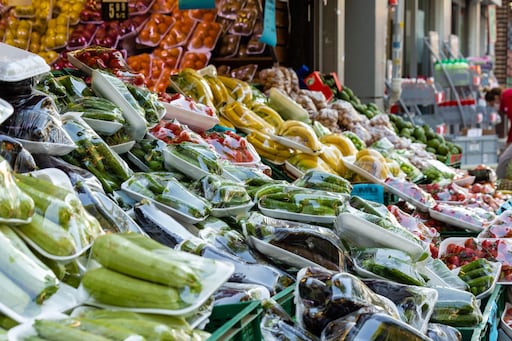
ProFood president Mauro Salini had already underlined the impact of the new regulation on the chain of food packaging companies: 'At risk is 60-70% of our turnover, with the associated workforce. Some of the companies in our sector will disappear. With a personal prediction of my own I would say that as early as 2028 we will be in serious trouble'. "We expect a fairly wide ban on plastic packaging, because we believe that the French list of banned products, the only one in Europe at the moment, will be followed." The reference is to the measure enacted in France as part of the Agec law banning the sale of fresh fruit and vegetables packaged in plastic packaging, weighing less than one and a half kilograms, with exceptions affecting some thirty products,


