

Tra emancipazione digitale e difesa dei diritti
di Paolo Benanti

by Anna Mulassano
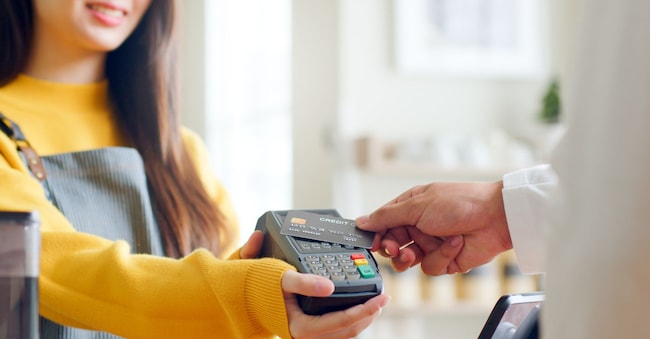
When card payments increase by 10 per cent, Italy's gross domestic product grows by 0.33 per cent. A figure that rises if account-to-account (A2A) payments, i.e. direct debits and credit transfers, are taken into account. In this case, GDP registers +0.42 per cent. It is not only the volume of payments that has a significant impact, but also the way in which they take place: a growing participation in e-commerce and a higher percentage of online transfers go hand in hand with further GDP peaks. These are the findings of a Bank of Italy study investigating the relationship between digital payments and economic performance. According to Via Nazionale, A2A payments that originate online, together with the use of e-commerce platforms, produce value added that is higher than that of transferred money. These correlations are even more pronounced in provinces with high levels of digitalisation: different payment habits may therefore contribute to the persistence of differences in the economic performance of different regions.
Although the use of cash money was greatly reduced at European level in the decade 2014-2024, our country still remains deeply attached to the use of banknotes. In 2023, the average number of non-cash payments per capita was 219, compared to 365 in the EU and 395 in the eurozone. In that year, Italy ranked last for cashless payments in the eurozone and third last in the EU, ahead only of Romania and Bulgaria. According to European Central Bank surveys, however, this does not fully reflect the wishes of Italian consumers, 61 per cent of whom prefer to use card or digital payments, while cash is the best option for only 20 per cent of the sample. Despite this, in shops it is still physical money that takes the lion's share, with 61 per cent of transactions, followed by 32 per cent cards and 4 per cent apps.
The prevalence of cash, according to Banca d'Italia, is therefore mainly driven by demand-side factors. According to studies by the Institute headed by Fabio Panetta, moreover, there is a correlation between the payment method of choice and thesocioeconomic background, as well as the geography of origin. In fact, it is households withlow incomes that show a particular fondness for cash and, among these, the tendency is accentuated when the head of the household has a low level of education, is old, retired or unemployed. In the South, then, there is a tendency to favour banknotes more than in the North: in 2022 in Middle Italy this accounted for 40 per cent of household expenditure, against a national average of 25 per cent.

