
Pakistani raids in Afghanistan, hit Kabul: 'Open war' on the Taliban regime
The Islamabad Armed Forces responded to Thursday's raids on the border and called the neighbouring country 'a colony of India'
from our correspondent Marco Masciaga
 Aggiungi Il Sole 24 Ore
ai preferiti su Google
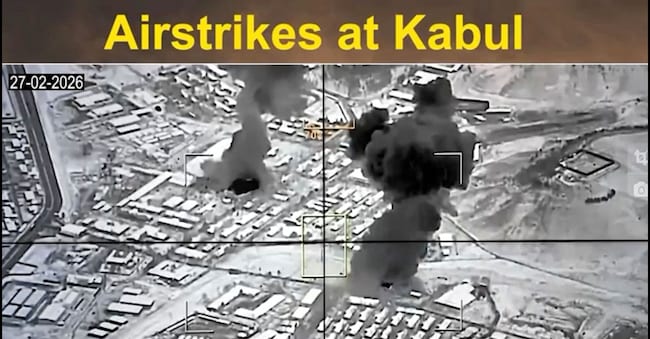
NEW DELHI - The low-intensity war that had been dragging on for days on the border between Pakistan and Afghanistan took a sudden quantum leap yesterday when the Pakistan Armed Forces launched overnight air raids on Kabul and the provinces of Kandahar and Paktia. The bombings were in response to an Afghan raid launched on Thursday evening against a number of Pakistani military positions on the border and took the crisis a quantum leap forward. Not only because the fighters of the Pakistan Air Force targeted the capital, but also because this time the targets were not the alleged hideouts and bases of the Islamic militant groups that according to Islamabad use Afghanistan as a base to strike Pakistan, but structures that report directly to the Taliban government. The bombing was decided in response to the Afghan raid launched on Thursday evening against a series of Pakistani military positions on the border
India charges
A few hours after the bombing, Pakistan's Defence Minister Khawaja Muhammad Asif called the ongoing offensive against Afghanistan an 'open war'. Asif accused the Taliban regime in power in Kabul of turning the country 'into a colony of India', of harbouring militants from all over the world, and of 'exporting terrorism'. The military and political leadership in Islamabad frequently accuse India of being the instigator of attacks carried out on Pakistani territory by Islamic extremist groups and irredentists from Balochistan. New Delhi, which in the months following last May's brief conflict with Pakistan established surprisingly good relations with the Taliban leadership in Kabul, has always strongly rejected accusations that it is using Afghanistan and the galaxy of irregular formations that would find refuge there as a tool to destabilise Islamabad.
In response to the night bombing, the government in Kabul claims to have 'successfully carried out' attacks on Pakistani territory using drones. A version that clashes with that of the government in Islamabad, which made it known that it had neutralised the unmanned aircraft before they could do any harm to people. There is such a difference between the Pakistani and Afghan armed forces in terms of men and means that it is unthinkable that Kabul could think of fighting a conventional war against its neighbouring nuclear power.
Diplomatic manoeuvres
Despite this, the sudden escalation on Friday immediately alarmed the diplomacies in the region. The Russian Foreign Ministry called on the two countries to cease fighting immediately and to try to overcome their divisions through diplomacy. Moscow is in a privileged position to intervene because it has good relations with Islamabad - Premier Shehbaz Sharif is expected in the Russian capital in the coming days - and at the same time is the only country to have diplomatically recognised the Taliban government in Kabul. Beijing has expressed deep concern about the clashes. Iran has offered to mediate.
The night-time bombings between Thursday and Friday marked a deepening of the crisis. On the night between Saturday and Sunday, the Pakistani Armed Forces had carried out targeted attacks in the Afghan provinces of Nangarhar and Paktika against "seven terrorist hideouts and training camps", which can be traced back to two extremist formations - Tehrik-e-Taliban Pakistan (Ttp) and Islamic State-Khorasan Province (Iskp) - that want to overthrow the government in Islamabad to establish a caliphate. An operation to which Kabul responded on Thursday evening with the border raid that triggered the Pakistani reaction yesterday.


