Palazzo Bentivoglio resists
The Bologna residence has become a propulsive centre of contemporary art with exhibitions, publications, dialogues and a rich library
3' min read
3' min read
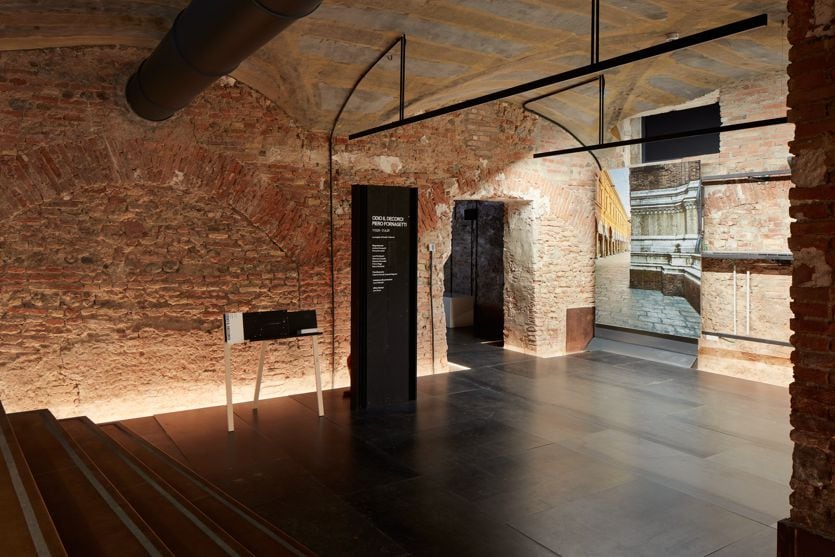
There is a building in Bologna that has never stopped asking to be read. Not just seen, not just lived in, but deciphered. It is Palazzo Bentivoglio, the 'new' one, so to speak, in Via Belle Arti. An architectural body that still today does not seem to want to reveal itself completely: it stands aside, amidst the obligatory routes of the students of the Accademia, with its half-loggia courtyard, regular windows, 16th-century layout and an air of a palace that knows its own failure, but does not regret it. Those looking here for traces of the 'great' Bentivoglio, the one demolished in 1507 under the fury of a revolt as popular as it was organised, will have to make do with ghosts. The great palace of Giovanni II - 244 rooms, gilded stuccoes, paintings by Francia and Lorenzo Costa - was demolished with political zeal and symbolic taste. The Bolognese Renaissance, after all, is a kind of interrupted novel, like the Bentivoglio family's own ambition: a lordship that wanted to pretend to be a republic and ended up being overwhelmed by the very city that had created it.
The garage and the library
The palace, which today bears the name of the family without having dominion over it, was built by Costanzo Bentivoglio in 1551 respecting order, measure and symmetry: the architecture of return, not triumph. Today the palace is one of the rare Italian examples of a private individual who knows what to do with his privilege. It is not a museum in the canonical sense: it has no fixed hours, it does not sell tickets, it does not welcome schoolchildren. It is a lived-in space, but with modesty. In recent years, it has quietly become a propulsive centre of high visual culture with exhibitions, publications, dialogues between contemporary art and the spirit of the place thanks to the careful and precise direction of Tommaso Pasquali. There is a library, the Busmanti, that resembles a personal studio, guardian of about six thousand volumes of art history included in the OPAC of the Sistema Bibliotecario Bolognese and available for consultation by appointment.
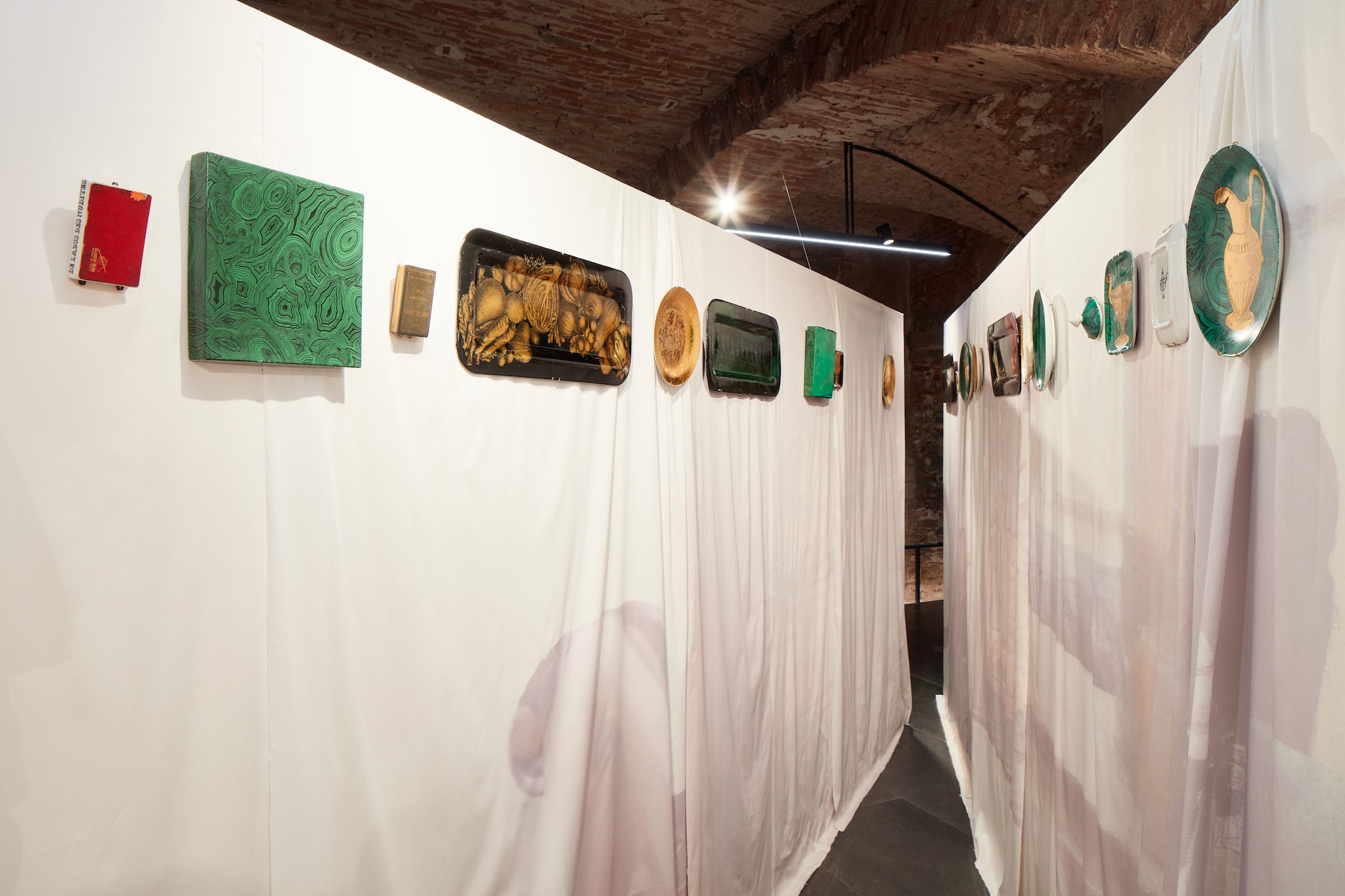
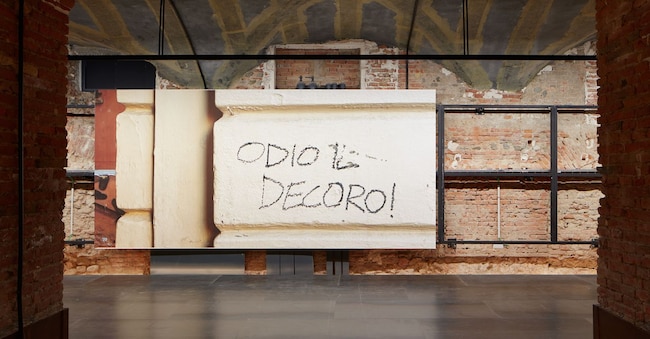
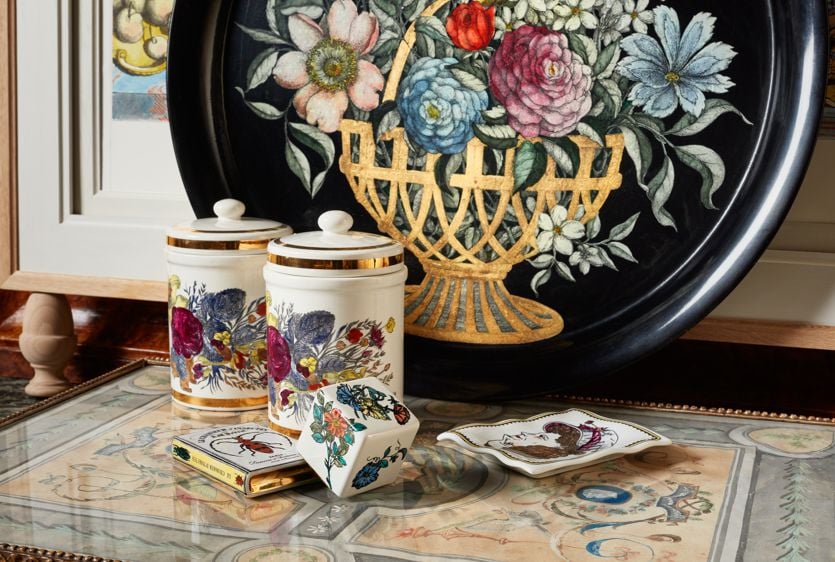
There is a 'garage', the garageBENTIVOGLIO, under the palace, in via Borgo di San Pietro, a special showcase that changes installation every month like a silent manifesto of urban rupture or reflection. There is a garden, which is at its best in summer. Palazzo Bentivoglio is not, therefore, a collection, but an environment. And in the hypogean rooms - restored with sober intelligence - installation exhibitions by Italian and international artists alternate, some of which have remained in the memory of many: above all, A view from a window by Patrick Procktor, the one with the photos that Luigi Ghirri took in Giorgio Morandi's studio and the recent I hate decorum! Piero Fornasetti, curated by Davide Trabucco. The difference is that here contemporaneity does not shout, it creeps in. Art does not invade, it interrogates, and what makes this place unique is its historical awareness without nostalgia. Here, ruin is not trauma, but method. There is no attempt to restore lost glory, nor to exorcise it with postmodern aestheticisms. What prevails is eloquent subtraction, because it is a place that does not seek to impress, but to resist. Whoever enters those rooms today, fresh with shadows and memories, does not find the lost Renaissance, but something rarer: an intelligence of time. Which is then the only true matter of art. Everything else - power, prestige and glory - are frescos that the people can always decide to erase.