
Palazzo Citterio opens, Grande Brera is inaugurated
Completely refurbished spaces that expand the offer of the Pinacoteca and the Braidense Library
by editorial staff
4' min read
4' min read
After 52 years, Milan realises the extension of the Brera Art Gallery with the exhibition of over 200 works from the Jesi and Vitali collections. With the inauguration of Palazzo Citterio on Saturday 7 December, the feast of Saint Ambrose, in the presence of the President of the Senate,Ignazio La Russa, and the Minister of Culture, Alessandro Giuli, what Franco Russoli, the visionary director of the Brera Art Gallery from 1957 until his death in 1977, had called 'La Grande Brera' was born. A dream more than half a century long that finally came true, with the opening to the public of the eighteenth-century Palazzo Fürstenberg, later known as Palazzo Citterio, acquired by the State in 1972, the year in which the then superintendents Gian Alberto Dell'Acqua and Franco Russoli formulated the idea of a place that would allow the museum to grow with twentieth-century art, becoming not only a place of conservation, but a centre of experimentation and research.
From 8 December, the public will be able to visit a space that was closed for decades and has now been returned to the city, a museum where collections including masterpieces of Italian and international art - Carrà, Morandi, Boccioni, Modigliani, Picasso, Braque - will be housed in an innovative layout and which will be the venue, in the completely refurbished spaces, for important exhibitions of modern and contemporary art. "We have been working since 15 January, the day I took office, focusing on the date of 7 December," said Angelo Crespi, director general of the Pinacoteca di Brera, Palazzo Citterio and the Biblioteca Braidense. "We have set ourselves the task of concluding the fifty-year journey of Palazzo Citterio by 2024, because we believe it is a rightful act, ethically and economically, the opening of this building that allows for the expansion of the Pinacoteca, crowning Franco Russoli's dream of realising the Great Brera, i.e. a new way of thinking of the historical Brera building with the adjoining Palazzo Citterio, of thinking of it as a unique place with its many functions and an ancient and a modern art collection, among the most important in the world".
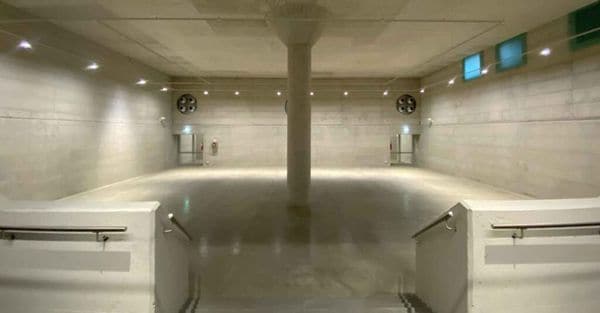
Over the years, Palazzo Citterio has undergone various renovation projects, from the 1980s onwards, with different allocations of funds by the Ministry: from the first project by Giancarlo Ortelli and Edoardo Sianesi, to the renovations that led to the creation of rooms such as the one entrusted in 1986 by the Associazione Amici di Brera to architect James Stirling, up to the 2000s with the redefinition of the layout of the underground rooms and the arrangement of the unbuilt spaces. Until the last substantial funding in 2012 with the start of the work, a significant part of which was completed in 2018. After the palace passed to the then director of Brera James Bradburne, the project was extended until the end of his term in October 2023 while, in the meantime, the twentieth-century works from the Jesi and Vitali collections have found their place in the Napoleonic rooms of the Pinacoteca in special on-sight storage areas created in 2019 thanks to financing from the Fondazione Giulio and Giovanna Sacchetti. After taking office on 15 January 2024, Managing Director Crespi launched a new project with major structural consolidation work on part of the building, improvements to the museum's HVAC systems, and the creation of fittings in continuity with the Superintendency's restoration work. The work, which began in June, was completed on 31 October. The opening has now arrived.
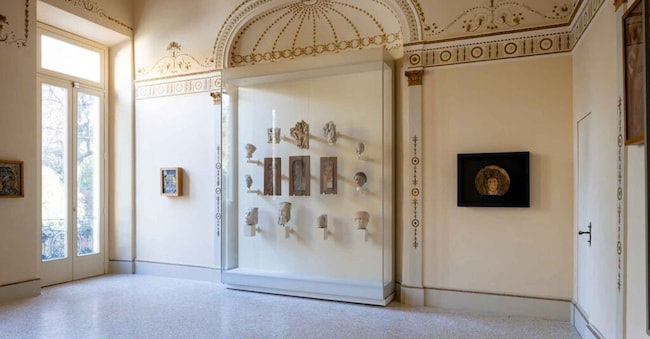
From a structural point of view today, in the centre of the Palazzo, on the piano nobile there is a large room, called room number 40, in continuity with the Pinacoteca where the works cover the period up to 1861. In this room, conceived by Isabella Marelli who recently passed away, Giuseppe Pellizza da Volpedo's "Fiumana" is exhibited and from here the two collections start: one facing Via Brera, the Jesi, the other facing the garden, the Vitali. Curated by Marina Gargiulo, art historian in charge of the Brera Art Gallery's 20th century collections, the arrangement of the works has been organised by thematic and chronological nuclei. The piano nobile will display masterpieces of the Italian and international 20th century, from Boccioni to Modigliani, from Morandi to Picasso. Added to these works is the collection of minimal self-portraits of great 20th century artists that belonged to the writer, scriptwriter and artist,Cesare Zavattini and the 23 "Fantasie" by Mario Mafai. The rooms of Palazzo Citterio will also be enriched by a series of masterpieces by great masters such as Picasso, de Chirico, Savinio, Campigli, Cassinari, Melotti, de Pisis, which the Pinacoteca has acquired in recent decades - through pre-emption or compulsory purchase - in order to enrich the corpus of 20th century works.
The second floor and the Stirling Hypogeum, on the other hand, are intended as spaces for temporary exhibitions, and here from 8 December 2024 to 9 March 2025 the exhibition "La Grande Brera. A community of arts and sciences" curated by Luca Molinari, tells the story of the architecture and communities that have lived in the Brera building since 1500.

