Urban regeneration

Palermo: a 319 million plan to regenerate the suburbs

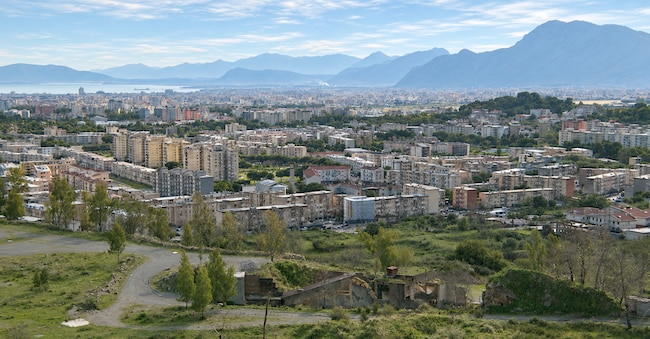
From the Borgo Nuovo forum: the council’s plans to bring services closer to residents, expand educational provision and improve connections between Zen, Borgo Nuovo and the South Coast and the rest of Palermo

3' min read

Translated by AI
Versione italiana

3' min read

Translated by AI
Versione italiana

It is fair to say that the project is already underway. One of the first steps was the forum on the value of urban suburbs, which on 13 November brought together local councillors, magistrates and university representatives in the conference hall of the E. Ascione Institute in Borgo Nuovo, a suburb of Palermo.

Three projects totalling 319 million, including the tram

The three municipal projects examined by Teha Group, a consultancy and research firm within The European House – Ambrosetti group, are worth a total of 319 million euros. The masterplan for Borgo Nuovo is worth €7.2 million. On the southern coast, €198 million has been earmarked for projects along seven kilometres of coastline. In San Filippo Neri, in the Zen district, the plan is worth €48 million, to which €65.8 million for the E2 tram line is added.

Loading...

“We are investing significant resources in areas such as Zen, Borgo Nuovo and the Costa Sud, through infrastructure projects, urban regeneration, improvements to transport links and the expansion of services,” said Mayor Roberto Lagalla in the forum’s press release. “Alongside public works, we are working to strengthen the social and educational aspects, starting with schools, by building new school complexes and enhancing the educational provision, including by increasing the number of places available in municipal nurseries.”

“Our vision is of a more inclusive Palermo, where infrastructure, services, education and social policies go hand in hand,” adds Lagalla. “This is the direction in which we are investing: not isolated measures, but a comprehensive urban project that puts people at the centre and leaves no neighbourhood behind.”

Palermo compared with other metropolitan cities

At Ascione, the discussion extends to Naples with Mayor Gaetano Manfredi and, through the study by the Teha Group and Palermo City Council presented by Cetti Lauteta, to other metropolitan cities. The seven cities in Southern Italy rank lowest in terms of value added per inhabitant. The Palermo metropolitan area accounts for over a quarter of Sicily’s value added. In 2025, the employment rate for 15–64-year-olds will stand at 43.7 per cent, on a par with Naples and below that of Catania and Bari. In Teha’s ranking, Palermo is third from last in terms of the availability of services and last in terms of the development of human capital. With the new tram network, according to the study’s estimates, almost four in ten residents of Palermo would have a new stop within 800 metres of their home.

From school to work, university at Zen

In the municipality of Palermo alone, almost one in three young people aged between 15 and 29 are not in education, training or employment. Federico Silvestri, chief executive of the Il Sole 24 ORE Group, emphasises the transition from school to work. Reducing drop-out rates, he notes, is the first step. Next, young people must be prepared to continue their studies or enter the world of work. ‘We need a public-private partnership between schools, technical colleges (ITS) and the business world.’ Silvestri calls on companies to help train professionals who are in short supply and to offer young people opportunities to enter the workforce upon completing their studies.

Costantino Visconti, Head of the Department of Political Science and International Relations at the University of Palermo, recounts the experience that led the university to the Zen neighbourhood, one of the areas where the report identifies the highest levels of socio-economic deprivation.

Housing policy and mafia pressure

City Councillor Fabrizio Ferrandelli brings the issue of housing policy and the fight against squatting into the debate. According to MP Carolina Varchi, ‘it is not enough to build new homes unless we also address the social fabric. We must move beyond housing models that have ultimately led to isolation and marginalisation’.

Palermo’s public prosecutor, Maurizio De Lucia, highlights the influence of Cosa Nostra in the area. In his view, the use of military-grade weapons in the incidents this summer served to reaffirm the organisation’s presence. The media furore, he says, ‘in our view, was calculated, because the message they wanted to send was “We’re here”’. In the city centre, De Lucia observes, the police presence is stronger, whilst ‘the suburbs are, in fact, under greater criminal pressure’.

Loading...

The way in which protection money is extorted has also changed. “The organisation demands payment of protection money when it is reasonably certain of receiving it.” The risk of being reported to the police, explains the prosecutor, may lead it to drop the demand. “There is a section of this city’s service sector – including the lower-income segment – which has been accustomed to dealing with the Mafia for generations.”

“In the context of regenerating the suburbs, the rule of law must be understood on two levels,” says De Lucia. The first concerns compliance with the rules in neighbourhood life. The second concerns the fight against an organisation that exerts influence over the local economy.

Copyright reserved ©
Loading...

Brand connect

Loading...

Newsletter

Notizie e approfondimenti sugli avvenimenti politici, economici e finanziari.

Iscriviti