2.6 million investment followed by Gfa for a new nailing line

Palm, the green pallet winning Transition 5.0 funds

Entrepreneur: 'Tax credit crucial to fuel future investments'

4' min read

4' min read

'No, other entrepreneurs who have followed this path I don't actually know of'. Primo Barzoni is a white fly, or almost a white fly. He is one of the few in Italy to have embarked on the Transition 5.0 process, and has so far followed it successfully. A rarity, in fact. The Gse portal, where applications are filed, offers (28 November, 6pm) an eloquent screenshot: of the 6237 million initially made available, 6101 are still unused.

Of the (few) tax credits booked, 136 million in all, one belongs to Barzoni himself. Entrepreneurfrom the pallet sector and owner of Palm, so far imitated by just over 400 companies throughout Italy, barely 0.01% of those active, able to book only 2% of the over six billion made available for joint investments in innovation and sustainability. A plan, therefore, that has so far been severely underused and criticised by businesses for the complexity of its procedures.

Loading...

While waiting for the innovations announced by Mimit (longer timeframes until April 2026, automatisms for assets depreciated for at least 24 months, cumulation with other EU incentives, see Il Sole 24 Ore of 16 November), which should broaden the investor base, some have already managed to get the go-ahead for investment.

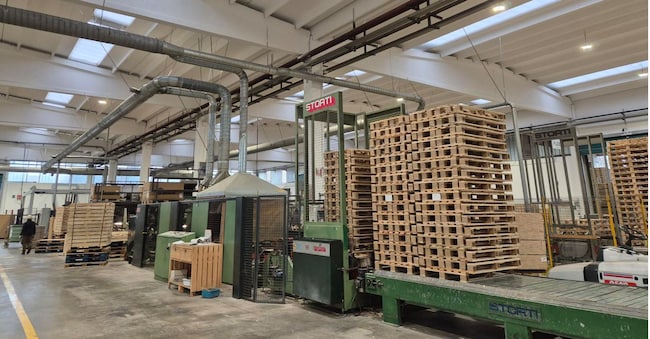
Palm, with 48 employees and 14 million in revenues, is a Mantuan manufacturer of pallets, wooden supports essential in the logistics chain, present in the supply chains of all production activities. Products made in 1.5 million units per year, which within a few weeks will be assembled with a new technology incentivised by Transition 5.0: a 2.6 million euro nailing machine made by a local supplier, a line capable of cutting energy consumption and boosting productivity also through the connection and availability of new performance data.

"Our goal is to push digitisation and in parallel achieve climate neutrality," explains the entrepreneur, "and that is why we have been investing for years. Transition 5.0 now allows us to save more than one million, perhaps even more with the new rates announced, taking into account that from the calculations made the energy savings for us are at the highest level. This is an important help, which supports the marginality and makes other future investments possible.

A green path, that of Palm, a benefit company, which aims to present the company as a sustainable partner to customers in the supply chain (including cosmetics and pharmaceutical groups), contributing to the reduction of emissions in the Scope 3 dimension, the one involving component suppliers.

"In turn, we ourselves act in this direction," explains Barzoni, "pushing our suppliers in this direction, working with local material and also recovering second-hand wood, in a circular economy perspective.

The new nailing machine, which no longer processes beams but agglomerate blocks, is flanked by an ink-jet printing system that replaces the traditional marking of pallets with hot stamps, another innovation that reduces energy consumption.

"Beyond investments in equipment," the entrepreneur explains, "the green path also involves new skills, hence a lot of training, which has a cost. That is why this tax credit is an important aid, which in my opinion should be stabilised in the future'.

This practice, that of Palm, is being followed by the Gfa group of Desenzano del Garda, which, after having already deposited some ten 5.0 projects with the Gse with its subsidised finance unit, is now following another twenty dossiers.

"These are complex procedures," explains one of the directors, Gianni Gorno, "but in any case it is a path that can be realised: we have successfully filed applications booking around five million tax credits. The crux is in the measurement of energy performance: on the one hand, suppliers are not always prepared to provide all the necessary data, and on the other hand, it is necessary to work in a punctual manner in the company to detect the ex-ante situation of consumption. Installing meters and then taking the data to the cloud for analysis. In some cases there is repetitive work, in others there is not. Then more extensive monitoring must be initiated. If, as hypothesised, the ministry were to insert some sort of automatism for already depreciated assets, it would actually be an important innovation in terms of simplification'.

While the scheme worked on the plant side, it was not possible to take advantage of the measure for the potentially 'tractable' intervention, i.e. the photovoltaic plant. As reported by many other companies, Palm was also faced with the objective difficulty of obtaining panels made in Europe according to the required specifications, the only ones allowed by the regulations. There are plans to increase the incentive rates in the future, but at the moment those who try to go down this road are stopped by the cost gap with Asian production.

"The incentive was not accessible in this case. We invested EUR 600,000,' Barzoni explains, 'but without panels made in Europe, which from what we saw, even in the presence of the bonus, were not cost competitive.

Copyright reserved ©
Loading...

Brand connect

Loading...

Newsletter

Notizie e approfondimenti sugli avvenimenti politici, economici e finanziari.

Iscriviti