Cinema

Cannes, Palme d'Or to 'Fjord' by Cristian Mungiu

The Romanian director wins the top prize again after winning in 2007 with '4 Months, 3 Weeks, 2 Days'

by Andrea Chimento

4' min read

Translated by AI
Versione italiana

4' min read

Translated by AI
Versione italiana

 The 79th Cannes Film Festival closed and it was an excellent edition, full of many important titles that showed that cinema is still the great mirror to interpret and better understand the world around us.

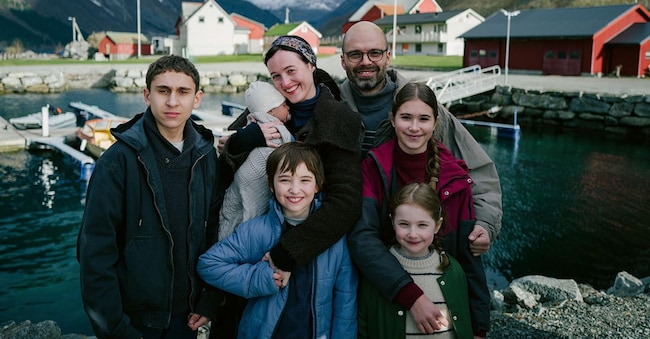
The Palme d'Or went to 'Fjord' by Cristian Mungiu, a Romanian director who had already won the prestigious award in 2007 with '4 months, 3 weeks, 2 days'.

Loading...

This time Mungiu goes beyond the borders of his country and sets the film in Norway to tell the story of a family that has recently moved to a small village overlooking a fjord. The father is Romanian, the mother is Norwegian and they have five children, including a boy and a girl who are going through the complicated period of adolescence.

After a domestic quarrel and a number of statements by the latter to the child protection authorities, the parents are accused of violence and psychological coercion against their children, who, from one day to the next, are taken away from them one after the other.

With his classic rigorous and profoundly realistic style, Mungiu offers a new, engaging moral reflection where the audience will have to judge which side they are on and what the best future should be for the younger characters.

The Romanian director focuses on the cultural as well as ethical and religious differences between the countries represented, offering a profound and interesting perspective on sensitive issues, including the difficulty of integrating in a foreign country and the prejudices that can arise on either side.

Some passages are not entirely incisive, but it is still a film that confirms the narrative strength of a director who, even on the move, definitely knows his stuff;

The other main prizes 

The Grand Jury Prize went to the beautiful 'Minotaur' by Andrey Zvyagintsev, a Russian dissident director who had been missing from the world of cinema since 2017, when he presented, again on the Croisette, the beautiful 'Loveless'.

Set in Russia in 2022, 'Minotaur' starts from an intimate family drama (the inspiration comes from Claude Chabrol's 1969 film 'Stéphane, an Unfaithful Wife') to depict a microcosm that then becomes a powerful collective metaphor for an explosion of violence unpunished and accepted by the bureaucracy, an allegory of the Russian invasion of Ukraine.

A well-deserved accolade for a product that effectively mixes the horrors of war with several highly intelligent mythological symbologies.

The prestigious award for Best Director was raised ex aequo by Los Javis (Spanish duo of Javier Calvo and Javier Ambrossi) for 'La bola negra', a film that is uneven but full of important ideas, and by the great Polish director Pawel Pawlikowski for the very powerful 'Fatherland'.

Jury Prize to 'The Dreamed Adventure' by German director Valeska Grisebach, a feature film that is somewhat verbose but nevertheless has a strong incisiveness.

The award for best screenplay went to Emmanuel Marre, author of the French 'Notre Salut', a good historical drama set at the time of the Vichy government;

The interpretations and absence of "El ser querido" 

The Best Female Actress Award went ex aequo to the two exceptional leading ladies of Ryusuke Hamaguchi's "All of a Sudden": French actress Virginie Efira and Japanese actress Tao Okamoto shared the prestigious award. Also ex aequo was the title for best male performance to Emmanuel Macchia and Valentin Campagne for their performance in Lukas Dhont's touching 'Coward'.

Both awards are more than understandable, but it is surprising (not to say worse) that an extraordinary film such as Rodrigo Sorogoyen's 'El ser querido', which also features memorable performances by actor Javier Bardem and actress Victoria Luengo, is missing from the awards list. It is this feature film that is the great unjustified absentee from an awards ceremony full of worthy choices but in which it certainly should have found a place. Also regrettable, it must be said, is the absence of James Gray's remarkable 'Paper Tiger';

Festival di Cannes: regista iraniano Jafar Panahi vince la Palma d'oro

Un certain regard and Caméra d'or 

In the second most important competitive section of the Festival, the beautiful 'Everytime' by Austrian director Sandra Wollner triumphed: this psychological drama, centred on the processing of a bereavement, earned recognition and would also have deserved a place in the main competition. It is also very pleasing to know that the Jury Prize went to 'Elephants in the Fog' by Abinash Bikram Shah, the first Nepalese film in the history of the Festival, and that the Special Jury Prize was won by the powerful animated film 'Le corset', directed by Louis Clichy. The title for Best Female Performance went to Marina de Tavira, Daniela Marín Navarro and Mariangel Villegas, protagonists of "Siempre soy tuo animal materno" by Costa Rican-French director Valentina Maurel, while that for Best Actor went to Bradley Fiomona Dembeasset for "Congo Boy" by Congolese director Rafiki Fariala.

Finally, it should be noted that the Caméra d'or (the title dedicated to the best first work) was lifted by Marie-Clémentine Dusabejambo for the committed "Ben'Imana", a film set in Rwanda in 2012, which focuses on the consequences of the tragic genocide against the Tutsis. This title was also included in the Un certain regard section, this year particularly rich in very interesting productions.

Copyright reserved ©
Loading...

Brand connect

Loading...

Newsletter

Notizie e approfondimenti sugli avvenimenti politici, economici e finanziari.

Iscriviti