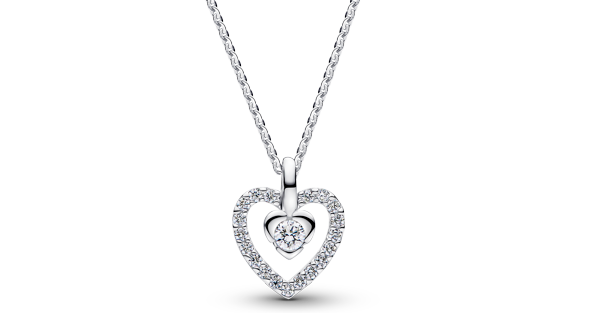
Pandora has chosen Italia as a testing ground for its new strategy
Having opened its first flagship store in Milan, the Danish brand – the world’s leading jewellery retailer by sales volume – is focusing on enhancing the shopping experience and on synthetic diamonds. We discuss this with Massimo Basei, the group’s CCO

Who knows whether, back in 1982, when Per Enevoldsen and Winnie Liljeborg opened their jewellery shop in Copenhagen, they could have imagined that from that very small space would grow the world’s leading jewellery company in terms of sales volume. This is how Pandora’s story began, with a shop called “Populær Smykker” (Popular Jewellery), which went on to become a group with a turnover of 4.4 billion euros in 2025, 7,000 shops in over 100 countries, 39,000 employees, and 50 million charms – its best-selling product – sold every year.
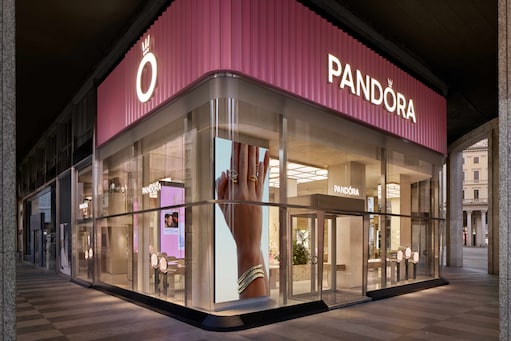
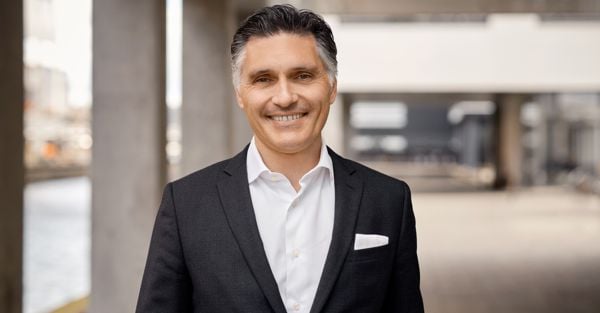
Of course, market developments and the challenges facing the market in recent years have also affected the Danish giant – the first quarter of 2026 nevertheless closed with growth of 2% – which has responded by devising an evolutionary strategy to fuel its future growth. A strategy centred on the concept of ‘elevation’, primarily of the shopping experience, as effectively demonstrated by Pandora’s first flagship store in Italia, which has just opened in Milan on Corso Vittorio Emanuele II, on the corner of Piazza San Babila: across 250 square metres spread over two floors, Scandinavian design elements meet Italian materials, such as Carrara marble, and the spaces are designed to allow visitors to discover the world of Pandora, its history and its latest offerings, such as the Diamond Salon, dedicated to the Pandora Lab-Grown Diamonds collection, which is now launching on the Italia market. “It’s a fantastic location; we’re very proud,” notes Massimo Basei, Pandora’s CCO, who has extensive experience within the group.
What does the Italia market mean for Pandora?
“It is one of our top markets, accounting for around 7 per cent of our turnover. But it isn’t just the figures that make it one of the most important: the focus on quality and style that characterises it makes it a priority testing ground for any company. Italia is a pilot market for our future.”
You have recently opened a new manufacturing facility in Vietnam, a $150 million investment that will increase your production by 50 per cent. Will this ‘elevation’ strategy also lead to partnerships with Italian jewellery districts?
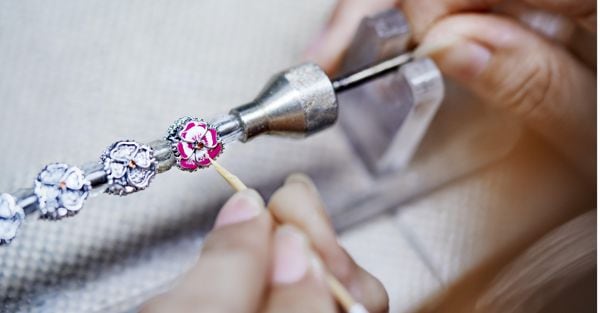
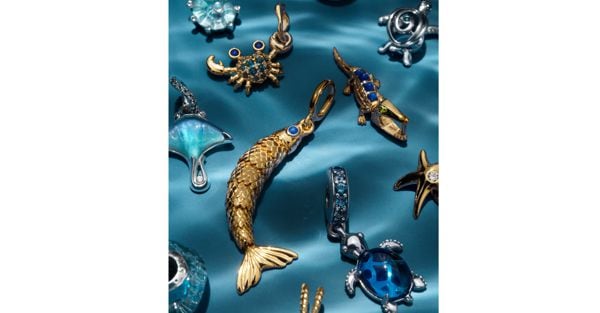
“We don’t so much see it as elevating our products – in line with the founders’ vision of offering high-quality, affordable jewellery – as enhancing the customer experience. We collaborate with companies all over the world; Italia supplies many components, and it is certain that as production increases, so too will our demand. And I’m pleased to point out that some of our charms are made from Murano glass».
Your silver and gold are 100% recycled – how do you certify that they come from ethical sources?
«All metal grains are certified in accordance with the Responsible Jewellery Council’s ‘Chain of Custody’ protocol, which sets very strict standards to ensure their supply chain remains separate from that of mined metals. We apply the same protocol, through internal audits, to the jewellery for recycling that we purchase externally.”