
Panetta, technology cannot replace central banks in money
Governor warns of the real risks of stablecoins
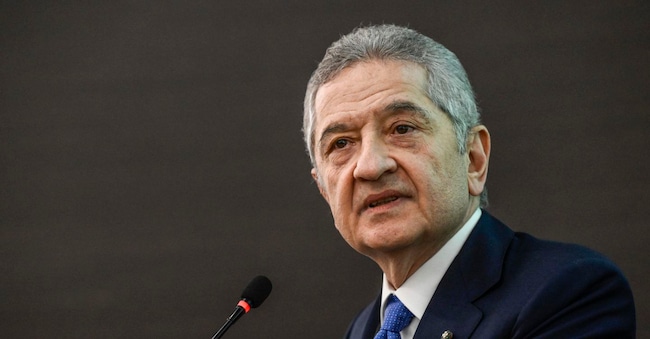
Technology is not enough: the role of an independent and credible central bank remains indispensable for 'secure' innovation. This was stated by the Governor of the Bank of Italy, Fabio Panetta, in a speech he gave today at the Embassy of Italia in London on the topic 'From interconnection to stability: the development of cross-border payments in a fragmented world'.
At the meeting, organised in cooperation with the Institute of International Finance and the Committee on Payments and Market Infrastructures of the Bank for International Settlements, Panetta emphasised the need to strengthen cross-border payments, both to foster global trade and integration, and to help the most vulnerable segments of the global population.
Loading...
The issue of cross-border payments, the governor emphasised, is not only technical but "also social, since it affects the most vulnerable people. They are geopolitical instruments'. In fact, remittances from emigrants have increased by 60% in the last decade and the forecast is that they will continue to grow, given the increase in migration flows.
"In the process of modernising the economy, cross-border payments still remain an unfinished business," the governor said. Nevertheless, payments across national borders often remain slow, expensive and constrained by fragmented rules. This is not only a financial issue. It is a challenge for the world economy, a test of its ability to remain interconnected in a context of increasing strategic rivalry. Strengthening cross-border payments does not only fulfil an economic need: it is a prerequisite for making the global economy more efficient and inclusive'.
Technological innovation can be a valuable aid but cannot replace the role of central banks, Panetta said: Although digital transformation may change the monetary architecture, its foundations remain unchanged. Technology can make the use of money more functional, but it cannot replace the credibility of an independent central bank and the authority of the state - the essential elements on which the trust placed in money rests


Brand connect
Loading...
