
Paolo Conte, a poet? No, he’s much more than that
The publication of a book containing all his verses reopens the long-standing debate over the distinction between literature and music. But it is a misguided question, and he has already moved beyond it

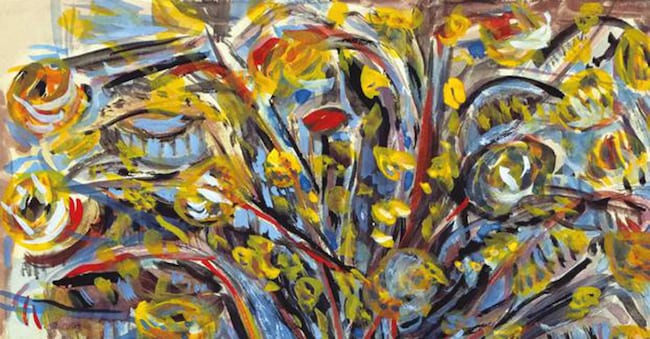
I’ll get straight to the point right from line 1: Paolo Conte (whom I, incidentally, adore) is not a poet. And, to be more precise, I’ll reiterate this in line 2: Paolo Conte is much more than a poet. End of review. The age-old question – whether it’s a non-issue or not, though the maestro himself alludes to it in the excerpt above, and in a mocking manner – resurfaces now that we have finally brought together (with the careful involvement of Conte himself, who occasionally even jots down a few words) All the verses: and it is a pleasure and a marvel to reread them in quick succession – for the chronological arrangement is significant and useful to us devotees, who can discern breaks, returns and recurring stylistic motifs – in a volume which (apart from the inexplicable, which is hideous – and yet Conte is a strikingly handsome man, photographed in every possible light, and indeed, if he so wished, a visual artist, so there really were plenty of options available, but never mind, let’s hope for a second edition – after all, we know that professionals make mistakes too) is destined to endure. Well, having read – or rather, mentally gone over – them, with the inevitable backdrop of music… – in this *Quanta strada nei miei sandali* (edited with great care by Manuela Furnari, Il Saggiatore, 470 pp., €24) – and having also personally heard the highly authoritative, mind you, opinions of two great literary critics and scholars such as Marcello Verdenelli and Giulio Ferroni (who contribute two substantial concluding essays to the book) – the thesis does not hold water. And it does not hold up for a reason intrinsic to the matter itself (‘The tropical gesture was ancestral / an arc from calm to storm / to tell you just how great the issue is / between the injured party and the insurance company’). Following the blunder of awarding the Nobel Prize in Literature to Bob Dylan (as if there were no novelists or, indeed, poets worthy of the honour), the mental mechanism that kicks in is always the same. The word ‘poet’ has a profound effect on us all: it is as if it were the highest honour one could bestow. And so a ‘singer-songwriter’ like Conte ought to feel flattered, elevated to the rank of, at last recognised, if he is admitted into the ranks of poets, and who knows what position of such great wisdom he might then occupy. But, ladies and gentlemen of the court: the opposite is true. Monsieur Paolo Conte – and I know, I know, he is a unicorn in our cultural landscape – has no need of such ‘recognition’. Because, in his own right, he is already worth more than many contemporary Italian ‘poets’ (indeed, I would say the majority of those published in so-called prestigious poetry series), and yet, on the other hand, if compared – as has been done quite recently – say, to Caproni or Campana, or to many others, he does not come out of it well. The point is precisely this: Montale is certainly unrivalled by Conte in terms of poetry, but the fact is that they are playing two different games – indeed, two different sports.
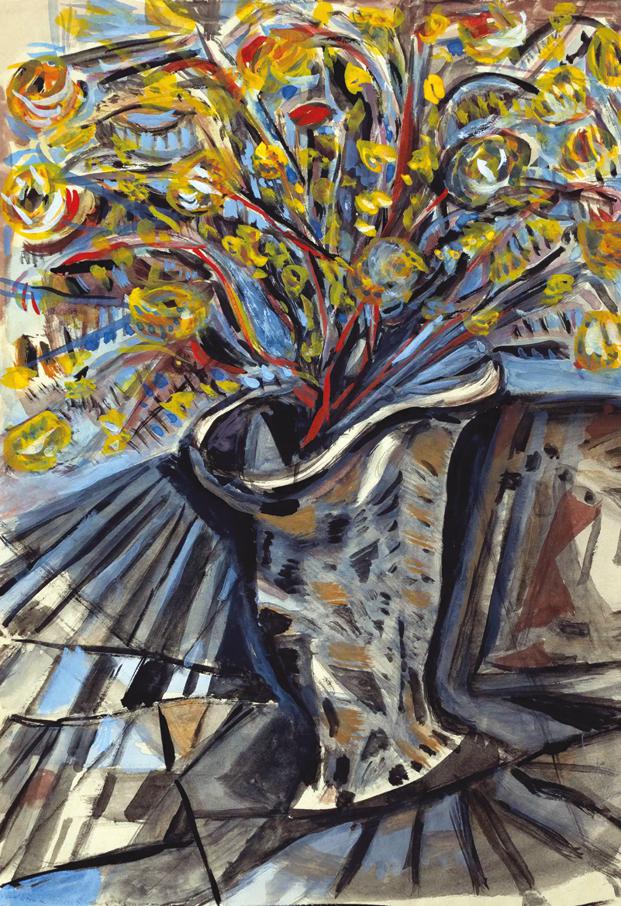
Paolo Conte, after all, has never had any doubts: for him (and in his line of work), music comes first, and only then the words. And since this is the hierarchy, it is the words – I mean the sonic, ironic, exotic, allusive and so on material of the words – that adapt to and, at the same time, spring from the melody which underpins the artistic creation to produce that overflowing, one-of-a-kind entity that is his songs. In Alba – at a gathering that was a celebration and a dazzling display of Conte’s refinement and intelligence (including his choice of favourite wines, less famous than the highly acclaimed ones: and I see a connection there) – it was clear. ‘Timbuctu-Babalu’, a rhyme that every Conte fan reveres, for a whole host of reasons which I won’t summarise here; Conte explains that he created it precisely because of the fluidity of the music and the fact that rhymes ending in -u are musical but very difficult in and for the Italian language (counter-example: ‘So many years later, do you remember?/ Du-du-du/ du-du-du’ – not exactly a shining example of poetic brilliance) – yet the rhyme that follows shortly afterwards in *Hemingway*, ‘curaçao’–‘spiegherò’, displays a heavenly, enigmatic virtuosity for us readers of poetry. So let us clear the ground: poems, as we sodden, modern literary types have been accustomed to experiencing them for at least the past few centuries, are sequences of written words intended for silent reading or, at most, for reading aloud to better appreciate their sonic quality, and they are distinct from songs. Because in songs there is ‘first and foremost’ – and in any case – the music – and sometimes even afterwards (a poet like Roberto Roversi, who wrote excellent lyrics for Lucio Dalla, still had them altered by Dalla to suit the song’s sound, and, however talented he was, none of his compositions surpasses Dalla’s own creation *Com’è profondo il mare*, just to give an example). None of this detracts – on the contrary! – from Conte’s mastery as a versifier: this is why his position stands all the stronger. But that is not enough. Music and words come together – and it is magic, a miracle, shipwrecked water, a flight – to create a universe that is his and no one else’s, in which stories and melancholy, provincial life and nostalgia, exoticism and rumbling (ci bum ci bum bum) merge and present us with a solitary titan of 20th-century Italian culture (not in the history of song, not in the history of poetry) and beyond. Above all, the pieces from the 1980s and 1990s: when read (no: mentally replayed, in their inseparable connection with the musical score), those verses are truly proof that this lawyer from Asti was touched by grace, and there was, in those years, no poet honoured by the publishing houses who could match the calibre of his work. Having said all that, allow me to conclude here: Paolo Conte is not a poet but a living national treasure. I would make him a life senator on the spot, but I have the right word that encompasses, justifies and forgives everything. For thanks to him, we have ‘the illusion of understanding / through art, living and dying’: and only a certain kind of person can achieve this. A classic – that is what you are, Maestro Paolo Conte, and I shall say no more. Zazzarazazz.

