
Paper mills: 44 per cent at risk of redundancy schemes – industry and trade unions sound the alarm
Assocarta and workers’ representatives are calling on the government to hold urgent talks: gas prices and imports from Asia are crippling the sector’s competitiveness

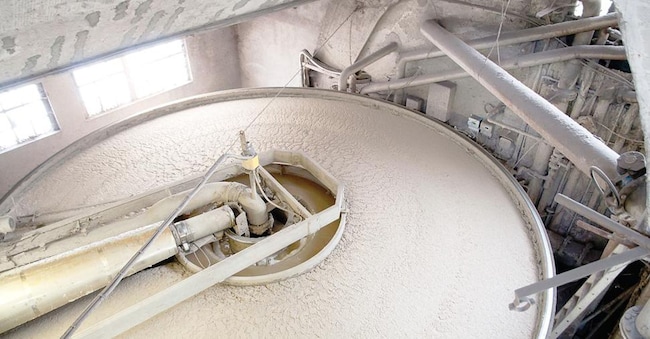
Rising energy costs mean that 50 paper mills – 44 per cent of all plants in Italia – are at risk of having to resort to furlough schemes in the second half of the year. This analysis – carried out by Assocarta’s research department, drawing in part on the sector’s experience during the 2022 gas crisis – has triggered fresh concerns about the sector’s difficulties. The warning has been issued by Assocarta itself, alongside the trade unions Slc-Cgil, Fistel-Cisl, Uilfpc and Ugl Chimici. They are joining forces once again following their shared concern over the European review of the ETS system this summer. They are appealing to the government and European institutions for urgent and structural measures to safeguard competitiveness, production continuity and employment.
Industry and workers’ representatives have produced a document summarising all the key issues, starting with the price of gas, which has risen from 35 to over 80 euros per MWh this year: ‘A trend that could see the sector’s annual gas bill rise from 800 million to 1.3 billion euros, pushing energy costs as a proportion of turnover up to 20 per cent or more’. Added to this are weak demand and growing competitive pressure from Asian producers, underpinned by structural overcapacity and public support. The rise in Asian imports into the Italian paper and board market (including tissue paper), which exceeded 31 per cent in the first half of 2026, highlights the risk that the energy cost differential could result in a lasting loss of market share for domestic companies. Alongside rising energy costs are the costs associated with the ETS system, ‘amounting to approximately 215 million euros per year in the absence of changes to the system’: these risk further widening the competitive gap with non-European countries.
Assocarta and the trade unions report that the deteriorating economic conditions are already causing several factories to slow down or temporarily suspend production, whilst also making use of social safety nets: for 2026, they estimate that the number of authorised hours under the short-time working scheme will rise to 7 million, costing the INPS approximately 58 million euros. ‘This marks a reversal of the downward trend observed over the last two years, reflecting the underutilisation of production capacity and market difficulties,’ the document states. The effects are bound to be felt across the wider supply chain as well.
The Italian paper industry has an annual production volume of around 8 million tonnes and a turnover of almost 8 billion euros; it employs 18,700 people across 114 paper companies: it is a national supply chain encompassing processing, graphic arts and related technologies, with a total value exceeding 26 billion euros and employing close to 162,000 people. It also contributes to the national circular economy: paper mills are, in fact, the natural outlet for a material of which 66.3 per cent was recycled in Italia in 2025.
These figures form the basis for a call on the government to launch urgent discussions to identify and implement all necessary measures, as well as an appeal to the European institutions: the sector needs assurances that energy and climate policies are consistent with the objectives of competitiveness, industrial autonomy and social sustainability. The solutions on the table are those already reiterated in recent months: immediate action to reduce the cost of gas, including through the use of resources derived from storage and additional VAT revenue, the full implementation of the provisions of the ‘Bollette’ decree – in particular, the elimination of the difference between the Amsterdam TTF price and the higher Italian PSV price – and the launch of the ‘Gas Release’ scheme, with increased domestic production to be allocated to industrial consumers at capped prices. At European level, Assocarta and the trade unions are calling for a review of the approach to the ETS system, the protection of free allowances, and the full reinvestment of auction proceeds into industrial decarbonisation projects.


