Parabita and contemporary art: when the past reinvents the future
The town’s urban regeneration programme with Ipogea and Rossella Biscotti’s work

Off the beaten track in Lower Salento, the town of Parabita (with a population of almost 8,000) is writing a new chapter in its history. Charting the course is the urban regeneration programme, ‘Parabita per il Contemporaneo’, which blends contemporary art with the genius loci. The past is no longer a time for nostalgia, but for remembrance. It serves as a compass to chart new courses towards the future, aimed at redefining the community’s identity and strengthening its sense of belonging and social cohesion. All this under the banner of contemporary art, as a “driving force for growth and change”.
Open-air contemporary museum
Strongly championed by the mayor Stefano Prete, under the artistic direction of Giovanni Lamorgese, the plan transforms this small town in the Salento region — situated inland, just 14 km from Gallipoli — into an open-air museum. The aim is not to attract hit-and-run tourism, but to build a permanent collection of contemporary art that becomes an integral part of the town’s fabric.
“Parabita per il contemporaneo” encompasses a range of initiatives, some of which have already been completed, others currently underway, and still others planned for the future.
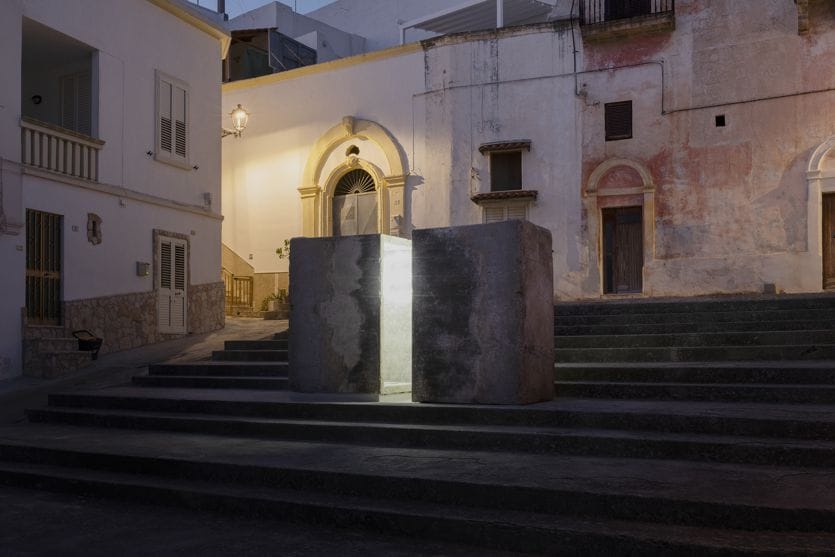
On 23 July, the work by Rossella Biscotti, “L’uomo che cammina all’indietro”, curated by Carmelo Cipriani, as part of “Ipogea”, a project aimed at the restoration and promotion of the local underground cultural heritage.
Parabita, like the whole of Salento, is rich in underground oil mills – cavities hewn out of the rock as far back as the Middle Ages – where oil, the ‘green gold’ of the rural economy, was produced and stored. The artist uses an ancient millstone, which becomes a device for reflecting on time and history. Biscotti’s project follows that of Francesco Arena , dating from 2025, who, with ‘La Grotta’, launched the ‘Ipogea’ initiative. Among the upcoming participants is the artist Rä di Martino, who will unveil his work in the autumn.
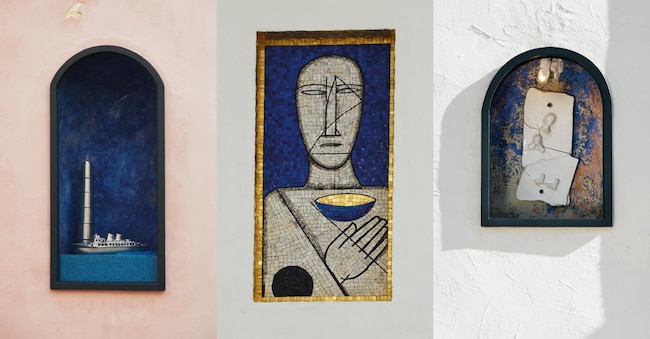
Votiva
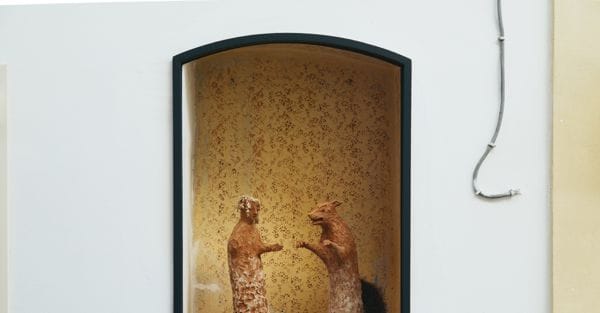
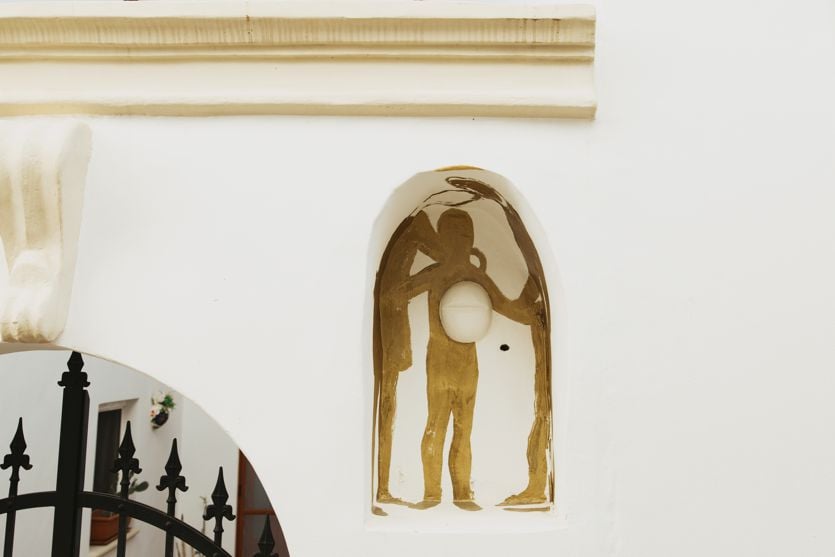
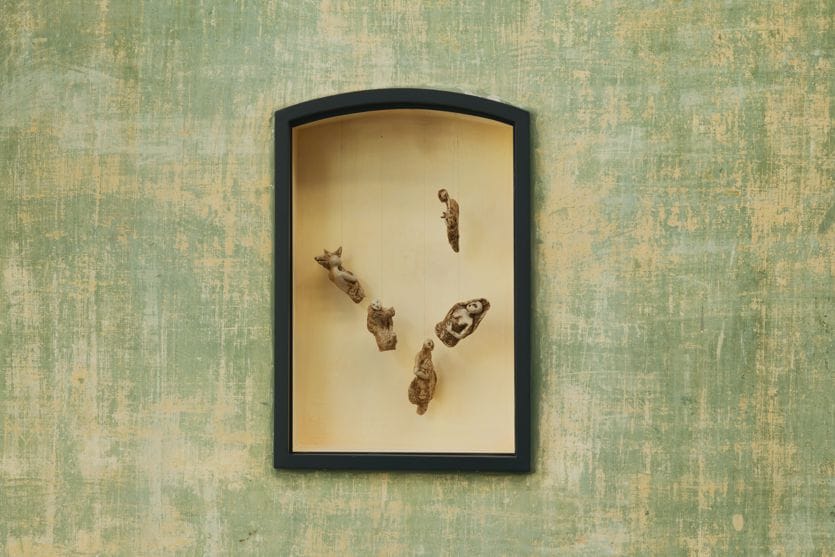
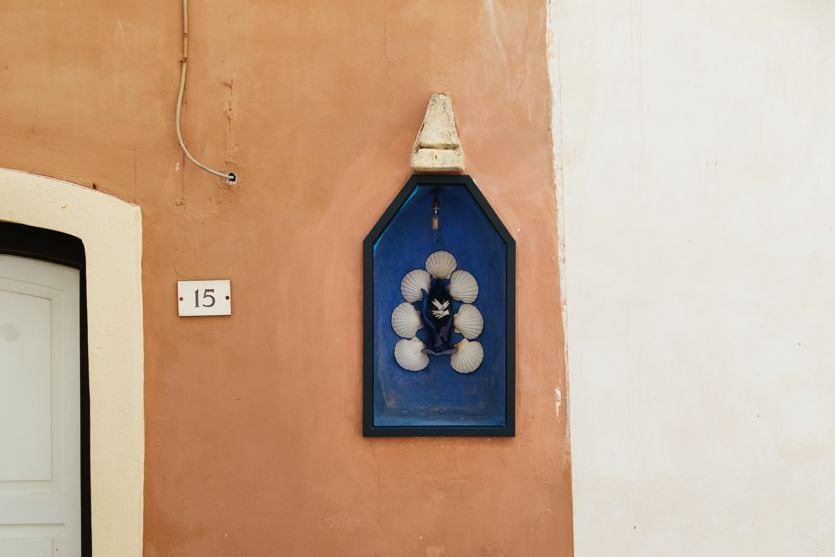
However, the launch of “Parabita per il Contemporaneo” dates back to 2024 with “Votiva”, curated by Laura Perrone together with Flaminia Bonino, an initiative focused on showcasing votive shrines. Rooted in folk tradition, these architectural elements also served to bring people together and foster the common good. Sixteen artists have engaged with these minimalist forms. Among the leading figures were internationally renowned names such as Arena, Chiara Camoni, Ludovica Carbotta, Claire Fontaine, Gianni Dessì, ektor garcia, Helena Hladilová, Felice Levini, Claudia Losi, K.R.M. Mooney, Liliana, Adrian Paci, Mimmo Paladino, Luigi Presicce, Michelangelo Pistoletto and Namsal Siedlecki. Last but not least, Giovanni Lamorgese, creator of the first secular newsstand, from which Stefano Prete drew his initial inspiration. To help visitors discover the works, the council has also made a dedicated app available, featuring audio guides and descriptive texts.