
Parental leave, discussion on timing reopened in the Labour Commission
The chairman of the Chamber's Labour Committee, Walter Rizzetto, assures the 'willingness to engage in a substantive discussion'

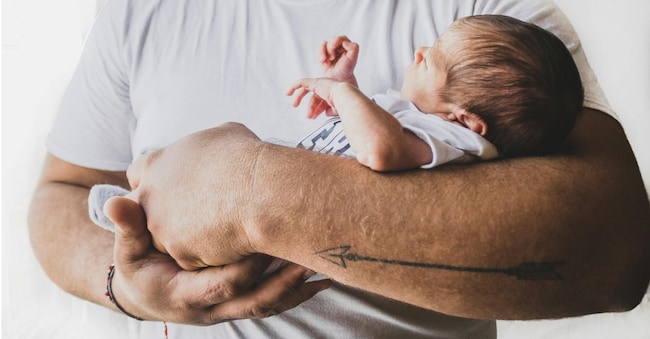
The path towards equality in parenting comes to a halt in the face of the coverage obstacle and the findings of the State General Accounting Office, but the debate remains open. After the Chamber of Deputies' 'no' to the oppositions' proposal on equal parental leave for five months - with total costs estimated in the Ministry of Labour's technical report at 3.7 billion euros in 2026 and 4.5 billion from 2035 - the future of the measure is moving on a mediation track. If the centre-left beats the drum on the equality of maternity/paternity leave, the majority opens a debate on the merits by focusing on flexibility and 'rewarding' optional parental leave.
The proposal failed
The spotlight has therefore been turned back on an instrument that, since 2013, has reached the current 10 days (minimum level of the 2019 EU directive) and that, according to Inps data, will have been used by almost 182,000 fathers in 2024, with adherence growing from 20 per cent in 2013 to 64.8 per cent in 2024.
'The issue has not ended up on a dead track. We will continue to keep it alive, also by tabling amendments,' says the Pd's Labour leader, Maria Cecilia Guerra. Because, she adds, it is true that 'there is a problem of coverage, but it would have been possible to have a debate on the merits that could have envisaged a partial application or in stages'. Moreover, she notes, it is 'short-sighted' not to consider the cost to society by excluding women 'so heavily' from the labour market.
"The point of greatest urgency is to increase the days of compulsory paternity leave, after which the costs are modulable," the Dem exponent further notes, adding that the question is whether there is agreement on the "fundamental message" of the proposal that was first signed by PD secretary Elly Schlein that maternity/paternity leave must be equal for two fundamental reasons: to allow men to exercise parenting equally as well and to eliminate the main element of discrimination of women in the labour market.
In the Labour Commission
For his part, Walter Rizzetto (FdI), chairman of the Chamber's Labour Committee, assures that there is 'willingness to discuss the matter in depth in the Commission' and that the issue will be examined in depth 'in the coming weeks' with the aim of developing it in the Commission before the Budget law. The exponent of Fratelli d'Italia makes no secret of the fact that he has 'some doubts and reservations' on the issue of compulsoriness. He notes, however, that 'one hypothesis on which the Commission could reason is to understand whether, with respect to timeframes well under five months, ways can be found, also in terms of economic coverage'.

