
Parents on the run from family troubles by Jim Jarmusch
'Father Mother Sister Brother', Golden Lion at Venice, is an episodic film, in which only the first part with Tom Waits is convincing

Key points
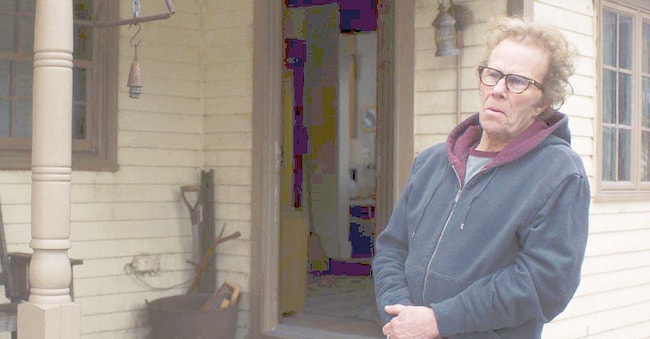
In Father Mother Sister Brother Jim Jarmusch seems to entrust Anthony Vaccarello's costumes with the only form - the most unconscious - of bonding between those strangers who can become parents, children, brothers and sisters. In the first part of this minimalist triptych, the poet of American independent cinema amalgamates Tom Waits (father), Adam Driver and Mayim Bialik (children) through the burgundy-coloured pullovers and hooded interiors that the three of them wear without having agreed. Similarly, in the second episode, Mother, the mother, Charlotte Rampling, and the daughters, Cate Blanchett and Vicky Krieps, wear something red, while the two brothers of Sister Brother, Indya Moore and Luka Sabbat, wear aggressive leather jackets.The theme of the film - rather than the selfishness and narcissism of the parents, which is there - is the eternal Jarmusky one: escape and freedom.
The Escape and Freedom
In this film they express themselves in the need to reclaim their individuality 'against' their children. Jarmush does not crucify his rambunctious heroes, he watches them slyly. Rampling tries to speed up the one annual Christmas meeting with her daughters, even though all three live in the same town. Waits turns his fancy sofas into beds and hides his Saturday night king car to flaunt a resigned life towards the twilight of the senses. Waits, with his ramshackle voice, subterranean mutterings about difficult loves and suspended existences, is the ideal companion for Jarmusch's marginal worlds. Starting with Danbailò (1986) with John Lurie and Roberto Benigni, Waits escapes from prison as in the last film he escapes from family obligations. Jarmusch and Waits meet again, then, in Coffee and Cigarettes (2003), in the episode Somewhere in California, where, together with Iggy Pop, he chats swiftly about smoking. The pair return under Jarmusch's 'irons' in The Dead Don't Die (2019), where Pop is a zombie and Waits is a hermit observing the uncovering of graves, concluding that the living dead are the only ones who are free.
The theme of repetition and episodicity
Jarmusch in his comic and tragic vein loves to repeat himself, because repetition is consoling and soothing, especially in childlike minds like his. His cinematography is often fragmented and episodic, the triptych scheme is also there in Stranger than Paradise (1984) starring Lurie, and Mystery Train - Tuesday Night in Memphis (1989), where he reunites Waits and Lurie without the corporeality: Waits is the radio DJ voice, Lurie composes the songs. Music, needless to say, is fundamental to Jarmusch, not only as a soundtrack to his films, but as a reason for creative existence.
The importance of music
He himself, as soon as he can, picks up the electric guitar, enjoying the vibe perhaps from the second rows as a backing vocalist, or filming the miracle of a concert, as in the documentary Year of the Horse (1997), where Neil Young is with the Crazy Horse, and Gimme danger (2016) about the rock band The Stooges. His films are streaked with dreamlike sounds, even when they try to be sinister. If Jarmusch wants to be gloomy, he is, in fact, never gloomy enough. Around the corner, there is always the sneer, the bawdy shortcut, the cheating, the slumming that helps not to take life too seriously, which is surreal at best. As in Paterson, where not even the regular routines of a bus driver, Adam Driver, under whose guise a poet hides, can preserve us from the unexpected that diverts the tranquil course of existence. Better to live without expectations, Jarmusch suggests, of lianas riding towards other lianas, a little crooked, a little ugly, but human.
Everything is held in colour
Unfortunately Father Mother Brother Sister only holds up in the first episode. Then the bridle of the bizarre becomes watered down, with only a hint of novelty: compassion for the even boring children crushed by parental emptiness. The weakest episode is that of Moore and Sabbat searching for traces of their childhood in a Paris flat inhabited by elusive hippie parents. But, mind you, Jarmusch goes on to absolve everyone, looking for a slice of goodness that deserves compassion, because, he explains, we did not choose the mask we wear. Only this time the thinking is slow and insistent, as if a depleted vein could be revived by the great performers he has at his disposal. Perhaps the most revolutionary message is given by those outfits that chase each other from one episode to the next, looping in red, to which Moore connects with a T-shirt. This film did not deserve the Lion, but Alexander Payne, president of the Venice jury, who has been nourished by Jarmusch's cinema, could not resist. It has to be said that, despite being a master, this is the first award with a moustache that Jarmusch has taken. But you know, lifetime achievement awards, if they are not expressly so, do neither cinema, nor literature, nor art in general any good, because they deceive the audience. If this is the best, they are forced to think, I'll give up going to the cinema (to read a book, to go to an exhibition)...


