
Paris 2024, from cycling to boxing in the race wins gender equality
In the field 5,377 athletes out of 10,971 participants, 49% of the total compared to 48% in Tokyo 2020. Swimming stops at 44.5%, athletics at 48.8%. The USA the country with the most women (339 compared to 297 men)

3' min read
3' min read
From the flag bearers - preferably two, one man and one woman - to the number of athletes and events on the programme, gender equality conquers Paris 2024. Together with the theme of sustainability, it is one of the pillars on which the 33rd edition of the Olympics, underway until 11 August, is based. Which further raises the level of female participation in the Games (49%) and thus comes close to achieving full balance.
If the Tokyo 2020 Olympics - held in August 2021 due to Covid - had already come very close (48%) to this target, the International Olympic Committee (IOC) strongly wanted the current edition to raise the bar even higher. And the result seems like great progress, especially when compared to the 2.2% quota of female athletes competing at the 1900 Paris Olympics, the first to admit women.
A handful of hours before the opening ceremony of the Games (at the time of writing, ed.), the official Paris 2024 database reported 10,971 athletes competing, of whom 5,594 were men and 5,377 women. Intertwined with the substantial balance in overall attendance, net of any withdrawals or changes 'in progress', is gender parity in the disciplines: there are those that are only feminine, such as rhythmic gymnastics (94 athletes) or artistic swimming (106 athletes), or those with a more marked presence of male athletes in wrestling (96 athletes, 33% of the total); perfect parity is reached, for example, in basketball, volleyball, boxing and archery; women even outnumber men athletes in road cycling (51.2%, with 98 participants out of 191). Other sports come close to parity, but still do not reach it, including football, which stops at 43.3%, swimming at 44.5% and athletics at 48.8%.
Even when comparing the participating countries, the female quota is very differentiated. While it is the United States that has the largest number of female athletes (339 as opposed to 297 male athletes), there are six countries with no women qualified (Belize, Guinea-Bissau, Iraq, Liechtenstein, Nauru, Somalia) and in four countries, on the other hand, female athletes exceed 75% of the total number of participants (Guam, Nicaragua, Sierra Leone and Kosovo). Italy brought 189 female athletes and 205 male athletes to Paris.
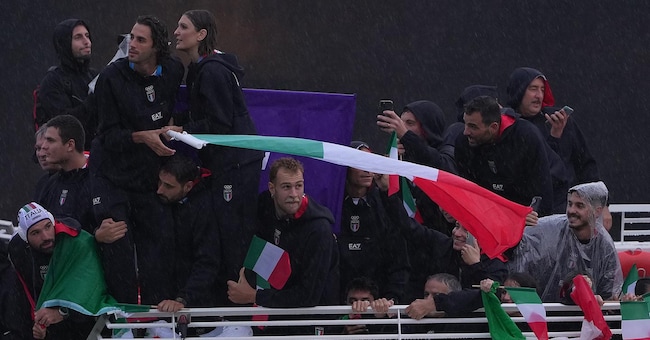
The IOC has also decided to add a more balanced choice in the awards: there are a total of 329 medals to be awarded, of which 152 in women's disciplines, 159 men's and 20 mixed. And, again, the committee worked on the 'line-up' of the Games to ensure greater balance in terms of exposure, including television. There will be 329 sports events, 45.9% women's and 52.6% women's or mixed (they were 41.5% and 44.9% respectively five editions ago, in 2004). Also in terms of visibility, the organisation urged participating countries to choose two flag bearers: a man and a woman. Most seem to have adhered: for Italy, for example, there was Arianna Errigo (fencing) and Gimbo Tamberi (high jump).


