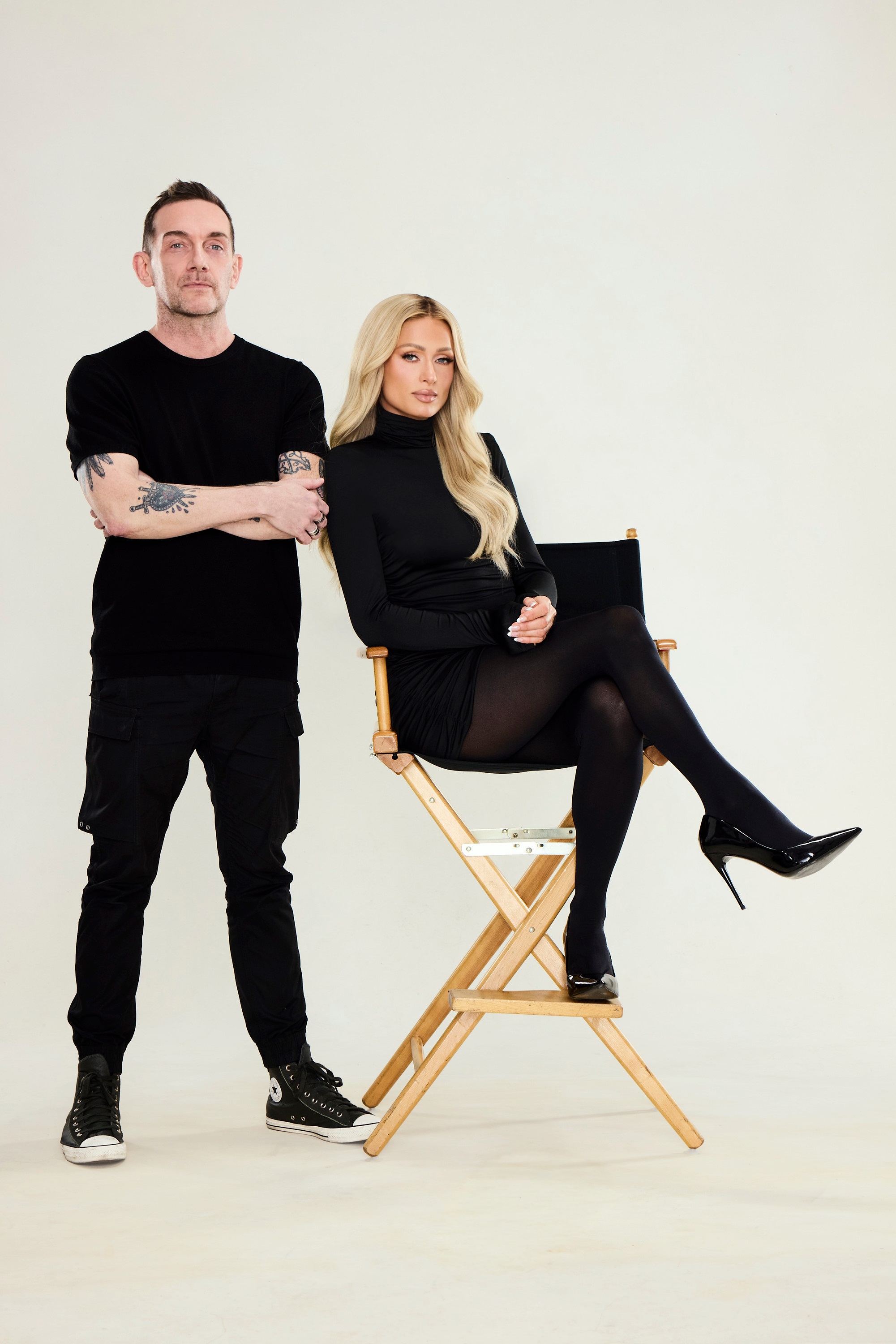
Paris Hilton: between stage and parliamentary battles, she tells her story without a mask
In a documentary by Bruce Robertson and entitled "Infinite Icon: A Visual Memoir' the rise, fall and struggles for rights of the American heiress and socialite

Key points
The colour pink dominates, some glitter here and there, particles of hydrogen peroxide suspended in a Beverly Hills room. These are just some of the clues telling us that Paris Hilton is ineluctably the demagnetised star of the 2000s, the all too human Barbie ready to tell us of her redemption, conquering new dreams on the wings of MTV and Instagram. And she does so with Infinite Icon: A Visual Memoir, a documentary directed by Bruce Robertson, in US theatres from 30 January, in which she recounts her return to music and traces a broader parable of survival, in the vein of the film This Is Paris (2020) and her memoir (2023), but with a code of honour that neither flirts nor sparkles. Today, at the age of 44, Paris reclaims her story. 'For too long, people saw a version of me that wasn't real'. Now the mask is down, the voice rippled, the truth dwells on her tongue. "I will not end up stuffed in some tabloid from the media meat grinder. I'm taking back Paris Hilton. I'm taking Paris back in hand."
The documentary starts with a sleepless night in 2019. Paris Hilton sits up in bed with a camera pointed at her face and unveils a story she has never told before. Like a Pandora immolating herself for her Flying Dutchman, the 'woman famous for being famous' speaks boldly of the boarding schools where she suffered psychological and physical abuse. Dragged from her bed in the middle of the night, subjected to drugs against her will, locked in solitary confinement. Those images, in fact, are the inverted poster child for the femme fatale, a project of re-appropriation. Hence the intuition to crumble that vacuous character and close with the post-positivist era that wanted Paris as a 'social experiment', a mediated construction.

The American heiress
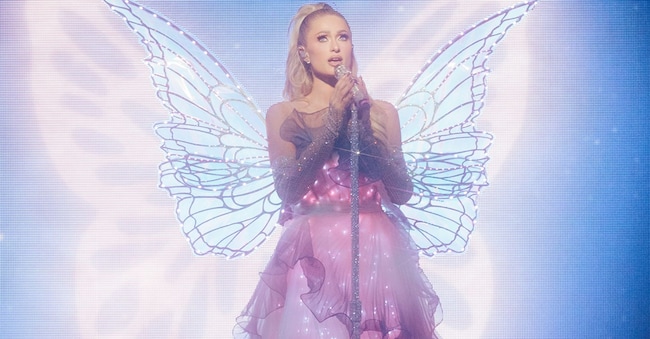
In the documentary we see the American heiress take the stage at the Palladium for her first real concert. The 26-billion empire, the luxury, the horse racing are distant counter-revolutions. 'Music saved me,' she will say. From its roots (and dust) in the Texas of 1919, where Conrad Hilton turned a modest hotel into an empire of innovation and Hollywood gossip between his marriage to Zsa Zsa Gabor and his brief liaison with Elizabeth Taylor, the Hilton dynasty has traced a centuries-long parabola of ascent. After decades of expansion into casinos and luxury under Barron's leadership, the group was sold in 2007 to the Blackstone fund for $26 billion, marking the family's definitive exit from the top. Today, with the inherited assets donated almost entirely to charity, Paris Hilton is left with nothing but her name as a stand-alone brand, transforming the myth of a lost legacy into a personal global marketing venture.
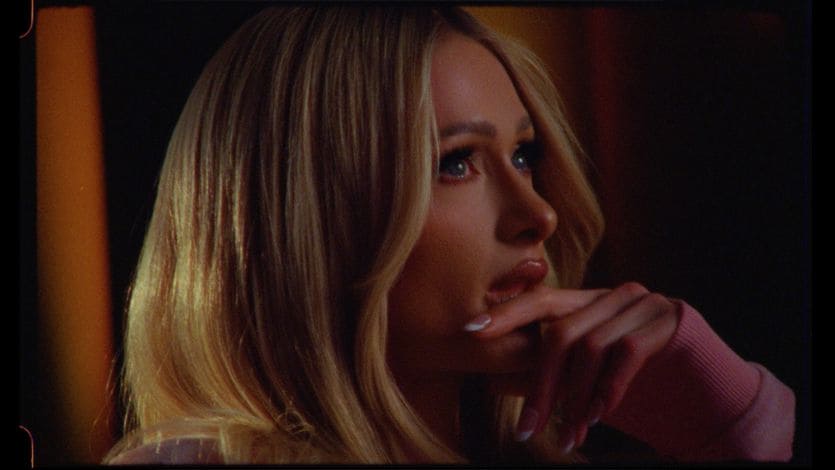
When asked what she has discovered about herself through music that had escaped her so far, her answer is straightforward: 'Having already lived through so much, along with all the traumatic experiences that have happened to me, music is something that follows me like a shadow. When I was locked up in institutions for troubled teenagers, I used to invent imaginary nightclubs in my head, where the music was loud, deafening, and I was free. The only thing that kept me going was thinking about who I wanted to be and what I wanted to become once I got out'.
Taken from the 2006 debut album Paris, the single Stars Are Blind entered the Billboard top ten and became a summer hit. "Yet, as a chart-topper, I remained a laughing stock to everyone, the symbol of excess and vanity, the heiress to a hotel fortune, the bimbo who became famous because of an X-rated video and a reality show".