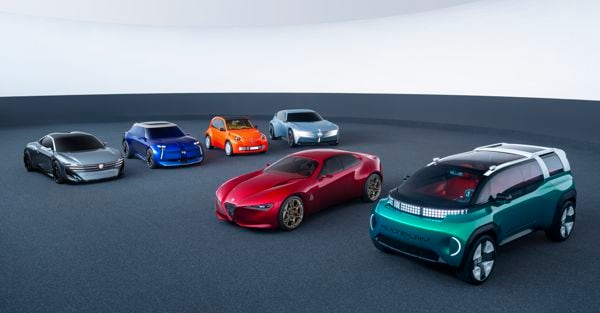
Paris Motor Show: Citroën reinvents the 2CV. Stellantis plays its trump card with concept cars
The Franco-Italian group is playing the ‘show car’ card to demonstrate that it is competitive and focused on the products of the future

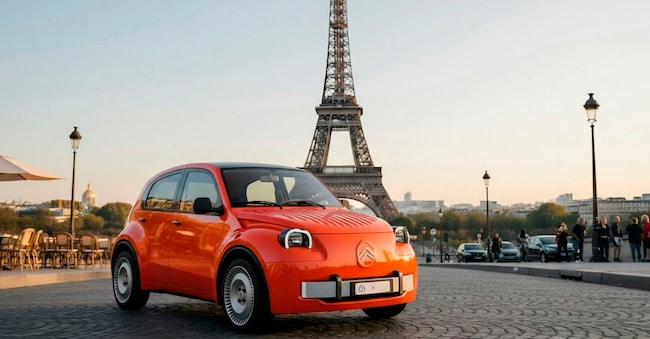
At the Paris Motor Show, Stellantis is seeking greater visibility than ever before at an international motor show. Among the group’s concepts and new models, there is already a star of the show: the Citroën 2 CV in the form of a show car, which is already capturing the imagination of all those who refuse to settle for battery-powered cars that are all the same and lack character.
In fact, the Franco-Italian group, at an event dubbed ‘The Night Before’ – which precedes the first day of the Paris Motor Show and echoes the former glory of Volkswagen’s group nights – aims to project an image of vitality and a focus on the product and design, not least because times are changing and, with them, the global automotive landscape, where European manufacturers are under pressure from their Chinese counterparts and a surge of pride and a return to tradition are needed.
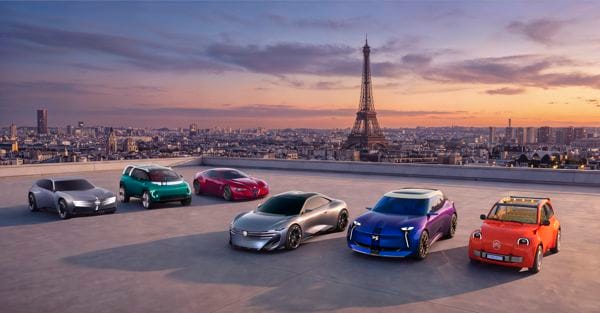
This is particularly evident right now at the Paris Motor Show and the accompanying events that began on Sunday 11 October (the show itself starts on 12 October).
But let’s return to Stellantis, which has unveiled a preview of six concept cars developed under the direction of Gilles Vidal, intended, on the one hand, to signal the future design language of the brands and, on the other, to convey the impression that the group is planning to develop and implement the ‘Dare Forward 2030’ industrial plan, which involves all the group’s brands, reorganised into four main structures.
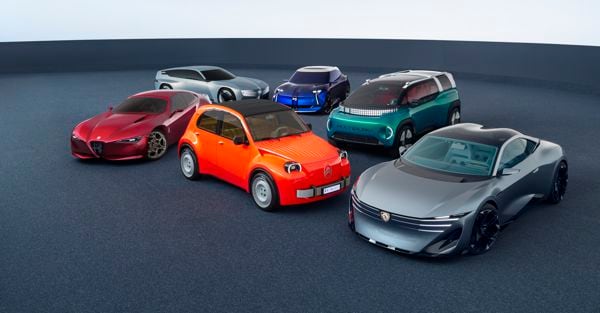
We’ll start with the star of Stellantis: the Citroën 2 CV Concept, which takes a different approach to retro styling and draws on the philosophy of the historic French city car, reinterpreting it for today’s mobility needs. The aim is to create a simple, practical electric car that is accessible to a wide audience, designed primarily for everyday travel. The project suggests a price of around 15,000 euros and production entirely within Europe. The challenge will be to keep costs down without compromising on adequate range and the features needed for everyday use, whilst retaining the simplicity that made the original model famous. In short, Citroën is following in the ‘techno heritage’ footsteps that Renault has successfully capitalised on over the past two years with the Renault 5 – named Car of the Year 2025 – the Renault 4 and, in recent months, the new Twingo.