
Paris Photo 2026 ends on a positive note
Fewer visitors, more galleries and a robust market in the mid-range sector: the 29th edition celebrates two hundred years of photography

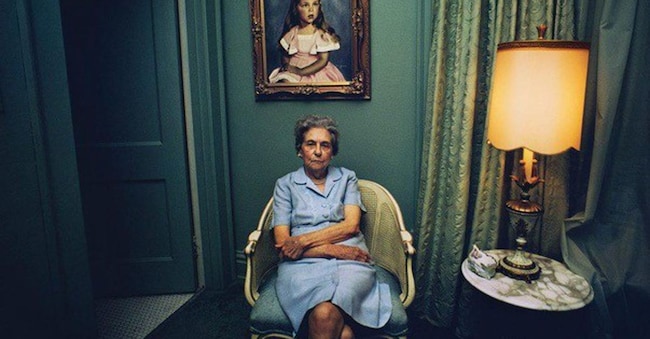
Paris Photo 2026 took place from 12 to 15 November beneath the grand glass-and-steel nave of the Grand Palais, built for the 1900 World’s Fair. This is the third edition since the fair returned to its historic venue, following extensive refurbishment and several years at the Grand Palais Éphémère. Attendance has fallen for the second year running. In 2024, the fair had reached a record 80,000 visitors, falling to 75,000 in 2025, whilst this year’s figure stands at 65,000 – approximately 13 per cent lower than the previous edition. Nevertheless, the fair’s overall assessment remains positive: numerous sales were recorded, mostly under 100,000 euros, along with a good number of institutional acquisitions.
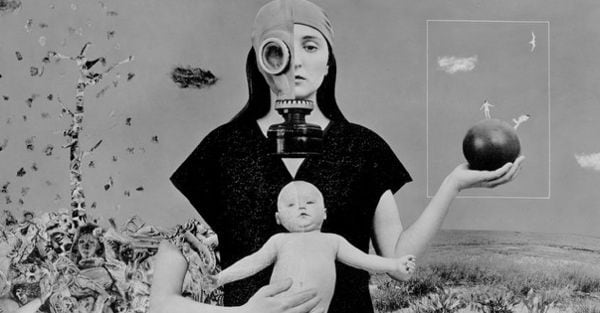
The Disappearance
The number of participants, however, is set to rise in the year marking the bicentenary of photography: from 222 exhibitors in 2025 (181 galleries and 41 publishers, from 33 countries) to 246 in 2026 (197 galleries and 49 publishers, from 38 countries). The guest of honour at this year’s event is the Centre Pompidou collection. The ‘Voices’ section, curated by Zasha Colah and Francesco Zanot, focused this year on the theme of ‘disappearance’: from that of cultural minorities to the much-feared disappearance of photography itself in the face of the advance of artificial intelligence. Symbolic in this sense is “Alternative” (1985, 5,700 euros, pictured) by Evgeniy Pavlov, one of the founders of the photography school in Kharkiv – the Ukrainian city hit by Russian bombardments – presented by the Alexandra de Viveiros gallery.
The theme of disappearance, however, seems to hang over the entire fair, which, on such an important anniversary, provides an opportunity to reflect on the transformations of the medium. Many processes used in the past are now rare or on the verge of extinction. Such as Ilfochrome, a paper for which Ilford announced its final production run in 2012, used in ‘Afton with flower’ 2026 by Richard Learoyd, (on offer at Pace Gallery for 22,000 euros), or the “Opticks” series by Hiroshi Sugimoto, of which Fraenkel Gallery is offering “Opticks 589”, 2023 (US$250,000), created using one of the last Polaroids ever produced, a prism and a mirror, alongside “Tyrrhenian Sea, Priano”, 1994 (US$400,000). Other materials are employed to achieve an almost painterly effect: ‘Mineko Orisaku’ by Akio Nagasawa, an inkjet print on washi torinoko and gold leaf (€4,500), whilst Jack Davison (Cob Gallery) prints his black-and-white works using photopolymer, as if they were etchings. A century and a half ago, Julia Margaret Cameron, presented by Hans P. Kraus Jr. with “J.F.W. Herschel”, 1867 (65,000 euros), “The parting of Sir Lancelot and Queen Guinevere”, 1874 (€62,000) and “Henry Taylor”, 1865 (€45,000), used albumen from collodion negatives instead.
Over the past two hundred years, photography has moved beyond paper to explore other media, such as the silkscreen prints on copper and brass, “Holes in the Moon”, 2024, by Yto Barrada (at Pace, 22,000 euros each), the artist representing France at the Venice Biennale, whilst Kiki Smith (Pace; ‘the light of the world’, 2017, on offer at 20,000 euros; “Sight Line III”, 2012, at 35,000 euros) pairs a cyanotype with a bronze. Nadav Kander (from Howard Greenberg) experiments with overlays and photographic etchings.
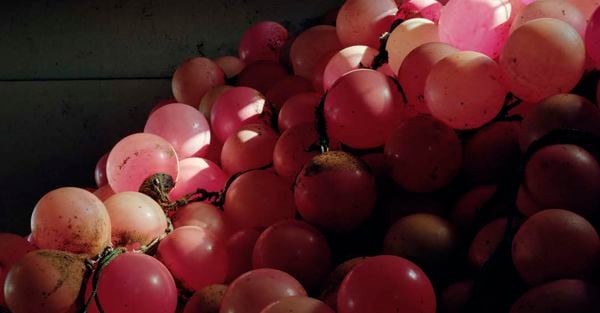
Historical rarities
But material value is not the only measure of worth; rarity is what counts on the market. For six unique dye-transfer prints by William Eggleston from 1968–73 (printed in 2008), Zander Galerie is asking for 1.1 million euros, with a negotiation margin of around 200,000 euros. Equally rare is the ‘Atelier Mondrian’, 1926 by André Kertész, a print on postcard paper (9 × 7 cm) offered by Pace Gallery at 500,000 euros: there are 6 or 7 copies in existence, of which only one other is in a private collection, whilst the rest are held in public collections.
The classics remain in the tens of thousands of euros: at Gallery Fifty One, Saul Leiter ranges from 13,150 euros (“Reflection”, 1958) to 27,850 euros (“Mr.”, c. 1958), Seydou Keïta costs 17,400 euros (“Untitled”, 1952–55) and Harry Gruyaert 10,040 euros (“Madison Ave.”, 1969); at Staley-Wise, David LaChapelle (“Collapse in a Garden”, 1995) is priced at $40,000 and Bert Stern’s Marilyn Monroe (“Crucifix II”, 1962) at $65,000.

