
Paris declares war on SUVs: parking sting. But only 5% of voters vote

4' min read
4' min read
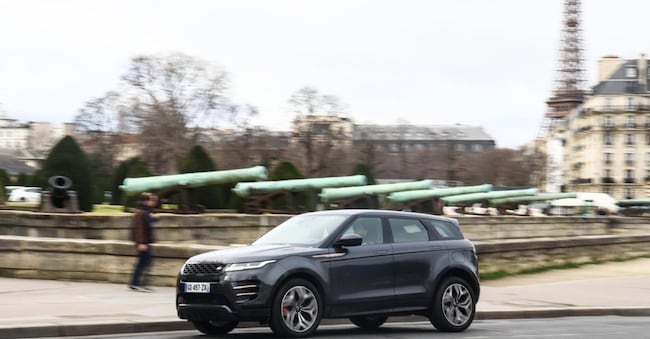
Parisians decided in a referendum to triple parking fees for SUVs in the city, marking a new step by the French capital against "autobesity". In Sunday's referendum, closely followed by other European capitals, 54.6% voted in favour of the new special parking fees for SUVs, according to provisional results. However, the turnout - around 5.7% of registered voters in Paris - was lower than green activists had hoped for. In last year's referendum, which banned electric scooters for hire from the city, more than 7% of Parisians had voted. Despite the low turnout, however, the result is binding, because in French municipal referendums there is no minimum quorum to be respected.
"Parisians have made a clear choice... other cities will follow," commented the socialist mayor of Paris, Anne Hidalgo, who called on citizens to introduce the new charges to defend road safety and fight against air pollution. Hidalgo has argued that she wants to curb the presence of SUVs by raising parking fees for 'a form of social justice': the aim is to deliberately target the most expensive, heaviest and most polluting cars in order to hit motorists who have not yet changed their habits in the face of the climate crisis and to protect the weaker segments of the population, who often live near the busiest roads. In Lyon and Grenoble, the authorities have also announced higher parking fees based on vehicle weight from next year.
In Paris, the new rates will come into effect at the beginning of September and will apply to all vehicles with combustion engines weighing more than 1.6 tonnes and 2 tonnes for electric vehicles. The cost of on-street parking for an SUV or 4x4 car will rise to EUR 18 for the first hour in the most central districts (almost half the municipal area) and EUR 12 in the rest of the city. A progressive tariff system, however, will lead to owners of a two-tonne car wishing to park for six consecutive hours in the central districts of Paris (1st to 11th) paying €225, compared to €75 at present. The deputy mayor of Paris in charge of transport, David Belliard of the Greens, pointed out that around 10 per cent of vehicles in Paris will be affected by the higher parking fees, which could earn the city up to EUR 35 million each year. The number of SUVs in the city has increased by 60 per cent in the last four years: now the municipality hopes that the fee increase will curb this trend and encourage the purchase of lighter vehicles. In Europe (and in Italy) more than 50 per cent of new registrations are now SUVs.
Belliard pointed out that SUVs are incongruous in an urban environment: 'There are no dirt tracks here, no mountain roads.... SUVs are absolutely useless in Paris. What's more, they are dangerous, bulky and use too many resources'. He added: 'Our goal is to send a very strong message to the car manufacturers: they should not produce these types of cars, they should be completely banned. The motorists' lobby 40 Millions d'Automobilistes, on the other hand, retorted that motorists should be free to choose whichever vehicle they want, blaming the increase in tariffs on 'an ultra-urban, anti-car minority'. Carlos Tavares, number one of Stellantis, commented scornfully that 'if France doesn't want SUVs, that's fine', adding that there are other spacious but smaller car models: 'I will sell them sedans and send SUVs to other markets'. But the tension between local administrators and car manufacturers does not stop there. 'What happens in Paris does not only apply to Paris,' warned Jens Müller, of the Clean Cities campaign at Transport & Environment, an environmental group specialising in sustainable mobility.
Under Anne Hidalgo, elected in 2014, Paris has increased the pressure on motorists by raising parking costs, gradually banning diesel vehicles and removing space for cars to expand the network of cycle lanes in the congested capital. There was a 71% increase in bicycle use between the end of the Covid blocks and the end of last year, the municipality announced. According to the bollards that count passages during the morning and evening rush hours, there are now more bicycles than cars on the main arteries through the French capital: almost twice as many. The figures comfort the policy of the mayor, who has pursued with conviction the idea of giving the streets back to the citizens of Paris, starting with the pedestrianisation of the dual carriageway on the right bank of the Seine, where a torrent of cars has been whizzing through the capital since the 1970s.

