
Parma Food Valley, turnover up 22% in 5 years. Success for the Dinner of the Thousand
Altogether, the six supply chains of Parmigiano Reggiano, Prosciutto di Parma, tomato, milk, pasta and canned fish reached 11.5 billion in 2024, 44% of which was abroad

4' min read
Key points
4' min read
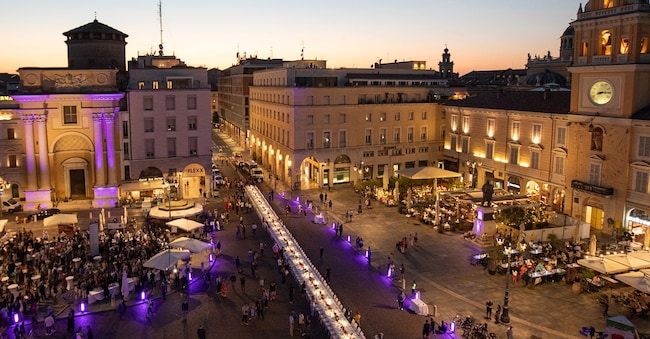
On Tuesday evening, a 400-metre long table will be set up in the historic centre of Parma to host the Dinner of the Thousand. One thousand like the diners ready to savour dishes signed by this year's guest of honour - chef Giancarlo Perbellini, newly Michelin-starred who conceived the antipasto - and colleagues from Alma (the International School of Italian Cuisine), Parma Quality Restaurants and Chef to Chef.
The 150 euro tickets that went on sale at the beginning of July sold out in an hour: a sign of the notoriety that this event organised by the Parma Unesco Creative City of Gastronomy Foundation has acquired in just a few years (this is the sixth edition).
Food Valley records
.The Foundation and the Parma Food Valley brand include some of the most important supply chains and companies that have been able to enhance the value of Made in Italy in the world. The final figures for 2024, anticipated in Il Sole 24 Ore, speak of a total turnover that reached 11.5 billion, compared to just over 11 in the previous year and 9.4 billion in 2019 (+22%). The two PDOs Parmigiano Reggiano and Prosciutto di Parma boast a turnover of 3.2 and 1.5 billion euros respectively; Barilla and Parmalat alone are worth 4.9 billion and one billion; followed by tomatoes (Mutti and Rodolfi Mansueto) with 849 million and anchovies (Delicius, Rizzoli, Zarotti) with 143 million. Exports amounted to 5.1 billion (44% of business), two more than pre-Covid.
To these figures must be added those of the rest of Parma's agro-food system, from the meat and cured meats chain (just think of the Culatello di Zibello PDO and Salame Felino PGI) to the milling industry, from wine to the technology and packaging companies related to food. It is a system made up of more than a thousand companies that employ 15 thousand people, equal to a quarter of the sector in Emilia Romagna, representing 36% of the provincial industry turnover," emphasises Cesare Azzali, director general of the Unione Parmense degli Industriali (Parma Union of Industrialists). "We are the first province for PDO and PGI and the propensity to export is 29%, 10% more than ten years ago and equal to 5% of the Italian total.
Companies resilient to crises and tariffs
Battleship numbers, but behind the growth in nominal values 'inflated' by inflation and in the face of rising costs in recent years, isn't there a risk of hiding some difficulties, also in view of tariffs? "On the domestic market, the loss of household purchasing power may cause consumption to turn towards lower quality and cheaper products," Azzali comments, "and on the international front we must hope that the effect of tariffs will be as mild as possible. On average, our products are aimed at US consumers in a fairly high income bracket, able to bear, at least in part, the price increases. We also hope for cooperation from distributors in absorbing a share of the increases. Positive results could come from the Mercosur agreement, but not in the immediate future. Overall, however, the sector is healthy and solid. We have to give credit to the companies for having managed in recent years, with considerable effort, to optimise costs and maintain margins at good levels. Then it is clear that it also depends on the individual sectors'.
For example Parma ham has seen a 200 million drop in turnover since 2019, due to declining domestic sales and the swine fever blockades. Dairy, on the other hand, can breathe a sigh of relief with tariffs at 15%, given the levels of taxation applied in the past.


