
Parthenope: the myth of the Siren at the Mann, telling the story of Naples
The exhibition “Parthenope. The Siren and the City” presents itself as a collective narrative on the identity of this city in Campania

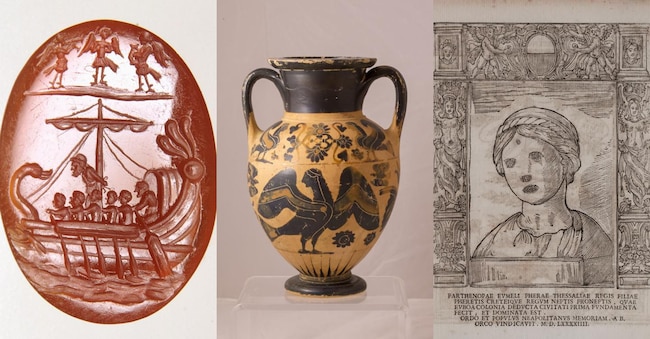
There is one figure who, more than any other, embodies the soul of Naples. She is neither a ruler nor a hero, but a mythical creature: Parthenope, the siren who, according to legend, washed up on the shores of the Gulf after failing in her attempt to seduce Odysseus with her song. From that body, washed up by the sea, a city was born, destined to make the myth its very identity.
“There dwell the Sirens, who enchant all men who draw near. Whoever, unaware, listens to their voices will never see his wife and children again...” (The Odyssey, Book XII)
The National Archaeological Museum of Naples is dedicating a major exhibition to this figure, entitled “Parthenope. The Siren and the City’, a project bringing together over 250 artefacts, dating from the 8th century BC to the present day, to trace the evolution of the siren’s image and her indissoluble link with Naples.
Curated by Francesco Sirano, Massimo Osanna, Raffaella Bosso and Laura Forte, the exhibition does not merely reconstruct the myth, but traces its constant transformations: from the bird-mermaid of Greek tradition to the woman with a fish’s tail in medieval and modern folklore, right through to contemporary reinterpretations in animated films, design and even toys.
Coins of Neapolis
The exhibition itinerary is also a journey through the city’s history. Among the most significant artefacts are the ancient coins of Neapolis, which bear the image of Parthenope, the civic symbol of the Greek colony. Alongside these are exquisite Attic and Magna Graecian vases decorated with scenes linked to the world of the Sirens, marble reliefs, votive statuettes, inscriptions and precious objects from major Italian museums.

