
Intesa Sanpaolo and Ferrari: the companies students dream of working for
Big tech firms are losing ground in Universum’s Italian rankings. Over 7,500 students from 50 universities were involved in compiling the rankings

Key points
Big tech firms are losing ground, overtaken by a major bank and a luxury car manufacturer. A beauty company has climbed the rankings by 34 places, whilst the National Health Service has once again become the sector where future healthcare professionals say they want to work. This year – perhaps partly due to announcements of job cuts at many tech companies resulting from efficiency gains achieved through artificial intelligence – the preferences of young talent, still at university, are somewhat upending the expectations of major brands in the Universum ranking, the international firm specialising in employer branding, labour market research and analysis, and talent attraction. For over 35 years, Universum has been investigating the expectations, preferences and behaviours of students, young talent and professionals, providing companies with insights and strategies to attract, engage and retain staff. These are the results for 2026.
The league table
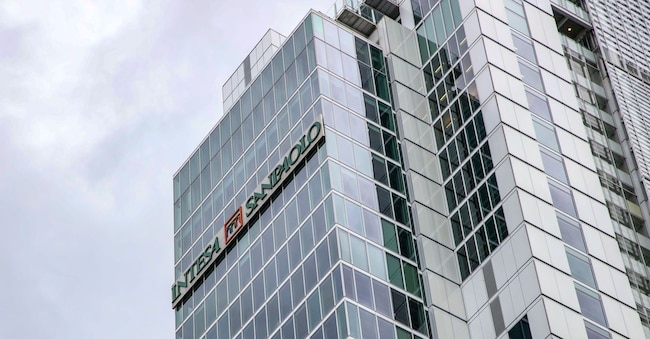
To compile Universum’s ‘Most Attractive Employers 2026’ ranking, over 7,500 university students from more than 50 Italian universities, divided into five main fields of study, rated the companies: Business, Engineering/IT/Natural Sciences, Humanities, Law and Health/Medicine. In the business category, Intesa Sanpaolo tops the 2026 ranking, followed by Ferrari and the European Central Bank. JPMorgan Chase and Apple round off the top five. The most surprising finding, explains Roger Manfredsson, managing director of Universum EMEA, is ‘the general decline of the major tech giants in this sector: Apple has slipped from 1st to 5th place, Microsoft has even dropped out of the top 20 – suffering the sharpest decline among the major tech firms – and Google, whilst remaining in the top 10, has also dropped two places. This is not an isolated case, but a trend affecting the entire tech sector in the eyes of economics students’. Among the new entrants to the top 10 are Goldman Sachs in eighth place and L’Oréal Groupe in ninth; the latter has jumped 34 places in the men’s ranking alone (from 87th to 53rd place), whilst retaining the top spot in the women’s ranking. These results, as explained by Manuela Pardini, HR Director at L’Oréal Italia, demonstrate that the group has managed to “overcome the perception of being a company aimed primarily at women”, by combining “science, data and artificial intelligence with human creativity to drive technological innovation in the beauty sector”.
Big Tech’s loss of ground
Looking at the responses from students in the fields of engineering, IT and natural sciences, the picture is similar: Google, Apple and Microsoft remain in the top five, but here too they have seen a decline in their share of the vote in percentage terms. There has been a change at the top: Ferrari has taken first place, whilst Google has dropped to second. Rounding off the podium is Leonardo, which has climbed two places compared with 2025. At Ferrari, explains Dennis de Munck, Head of Employer Branding and University Partnerships, ‘we have always believed that innovation comes from people. Our founder taught us that only through teamwork can the best solutions for our future emerge. Being chosen by young talent as a place where they wish to build their career makes us particularly proud. We will continue to invest in skills development, training and the creation of an environment that allows everyone to grow, learn and contribute their ideas to Ferrari’s success.”
The luxury car sector is becoming increasingly attractive
In the engineering, IT and natural sciences sector, the automotive industry takes centre stage, occupying no fewer than 5 out of 10 places in the top 10: as well as Ferrari, the list includes Automobili Lamborghini in sixth place, the Mercedes-Benz Group in seventh, Ducati in ninth and the BMW Group in tenth, all of which have either grown or remained stable compared with 2025. The sector also has a strong presence and is growing in the lower reaches of the ranking, with Dallara climbing four places, the Volkswagen Group five and Stellantis nine – the sector’s biggest rise. Despite the Asian advance, the Italian and international automotive sector remains a major magnet for STEM talent, consistent with the preference for the sector recorded in 2026. In the other academic fields surveyed, Feltrinelli remains at the top in the humanities, Intesa Sanpaolo in law, and the National Health Service in the health sector.
The appeal of finance
The finance sector is attracting young talent across all disciplines. In the historical trend for 2021–2026 regarding the average ranking of sectors, banking has risen from mid-table to become the most attractive sector of all amongst business students. In terms of direct preferences, it has risen from 53 per cent to 58 per cent in just one year (+4.80 percentage points), the largest increase of any sector. Banking is also gaining ground amongst STEM students.

