
Caporalato, Patrizia Pepe and Dixie placed under court-appointed administration

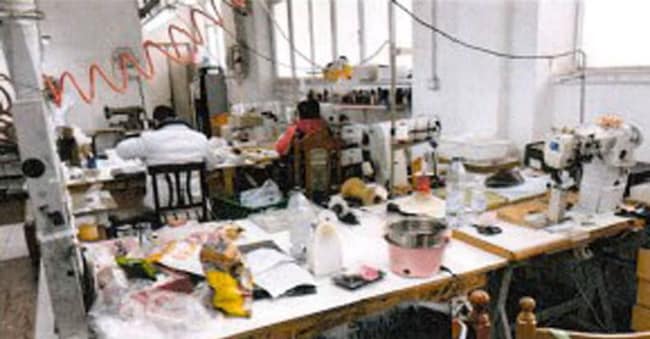
Whilst at the Sustainable Fashion Forum in Venice, the Milan public prosecutor, Paolo Storari, explained how and why he had sought court-appointed administration for several major brands – from Armani to Dior, from Valentino to Loro Piana – accused of having facilitated (through a failure to monitor) or carried out (through contracts and subcontracts) labour exploitation in the Chinese workshops producing for them; the public prosecutor for Prato, Luca Tescaroli, has requested and obtained from the Florence Prevention Court judicial administration for two further fashion brands, this time in the premium sector: Patrizia Pepe, based in Campi Bisenzio (Florence), and Dixie, based in Signa (Florence).
The reason is always the same: they had outsourced production to garment workshops run by two Albanian businessmen, who exploited Albanian and Bangladeshi workers (some of whom were undocumented) by forcing them to work gruelling shifts for extremely low wages. Illegal labour brokering and labour exploitation – and therefore the ‘caporalato’ system – are the offences with which the Albanian owners are charged, whilst Patrizia Pepe and Dixie are not under investigation.
Failure to monitor profit margins
‘It is a production system based on the logic of profit maximisation, which has enabled substantial profit margins by cutting labour costs, reducing expenditure and maintaining a high level of competitiveness,’ states the Public Prosecutor’s Office. Patrizia Pepe and Dixie are alleged to have negligently facilitated labour exploitation through inaction and a failure to exercise due diligence. In practice, the client brands are alleged never to have verified the actual business capacity of the subcontractors entrusted with the orders, which operated through front companies.
The Public Prosecutor’s Office has highlighted the signs of exploitation it uncovered: inadequate pay, gruelling working hours, denial of holiday and rest periods, the application of inadequate collective agreements, and falsified payslips. These conditions were ‘exacerbated by a climate of constant harassment, insults, violence and constant physical control over the workers’. As had previously been the case in Milan, irregularities were also found in the company’s audits.
According to the Prato Public Prosecutor’s Office (which has imposed judicial administration for the second time – the first instance having been in relation to Piazza Italia) this illegal scheme secured the exploitative organisation revenues of around 500,000 euros and enabled Patrizia Pepe and Dixie to produce goods at lower costs and reduce manufacturing times. ‘These advantages enabled them to corrupt the entire supply chain and establish themselves in the market,’ writes the Public Prosecutor’s Office. Eighteen workers who were victims of exploitation have decided to cooperate with the prosecutors: an application has been made for them to be granted residence permits on grounds of justice (pursuant to Article 18-ter of Legislative Decree No. 286/1998).

