
Pay them all and better: tax trial at the reform milestone
Fiscal issue. On stage in Trento, deputy minister Leo and experts from Il Sole. Attended by Vincenzo Carbone, director of the Revenue Agency
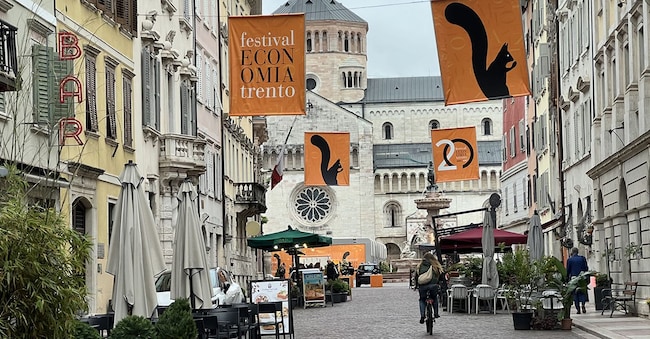
Tax reform, social economy, the relationship between tax and artificial intelligence are among the most debated topics of current economic and tax news. Topics that, as is now customary, cannot miss the stage of the Trento Festival of Economics, organised by Il Sole 24 Ore and the Autonomous Province of Trento and scheduled from 20 to 24 May. The objectives that the government had set itself with the tax reform, presented to the Chamber of Deputies in March 2024 by Prime Minister Giorgia Meloni, Economy and Finance Minister Giancarlo Giorgetti and Deputy Minister Maurizio Leo, were ambitious: to simplify the current tax system, reduce the tax burden on citizens and businesses, and stimulate investment and hiring. The deadline for the implementation of the tax reform, originally set for 29 August 2025, was extended to 29 August 2026 by Law 120/2025, while the deadline for the preparation of supplementary and corrective legislative decrees was extended to 29 August 2028. The deadline for the drafting of single tax texts was also extended from 31 December 2025 to 31 December 2026.
The reform coupon
Taking stock of the timetable and measures envisaged by the reform will be two Festival meetings, scheduled for 21 and 23 May respectively. The first is 'La pagella alla riforma fiscale' (The tax reform report card), during which Cristina Bartelli will debate with Cristiano Caumont Caimi, partner at Tremonti Romagnoli Piccardi and associates; Guglielmo Maisto of the Università Cattolica del Sacro Cuore; and Maria Cristina Pierro, rector of the Università dell'Insubria. 'Pay better, pay all? Tagliando alla riforma fiscale' is instead the title of the event on 23 May, moderated by the deputy editor of Il Sole 24 Ore, Jean Marie Del Bo, an appointment in which the president of the National Council of Chartered Accountants and Accounting Experts, Elbano de Nuccio, the president of Confcooperative, Maurizio Gardini, and the deputy minister of Economy and Finance, Maurizio Leo, will take part.
The value of non-profit
According to the data of the 2021-2022 Subsidiarity Report by the Subsidiarity Foundation, the non-profit system in Italia is worth 84 billion euros, equal to 4.4 per cent of the national gross domestic product. At the end of 2023, according to ISTAT, just under 370,000 non-profit institutions were active in the Peninsula, employing a total of almost 950,000 people. Numbers that make the social economy a valuable sector for economic development and social cohesion, to be carefully monitored. This is also why the social economy will be the fil rouge of three other events of the Trento Festival, scheduled between 23 and 24 May. Opening the triptych will be "The role of finance and the social economy in economic growth", a discussion between Laura Biancalani, general director of the Bocelli Foundation; Giorgio Micheli, director of Nomisma; Nicola Riccardi of the Pontifical Academy of Social Sciences; Paolo Venturi, director of the Aiccon research centre and lawyer Gabriele Sepio moderated by Maria Carla De Cesari. Jean Marie Del Bo and Franco Gallo from the Luiss Guido Carli University will also talk about social economy in a discussion entitled 'Taxes, solidarity and subsidiarity'. Closing this series of events will be a discussion entitled "Social economy between profit and non-profit" between the members of a large panel: Fabiola Di Loreto, general director of Confcooperative; Renzo Pegoraro, president of the Pontifical Academy for Life; Luciano Rova, president of Itas Mutua; Gianluca Salvatori, secretary general of Euricse and lawyer Gabriele Sepio moderated by Maria Carla De Cesari.

