
PD reformists hold a closed-door meeting; open primaries with a two-round system. “No compromise on Ukraine”
The Democrats gathered at the Casa del Popolo in Coiano, on the outskirts of Prato, to put forward “ideas and proposals” but also to set some boundaries

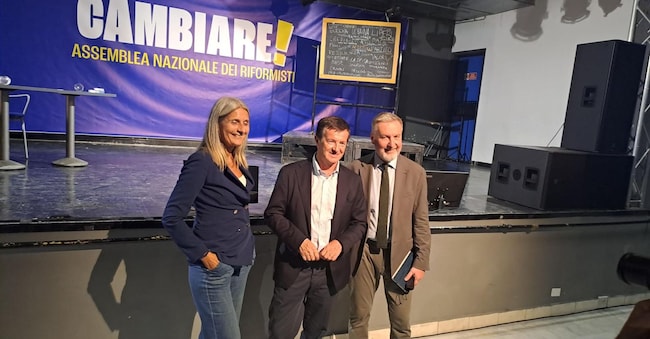
The ‘red lines’ that must not be crossed are not confined to the centre-right debate – they are being brandished every day against Prime Minister Giorgia Meloni by Roberto Vannacci – but also within the debate animating the PD first and foremost, and the broader political spectrum secondarily. And it is the reformist Democrats who are reminding Secretary Elly Schlein and the party majority of this; they have gathered today at the Casa del Popolo in Coiano, on the outskirts of Prato, to put forward ‘ideas and proposals’, but also to set certain boundaries.
First and foremost, the fact that “the PD must be true to itself”, “must not lose its identity”, “must not water down its values”, and must not give in “to extremism”. In short, it must not shift to the left in pursuit of Giuseppe Conte who, as Lia Quartapelle observes, “cannot impose all the M5S’s policies on us; even he knows they are just slogans”.
Messages to campo largo, but above all messages to those who form the majority within the Democratic Party and also to other factions which, as Senator Simona Malpezzi observes, must not ask for ‘positions’ but rather put forward proposals to the party, in order to ‘broaden its base’ and win over as many voters as possible, starting with the ‘moderates’. In short, from Prato, all eyes are on Montepulciano where, from 23 to 25 October, the Democratic Party’s ‘main faction’ will convene. And eyes are on Rome to make it clear that the reformist faction is seeking neither positions nor “recognition” – and, as Lorenzo Guerini pointedly remarked whilst closing the meeting, “we do not accept lessons in unity from those who have left” because “we have stayed; this is our home” and “we want to help the PD win against the black wave of the right”. It is all too clear who Guerini is targeting.
Ukraine and anti-Semitism
The first ‘red line’ issue is, of course, Ukraine, but it is not the only one. There is no shortage of adjectives describing how ‘unwavering’ support for Ukraine must continue, including military aid: for everyone, from Giorgio Gori to Lia Quartapelle, from Lorenzo Guerini to Graziano Delrio, this is an ‘indispensable’ principle, ‘non-negotiable’ and ‘not up for discussion in the programme’, ‘fundamental’ to achieving ‘peace rather than surrender to Putin’s demands’. On this point, they say, the only possible sticking point when sitting down with the other coalition parties is convincing them that abandoning Ukraine now would not bring peace closer but push it further away. Then there is, very imminently – it is due to be debated in the Chamber of Deputies next week – the issue of the anti-Semitism bill which, beyond the specific legislation itself, reveals the various factions within the PD and the concern among the ‘reformists’ not to endorse another ‘drift’ towards the positions of the left-wing flank of the broad coalition. It is no coincidence that Lele Fiano is taking to the stage in Prato, arguing that confirmation of the PD’s ‘no’ to the bill would represent an ‘insurmountable’ red line, perhaps making his own continued membership of the party untenable. Giorgio Gori urges the PD not to cross that line.
In a sort of counterpoint to Secretary Schlein’s ‘stubbornly unitary’ stance, Gori insists that ‘unity is fine, but not at the cost of abandoning the PD’s values’, “unity is fine” but “a race to see who is further to the left would leave room for a right wing that deserves nothing”; unity is fine, but the PD must “not water down its distinct identity”.

