Interview

'Peace requires courage and Netanyahu did not have it'

Zeruya Shalev, Israeli writer, hopes that the protests will create the conditions for a change of government and hope for a better future
by Roberto Bongiorni

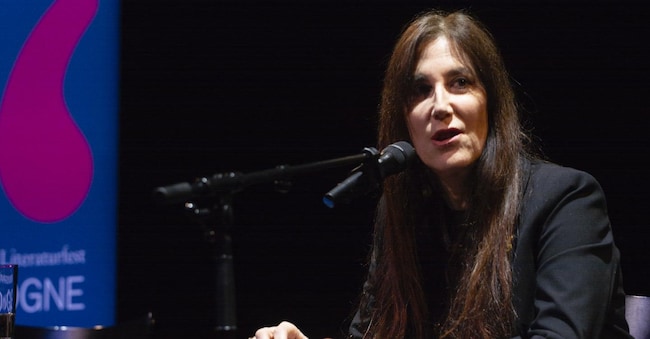
Zeruya Shalev. (AFP)

3' min read

3' min read

"Traumas, however painful, can be overcome. But to speak of peace takes courage. Netanyahu has shown he has none." Zeruya Shalev knows pain well, the physical pain and the pain of the soul. Her novels penetrate deep inside the characters, explore the innermost parts of their being. They give a voice to their suffering. She, who in 2004 was involved in a kamikaze attack in Jerusalem, sustaining serious injuries, sees no other solution than dialogue between the two peoples, a road that must be travelled together. On the question of the hostages she has no doubts: only a peace agreement will bring them home.

7 October was for Israelis a collective trauma that violently brought to light the spectre of a tragic past. Do you believe that there are conditions to get out of this condition that paralyses society? And how?

Loading...

I believe that Israelis are a very strong and courageous people. The activism that made it possible to create a state only three years after the Holocaust is still alive. The protests give us the power and hope to change this government and create the conditions for a better future. However, I believe that the problem is not only the trauma generated by 7 October. It is everything that happened afterwards. Benjamin Netanyahu has created so much trauma. The way he neglected the hostages, the way he put his political survival ahead of the interests of the country, the way he carried out military operations.

Two million Palestinians in Gaza have also experienced and are still experiencing great trauma. How do we get out of it?

It is really very sad. I felt so saddened by the ongoing tragedy in the Gaza Strip, for all the civilians killed and injured. Hamas is responsible for the war. The Palestinians of Gaza have been the victims of its fundamentalism as we have been. Hamas used them as human shields, dug tunnels under their homes. Maybe the solution to overcome the trauma is to stick together, to try to live together. I know it is very early now. It will take time. But it will take effort, focusing on the moderates.

Every Palestinian who wants to live in peace next to Israel must have the right to do so. We have many interests in common. The best way to overcome trauma is to achieve something positive that triggers change.

In the hands of Hamas there are over 70 hostages still alive. Isn't the military operation in Lebanon diverting attention?

Without a doubt, the military operation in Lebanon is overshadowing the hostage issue, which should always remain central. I try to put myself in the shoes of the families of the hostages, who have been in the hands of Hamas for a year. I identify with them and feel a sense of pain, of betrayal. Making peace takes courage. Netanyahu has shown he has none. He has neglected the hostages. The social pact that has bound citizens to the government since the founding of the State of Israel has broken down. Just imagine: with what spirit do our soldiers go to fight in Lebanon, with what apprehension do their relatives live if any of them should be kidnapped?

Is there any alternative to a ceasefire agreement to bring the hostages home?

No. Only a ceasefire agreement can bring everyone home. Even if we have to release so many dangerous Palestinian prisoners. Another unavoidable condition is the withdrawal of troops from the Gaza Strip. But the extremist government ministers, Bezalel Smotrich and Itamar Ben Gvir blackmail the premier and threaten him. They boycott every attempt. We are facing an enemy, it is true. But I am sure there were several opportunities to seal the deal. Netanyahu was not ready to pay the price. He wanted to stay in place.

Hamas has struck at the heart of the Kibbutzin community. Now there are many who no longer believe in the peace process.

I can understand that. I think it is wrong to judge these people. They were the left-wing kibbutzin, those who dreamt of the peace process, those who sought dialogue with the Palestinians, who implemented it. Such a massacre, the kidnappings, is a gigantic trauma that breaks trust. It calls this process into question.

I believe a de-radicalisation process in Gaza is important. I may be naive, but I still believe in changing human beings.

Working with the Palestinian National Authority, with its president, Abu Mazen, we will have to do our utmost to create a coalition of moderates. Throughout the Middle East while a war is going on on several fronts, the possibility of a coalition of moderate Arab states remains alive. This could influence the entire Middle East region.

Copyright reserved ©
Loading...

Brand connect

Loading...

Newsletter

Notizie e approfondimenti sugli avvenimenti politici, economici e finanziari.

Iscriviti