
Pecorino Romano, race against time against Trump's tariffs
The consortium: this puts at risk the market share of the American industry that uses it as a flavour enhancer
2' min read
2' min read
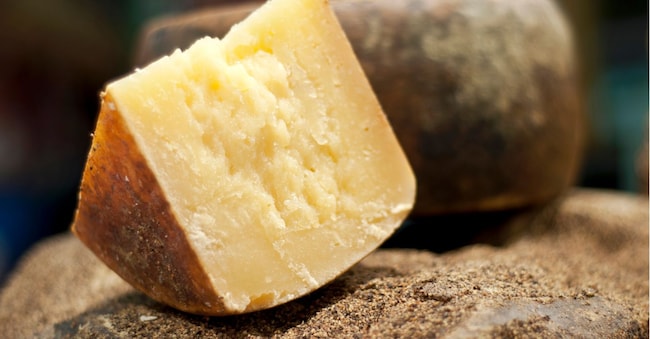
The Minister of Agriculture, Francesco Lollobrigida, has officially promised all his help. The President of the Protection Consortium, Gianni Maoddi, is lobbying the main American operators. That of Pecorino Romano against Trump's tariffs is now a fight against time. The objective is to obtain an exemption - or at least a limitation - of the 15% tariff that the US president imposed last August. The stakes are very high: of the almost 40 thousand tonnes of Pecorino Romano produced each year, 40% is consumed in the USA and only 30% in Italy. Therefore, the United States is not only its first export market, it is the first market in absolute terms.
'The presence of Pecorino Romano in the US dates back 140 years,' says the president of the consortium, 'and it was immigrants from southern Italy who brought it overseas. It is a product particularly linked to southern cuisine and could be transported and stored without too much difficulty. Over the decades, it ended up contaminating American cuisine itself: the recipe for 'macaroni & meatballs', for example, includes Pecorino Romano as an essential ingredient'. The second, and more important, phase of this cheese's expansion came, however, thanks to the industry: 'Pecorino Romano is a great flavour enhancer,' recalls Maoddi, 'and has a high stability. Perfect for sauces, chips, pizzas, snacks.
Although its direct consumption has been growing in recent years, in the United States its industrial destination is still worth half of the entire American turnover of Pecorino Romano. And it is precisely this slice that is the most worrying: 'Before the tariffs, the price to importers was $13 per kilo, while the price to end consumers was $35,' explains Maoddi. 'With the 15% tariffs, the price to importers will increase by about two dollars. But if going from $35 to $37 per kilo for the end consumer makes little difference, going from $13 to $15 for an industry that buys in bulk is quite a change of perspective: 'There is a cheese,' Maoddi continues, 'that is produced in the USA and they call it 'Romano'. It is not made with sheep's milk because there are practically none in the United States: it is made with cow's milk, to which enzymes are added to make its flavour resemble that of our Pecorino Romano. Do you know how much they sell it for to the industry? At $3.5 per pound, while ours costs $8 per pound'.
As if that were not enough, the uncertainties in the US market are already being reflected in other markets: 'Betting on a drop in sales in the US,' says Maoddi, 'many in Europe are already asking us for a price cut. Just this week the consortium is on a mission to Australia, where it aims to increase sales with a view to diversification. But the US market for Pecorino Romano remains irreplaceable: 'After the United States,' recalls Maoddi, 'the second most important foreign market for us today is Canada, but what we sell to the Canadians in a year, we sell in the USA in a fortnight.


