Special Campiello/ The finalists

People without history, who made history

In 'Troncamacchioni', a term from the slang of the woodcutters and charcoal burners of the Maremma, Alberto Prunetti recounts how a world war led to a dictatorship

by Sunday Edition

4' min read

4' min read

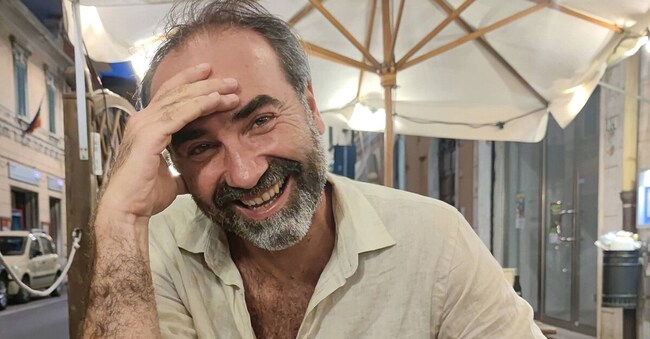
"Novella nera con fatti di sangue" is the subtitle of the novel Troncamacchioni (Feltrinelli, pp., 162, euro16) with which Alberto Prunetti, translator and editor, is in the finals of the Campiello prize.

 Could you describe it? .

Loading...

It is entitled 'Troncamacchioni', a term from the slang of the Maremma woodcutters and charcoal burners that indicates a sui generis way of proceeding in the woods (and in life): head held high, taking adversity head-on and moving straight ahead, with the certainty of the rightness of one's actions. It is a hybrid work, a kind of historical investigation of acold case, a murder that occurred a century ago. I define it as a rags-to-riches epic, because I try to tell in an epic key, and therefore with adventurous and lofty tones, stories of lowly and minute people, set in a wooded and mining patch of land in Maremma, between the end of the First World War and 1922. I therefore try to put together a high-sounding and tragic language with a low but nonetheless dramatic story. Political violence, murders and settling of scores in the provincial Tuscany of the years in which Fascism asserted itself with the violent strategy of squadrism. But also popular poetry and straightforward wine, recounting the lives of ordinary people. People without history, who made history. In the end, it is a choice in line with Goldoni's Campiello, which in the warning to the reader declares that he wrote his comedy 'in the most refined terms of the lowly rank and with the most ordinary phrases of the plebeians' and that his story is precisely 'about the customs of cotal gente', that is, 'the lowly people'. And similarly, I too have written 'in the manner of the low people', as the back cover of Troncamacchioni states.

Why did you feel the need to tell this story?

I recount in my pages how a world war led to a dictatorship. If we look at the world today, the theme is still relevant. And I feel the need to honour the memory of so many nameless deserters who preferred to avoid spilling their blood, their own and that of others, for their homeland, at a time when the rhetoric of blood and soil infected Europe with Nazi-fascism. The writer Karl Kraus rightly argued that with blood and soil, key elements of Hitler's rhetoric, you only get tetanus. The protagonists of my pages are anonymous peasants, labourers, coal miners, but at the moment of choice they are not mobilised by the warmongering slogans of those years. They are on the side of the last, which is their side, until the end, and they will pay bitterly for those choices.

How did you decide to tell the story, through what narrative and stylistic choices?

I worked a lot in the archival research phase. In a certain way, the writing proceeded while deepening the research among the folders of the archives. The work of the historian and the work of the narrator sometimes walked in parallel, at other times I had to choose which of the two ways of framing a story best suited my intentions. In the end, the narrator's choice prevailed. So I tried to tension the story through different planes of conflict, because a story works well if there is a conflict to tell. Here there was ideological, class and linguistic conflict. As a storyteller, I use language to tell the other two planes of conflict. And I tension high and low, comedy and tragedy, humour and drama, to hold together a story without strong characters. Mine is deliberately a choral story of minute people. There are no great leaders, big charismatic males or romantic figures with whom the reader must identify. There are the little people, the little ants who make the tiny story. Moreover, in contrast to my earlier production and the bulk of what goes to press today, there are no emotions with which to win over and convince the reader: mine is a mining story, of people who do not allow themselves the luxury of telling their intimacies. There are facts, raw and naked, sweat and blood, but no emotions. It is a very precise stylistic choice. Finally, the perspective of the writer: I was tired of narrating in the first person, even though autobiography (but mine was perhaps more of an auto-socio-biography) is perhaps the most relevant narrative choice in recent years. Instead, I now move away from the first person. Nor do I choose the position of the omniscient narrator of the naturalist novel of the past or the bourgeois historical novel. I therefore entrust the narration to two vicarious narrators, belonging to two opposing political camps, a carabiniere and a socialist. But they are two unreliable narrators and they complicate things instead of telling them as they should be told. That's why I occasionally have to have them beaten up by some secondary character. And it is precisely the secondary characters with whom I identify most, as an author.

Are you already working on a next book? If so, can you anticipate something?

Actually, when I received the news that I was in the Campiello shortlist, I was working on a new translation from Spanish. By now, after a decade of working in publishing, which is a low-income, low-prestige sector, I am working in publishing, which is a low-income, high-prestige sector. So I was translating an Argentinian novel but I slowed down a lot in translation because of the commitments of the Campiello presentation tour. And in the last few months I have put my writing aside. Of course I have some material in the drawer. An old draft of a travel report from India, then two separate ideas to develop for a novel project. Then an old novel that I would like to rewrite because I consider it as unhappy as I gave it to print so many years ago. And above all, a series of short stories on the theme of work to be organised, which I have been putting aside for decades. Unfortunately, short fiction is little appreciated in Italy but I adore it. In short, the drawer is full of dust and ideas. You have to find the time to get to grips with it: remove the dust and scratch the ideas with a file, so that they sparkle.

Copyright reserved ©
Loading...

Brand connect

Loading...

Newsletter

Notizie e approfondimenti sugli avvenimenti politici, economici e finanziari.

Iscriviti