
Why Minnesota (and Minneapolis) is the centre of the clash with Trump
What fuels the crisis between federal and state authorities, between immigrant communities now living in fear and a democratic majority state

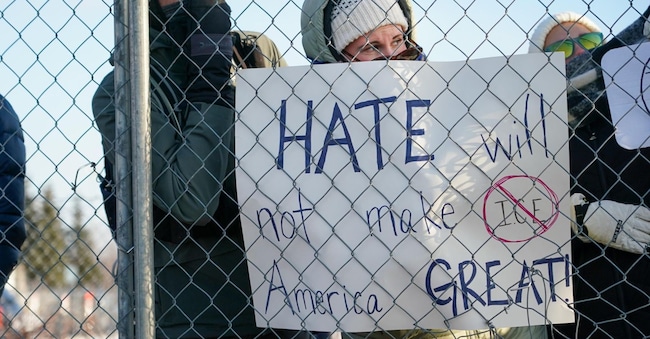
Minneapolis has not become the centre of the immigration clash by accident. In recent weeks, the crisis between federal authorities and local leadership has been fuelled by a rare mix of ingredients: a huge investigation into pandemic-related reimbursement fraud; a chain of killings during federal operations, including those of Renee Nicole Good and Alex Pretti; a Democratic political leadership (at city and state level) challenging Washington's approach; and, in the background, one of the largest Somali communities in the United States, turned into a symbolic target. The result is a high-voltage laboratory: an operation that starts as an enforcement and becomes a political showdown, with a potential domino effect on other American cities. In the state that lives below zero for many months of the year, the decisive battle is being fought for the future of American sanctuary cities, i.e. those local jurisdictions (usually a city, sometimes a county or an entire state) that limit or actively refuse to cooperate with the federal government in operations related to irregular immigration.
Trump's strategy against immigration
During his campaign for the presidency and with his return to the White House, Donald Trump has made immigration one of the central pillars of his political agenda. An issue that in the past was not among the main concerns of voters, before the November 2024 vote had instead shot to the top. Among candidate Trump's promises were highly restrictive measures on borders and internal immigration: for example, the announcement to conduct what he described as 'the largest deportation operation in American history', the closing of 'unauthorised' borders, the arrest and deportation of those who cross the borders illegally, and the use of legal instruments such as the expedited removal to remove many irregular migrants without judicial hearings. To support these policies, he then issued an executive order to deny federal funds to sanctuary cities and to increase penalties for those who do not register as illegal immigrants.
President's thesis: Somali community co-responsible for fraud during Covid
But the administration's official motivation for the deployment of more than 2,000 federal agents in 'Operation Metro Surge' is the fight against fraud. The occasion was provided by the 'Feeding Our Future' scandal, which had already flared up in previous years but whose investigation peaked in late 2025 and early 2026. It is the largest pandemic reimbursement fraud in US history: a hole of hundreds of millions of dollars siphoned off from federal food programmes for needy children during the most acute phase of Covid-19 infections. According to the indictment, a network of fictitious non-profit organisations billed millions for meals that were never served. Because many of the suspects (78 indicted at the end of 2025) belong to the Somali community or are linked to local figures, the administration used this scandal to justify massive federal intervention, claiming that public officials in Minneapolis and the state were complicit or incapable of handling the corruption. It is no longer just a police matter; it has become a national security issue in the eyes of Washington, allowing ICE and the FBI to bypass local jurisdictions with an unprecedented mandate.
The clash with Minneapolis Mayor Jacob Frey
Minnesota represents the ideal political antagonist. The institutional clash is total because the local leadership are Democrats who put civil rights before security or immigration regulations. In recent weeks, the Justice Department has taken the unprecedented step of sending subpoenas to Governor Tim Walz (former vice presidential candidate with Kamala Harris) and Minneapolis Mayor Jacob Frey, accusing them of 'obstruction of federal law enforcement' for their refusal to let local police cooperate with deportation teams. Walz called the federal agents sent by Trump a 'violent and untrained occupation force' and demanded their immediate withdrawal after the shootings.
A commune under indictment living in terror
The emotional and demographic heart of the crisis is Minnesota's vast Somali community (over 80,000 people), the largest in the US. Presidential rhetoric has been incendiary, calling elements of the community 'trash' and accusing them of 'looting the system'. But what does the data say about security? On data and perception there is a heated and polarised debate. Some analyses, such as those cited by the City Journal in January 2026, claim that, normalising the data by age and gender, incarceration rates among Somali immigrants are two to four times higher than among whites. Community leaders and civil rights organisations denounce that these statistics are distorted by systemic over-policing.

