Pernigotti relies on ice cream and private labels to recover profitability
A few months after the merger with Walcor, CEO Francesco Pastore takes stock: 'The new business plan outlines a growth path to reach 100 million in revenues in the three-year period'

It was a long and difficult crisis, left behind. Today, the Group created by the merger of Walcor and Pernigotti bears the name of the historic Piedmontese chocolate producer, one of the historic Italian brands linked to the world of chocolate, and aims to recover margins and profitability thanks to new businesses such as ice cream and the volumes guaranteed by the private label channel.
Last July saw the merger by incorporation of Pernigotti and Walcor, the culmination of the consolidation of the two companies into the corporate structure that includes J.P. Morgan Asset Management and Invitalia. A reality that today counts on a turnover of about 70 million Euros, over 340 employees, including seasonal workers, and two production centres, in Novi Ligure, in the Alessandria area, and in Pozzaglio ed Uniti, in the province of Cremona. 'The new industrial plan,' explains CEO Francesco Pastore, 'outlines a growth path to reach 100 million in revenues in the three-year period. What we lack most at the moment is the profitability of our asset, the new Pernigotti has this as its priority, to recover margins after years of difficulties due to the restart and also to the dynamics of raw material price increases'.
The focus for the next three years is a 5 million investment plan, twice as much as in the past. "To this must be added the acquisition of the building where Pernigotti is based," adds the CEO. The investment plan looks at plant safety, production capacity enhancement and automation in the Group's plants. The context of the sector is difficult, with a series of heavy variables such as the increase in raw material prices, which is slowly letting up, so much so that the CEO cites the case of the cuts announced by Nestle. 'We will be helped in the future on the chocolate front, which has returned to the prices of a year ago, while we will be penalised by hazelnut prices, which had a bad harvest and skyrocketing quotations,' Pastore adds.
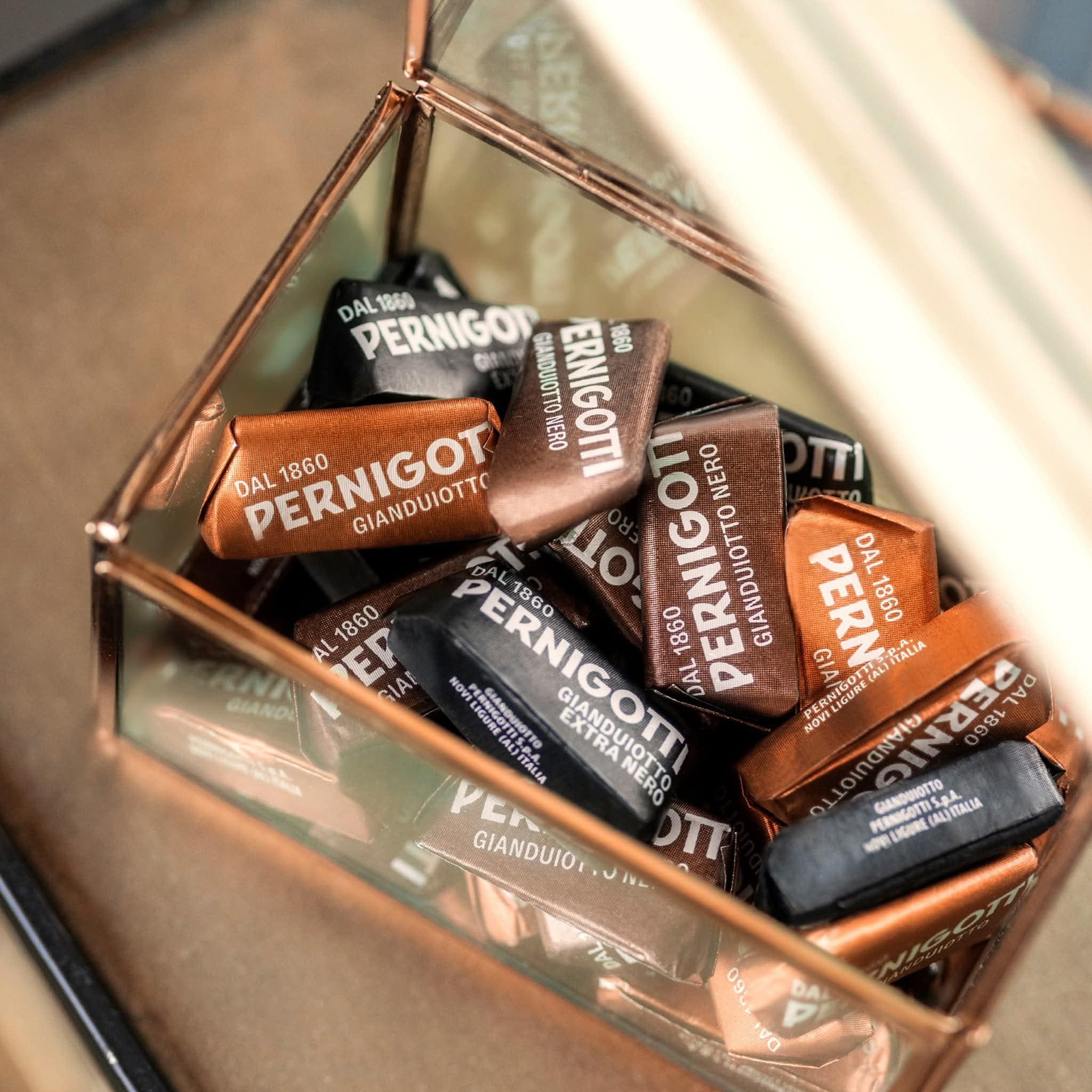
A few months ago, Pernigotti put ice cream production back on track, after the sale of the business unit in the initial phase of the industrial path that had seen Pernigotti's owners, the Turks of the Toksöz Group, sell the asset on the market. The industrial plan is to reach a production of 1,000 tonnes in three years. "Today, Pernigotti's business can be read through three lenses," explains the CEO, who has led the Group since last July, "the first is that which refers to the brand, with production concentrated in the Piedmontese factory, alongside processing destined for the private label, the second looks at the dynamics of sales actually divided between the domestic and foreign markets, the third lens refers instead to the two types of production, chocolate and ice cream.
After the three-year 'non-competition' period, Pernigotti has now restarted in the Ice sector with the Signor Stefano brand, which made its debut at the Sigep in January. 'We have worked on the fundamentals,' explains the CEO, 'getting the formulations right, restarting the production plants and the sales network. We are back on track and the appointment with the Sigep next January will allow us to present a series of novelties'. And it is precisely on the ice cream channel that Pernigotti's new management is betting to recover marginality on a business stressed by the upward dynamic of chocolate prices. "For a company like ours, which is very seasonal, developing ice cream production also allows us to optimise production infrastructures and reduce production downturns, because we would be operating in a market that has the opposite seasonality to chocolate," adds Francesco Pastore.