
Collapse of pesticide sales in Italy: the countryside is increasingly organic
In ten years, old principles have fallen by 18% compared to the 133% leap in active ingredients of organic origin

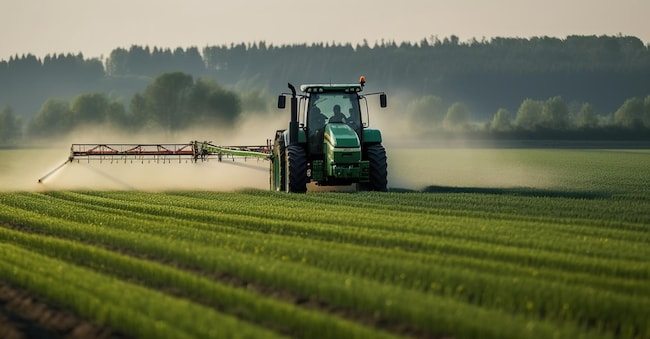
In Italy, sales of plant protection products fell by 18% between 2021-2023 and 2012-2014. The figure comes from the latest semi-annual report that the Agrofarma Observatory presented on Tuesday 11 November in Bari. In first place, experts explain, is the decline in fungicides, followed by that of herbicides. The observed reductions are greater when looking at the volumes of active ingredients contained in the products, which are down 24%. At the same time, the use of active ingredients of organic origin saw a significant increase of +133%.
Italy therefore records a decidedly significant reduction compared to the EU average and, in terms of food safety, maintains its leadership: the data show that we are among the countries with the lowest presence of pesticide residues in food, with just 1% of foodstuffs with phytosanitary product residues above the permitted limits. "There is a change underway," said the president of Agrofarma-Federchimica, Paolo Tassani, "which comes not only from providing new solutions, but also from the correct application of good crop protection practices. Farmers are aware of this, so much so that for years they have been acting in the field to ensure ever greater sustainability'.
Innovation in the field of pesticides has also progressed: according to the observatory's data, more than half of the active substances currently authorised in the EU have been introduced in the last ten years. In Italy alone, 85% of the pesticides on the market today were approved after 2010. In addition, in the period from January 2024 to October 2025, 38 new pesticides have been authorised in our country for use in organic farming, 17 more than in the same period 2023-2024.
As far as emissions are concerned, ozone precursors, acidifiers and greenhouse gases have also been reduced over the past ten years. Ammonia emissions from agriculture, on the other hand, increased between 2022 and 2023 but, despite this, the reduction trend that began in the early 1990s is being maintained and, in any case, the emission containment target agreed by Italy with the EU for 2030 has already been reached by 2021.


