New York

Peter Glidewell: the shadow man of Almagia's antiquities dealings in New York

From Sotheby's London to consultant to the Ministry of Culture on museum policy. For investigators he is part of his cousin's international criminal network

by Marilena Pirrelli

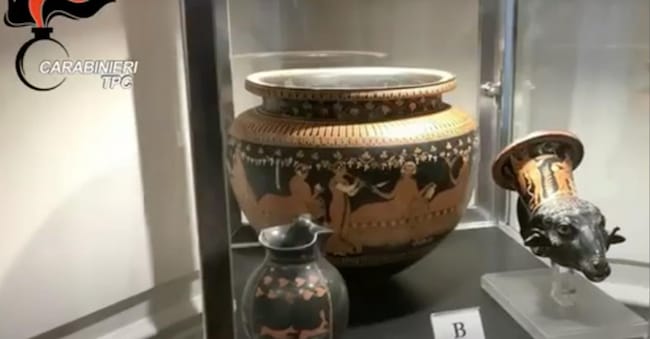
Museo dell’arte Salvata. Il Rhyton e il Dinos, venduti per 50mila dollari alla collezionista Shelby White sequestrati nel 2021 e restituiti all’Italia

5' min read

5' min read

Peter Cesare Glidewell, to many this name will mean little or nothing, but to insiders and in the rooms of the Ministry of Culture the name circulates, and how. It appears several times in the arrest warrant against the Italian-American antiquities dealer, Edoardo Almagià, issued on Thursday 31 October by Manhattan Criminal Court Judge Rachel Pauley at the request of Matthew Bogdanos, head of the Antiquities Trafficking Unit (Atu) at the Manhattan District Attorney's Office.

Described in the arrest warant as the 'business partner' of Almagià, his cousin, Glidewell is a man close to the former undersecretary Vittorio Sgarbi, current president of the Mart in Rovereto, now under investigation for money laundering and counterfeiting cultural goods (for the Rutilio Manetti painting). According to the arrest warrant, Glidewell brokered the sale of two pieces - a Rhyton and a Dinos (pictured on display in the Museo dell'arte Salvata), sold for $50,000 to the collectorShelby White seized in 2021 and returned to Italy - and donated a piece trafficked by Almagia to the Princeton Museum that was also stolen from Italy. Glidewell also shared with Almagià, according to the 80-page arrest warrant, the profits from the sale of the illicitly sourced goods, listed in the so-called Yellow Book, one of the two notebooks that make up the Almagià Archive with the list of all the ancient works of art, there must be more than a hundred, sold in partnership by 'AE' (Almagià Edoardo) and 'PG' (Peter Glidewell).

Loading...

Peter Cesare Glidewell

Glidewell, born in 1957, was born in Rome and after studying at Sotheby's Institute of Art he consulted for Sotheby's London. Between 2001 and 2002, he worked as an advisor to the Italian Minister of Culture on museum policy, having been appointed by the former Deputy Secretary of the Minister of Culture, Vittorio Sgarbi. Described as one of Vittorio Sgarbi's most trusted advisors, Glidewell moves poised, like his mentor, in grey territory.

The archives where everything is documented

.

In April 2006, special agents of the US Department of Homeland Security, with the intelligence assistance of officers of the Italian Carabinieri, obtained legal authorisation to enter and photograph the contents of Almagià's New York flat on East 78th Street, as well as his rented storage space at the Manhattan mini-storage facility on 62nd Street in New York. There, officers documented dozens of antiquities and stacks of records detailing the trafficking operations of the clandestinely excavated works. In the operation, law enforcement officers found the sales transactions noted by Almagià in the 'Green Book' and 'Yellow Book' from 1986 to 2001.

In the 'Green Book', Almagià listed in detail a total of almost 2000 archaeological artefacts of Italian provenance that he had sold from his New York flat. In doing so, he often grouped the artefacts according to the tombmaster from whom he had purchased the material (identifying the supplier tombmaster by his nickname or initials). Some entries listed in these registers indicated both the price Almagià had paid to his source (often Mauro Morani) and the price at which he had subsequently sold the archaeological artefact. Sometimes, some entries even listed to whom the stolen artefact had been sold.
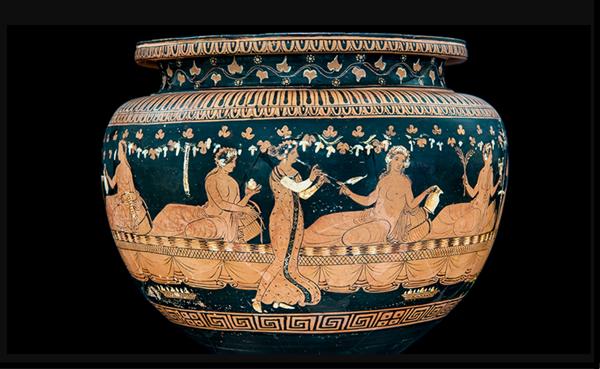
Al Museo dell’arte Salvata Dinos, cratere a figure rosse con scena di banchetto trafugato dal territorio pugliese venduto alla collezionista Shelby White nel 2021, sequestrato e restituito all’Italia

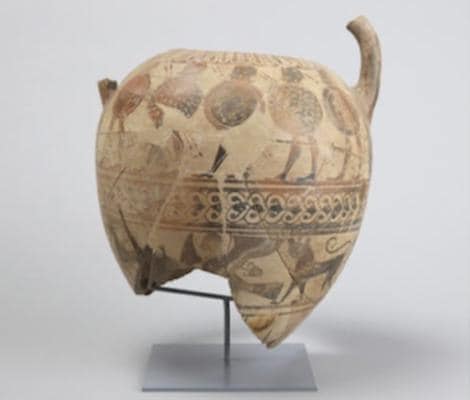
According to the reconstruction of the American investigators, Glidewell co-owned many antiquities with Almagià, using his cousin's flat in New York for the delivery of the antiquities. But Glidewell's main role in the trafficking network - according to the investigators - was to solicit buyers for their stolen antiquities. For instance, in 2021, as mentioned above, the Atu seized from Shelby White a Rhyton and a Dinos that he had purchased from Glidewell, both of which were present in photographs in the Almagià Archive. In 2023, the Atu seized from the Princeton Museum a stolen amphora (pictured) that was "a gift from Glidewell via Almagia", as stated on the museum's website. Almagià and Glidewell often claimed - according to the investigators - to have received their antiquities from non-existent galleries, such as Tempelberg and the Lebanese Ancient Art gallery. Also attached to the warrant were fake sales documents, in Glidewell's name, which accompanied shipments of objects from Italy. The two cousins also relied on scholars and curators, such asArthur Dale Trendall, Robert Guy and Michael Padgett, to attribute the stolen antiquities to ancient painters and potters, thus creating impressive pedigrees for antiquities without provenance. A truly comprehensive architecture to make antique cultural goods of illicit provenance marketable.

Princeton Museum, Gift of Peter Glidewell through Edoardo Almagia, Class of 1973”

The scheme

.

In 2019, for five years, the Atu launched an international investigation into Almagià and others who had been involved in a decade-long conspiracy whose main objective was to acquire stolen antiquities from Italy, market them as legal, display them openly in well-known institutions to increase their value, and then sell these antiquities for profit. The investigation intends to show that Almagià developed a highly profitable criminal enterprise, trafficking stolen antiquities from Italy, using grave robbers such as Mauro Morani to supply these looted antiquities to the dealer in New York County who then sold them, often in cooperation with Peter Glidewell, to museums and collectors through Robin Beningson's Antiquarium Ancient Arts, Richard Brockway's Ancient Art International and Howard Rose's Primitive Art, and with the complicit assistance of then Princeton University Art Museum (Princeton Museum) curator Michael Padgett. Almagià also sold stolen antiquities directly to complicit collectors who then donated those laundered antiquities to museums and universities for massive tax deductions.

The assignments

.

But who is Glidewell in the art world? In 2001, Sgarbi included Glidewell as curator of the Italian Pavilion at the 54th Venice Biennale in the exhibition 'Art is not Cosa Nostra'. His name stands out among the intellectuals in the Arsenale. As per his cv from 2001 to 2005 Glidewell is a member of the Scientific Committee of the Museum of Music in Bologna, on the recommendation of the Presidency of the Council of Ministers, Advisor to the Minister for Cultural Heritage and Activities (MiBAC), consultant of MiBAC for museum policy, as well as Member of the Commission for the evaluation of purchases of modern and contemporary art of MiBAC. From 2002 to 2005 he was appointed and represented MiBAC at the Interministerial Committee for the promotion of the Italian agricultural and food sector. From 2003 to 2005 he was cultural advisor to the Buonitalia company, set up by the Ministry of Agriculture for the promotion of Italian agri-foodstuffs.

In 2006, his name appears in the papers and records of the proceedings against his cousin, Edoardo Almagià. Glidewell's role in the trafficking of archaeological artefacts of Italian origin is highlighted in the technical office report. Despite this, Glidewell retains his role as Consultant of the Department for Development Cooperation of the Ministry of Foreign Affairs and Member of the MiBAC commission for exhibition coordination (2005-06). Moreover, between 2008 and 2009, Sgarbi, elected mayor of Salmei, wanted him as councillor for culture . In 2010, still councillor for culture in Salemi, he worked with Sgarbi on the town's Mafia Museum. In the same year, he was on the jury of the Italian Factory Prize for young Italian painting. Until 2011, he was a member of the board of the Italian Institute for Africa and the East (IsIAO). Since 2015 he has been operating with an ancient art gallery in Madrid and London. He was a lecturer in the Master on Cultural Heritage at the Libera Università di Lingue e Comunicazione - Iulm and continued to collaborate with Vittorio Sgarbi on exhibitions and conferences.

La circolazione delle opere d’arte: modelli europei

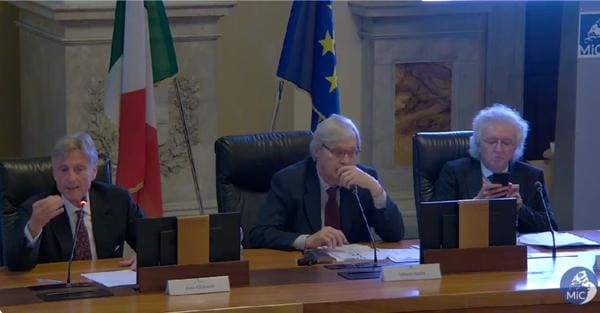
His last public appearance was on 20 April 2023 at the conference on the "Circulation of works of art: European models" held in the Sala Spadolini of the Ministry of Culture where Glidewell spoke as an art expert stating that he had "many parts in comedy" (7:34:05-7:45:42).

Copyright reserved ©
Loading...

Brand connect

Loading...

Newsletter

Notizie e approfondimenti sugli avvenimenti politici, economici e finanziari.

Iscriviti