
Fuel: petrol station owners are calling for a national, dynamic price cap for 90 days
The organisations are now awaiting a meeting with Minister Adolfo Urso. “We are in constant contact with the Mimit,” explained Sperduto, recalling the three years of joint work on the sector-specific bill, “which we hope will be approved as soon as possible.”

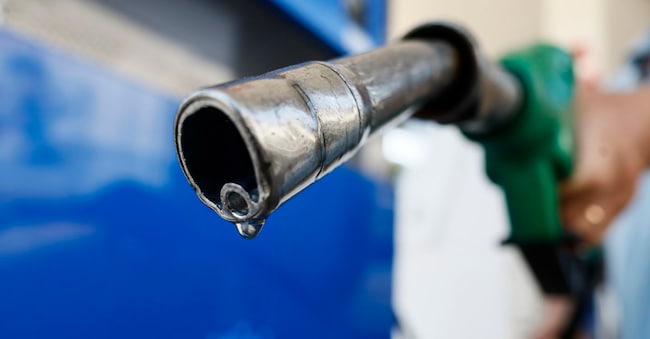
A price cap on petrol and diesel, applied uniformly across the entire network and calculated using a publicly available formula, to be introduced by decree-law. This is the proposal that Faib Confesercenti and Fegica presented at Confesercenti’s Forum 2026. The starting point is the price rises. Between 27 February and 24 September, self-service prices rose by around 49 cents per litre for petrol and 62 cents for diesel, despite the cut in excise duties. In August, the energy component stood at +17 per cent and inflation at 3.3 per cent, rising to over 4 per cent in September according to the two organisations.
Two-tier scheme
The scheme comprises two stages. The Price Monitoring Authority determines whether an exceptional situation exists, and the Minister imposes the price cap by means of a reasoned decision. The measure would remain in force for 90 days, with a single extension of a further 90 days, and would be reviewed approximately every 15 days, with prices adjusted either upwards or downwards. The maximum price is based on the manufacturer’s price as at 27 February, to which are added changes in cost components and a safety margin for stock levels. ‘Nobody wants to introduce an administratively set price,’ clarified Fegica’s president, Roberto Di Vincenzo. The mechanism, he explained, has been designed ‘on the basis of national and European administrative acts’, and the two organisations are insisting ‘on the identification of the method’.
The refining margin
The crux of the matter is the refining margin, which is approximately 21 cents higher than the 2025 average for petrol and 39 cents higher for diesel. The proportion of this margin to be recognised is a political decision, determined by the alpha parameter. With alpha set at 0.25, the cap would be 2.04 euros per litre for petrol and 2.02 for diesel; with alpha set at 0.5, it would rise to 2.10 and 2.14 euros. The organisations point out that the calculation does not prove speculation but indicates a range for consideration, with a margin of uncertainty of 1–2 cents. The cap remains a maximum and prices may be sold below it. In the event of supply risks, suspension is provided for as a last resort.
Meeting at Mimit
For the trade associations, therefore, the price cap would be a public measure applicable to all. “We all regard energy as a basic necessity, which cannot be safeguarded unless certain, clear, transparent and uniform public rules are applied to everyone,” said Giuseppe Sperduto, president of Faib Confesercenti.
The organisations are now awaiting a meeting with Minister Adolfo Urso. “We are in constant contact with the Mimit,” explained Sperduto, recalling the three years of joint work on the sector-specific bill, “which we hope will be approved as soon as possible”. Fegica’s national secretary, Alessandro Zavalloni, announced that, as of this evening, the documentation will be formally sent to Palazzo Chigi and to all political parties.

