
PhD programmes in Italy: the European gap that holds back talent
According to Eurodoc, Italian PhD scholarships are among the lowest in Western Europe. This disparity penalises young talent, reduces the appeal of postgraduate education and calls for new public policies

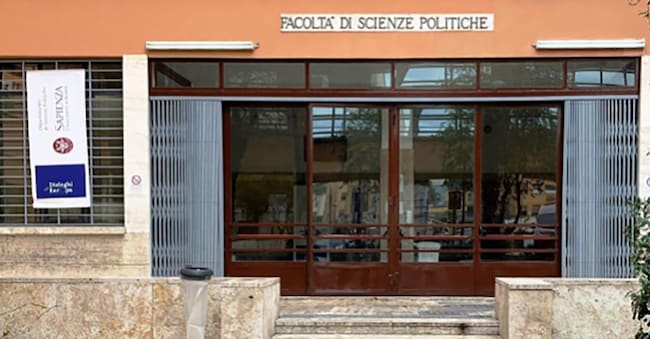
How worthwhile is it to invest in the training of those undertaking a PhD? In Italia, €16,243 gross per year, compared with €58,014 in Denmark, €55,556 in Germany, €26,400 in France and €24,360 in Spain. This is according to the 2026 survey by Eurodoc, the European organisation representing PhD students and researchers in the early stages of their academic careers. The survey, which covers the 2024–2025 academic year and was conducted in 27 countries, ranks Italia among the least generous systems in Western Europe.
Comparison and precautions
This comparison requires some caution: the figures are gross, do not take into account differences in the cost of living, and reflect different legal systems. In some European countries, PhD students receive a scholarship; in others, they are employed on a contract of employment, benefiting from different forms of financial and social security protection. Beyond these differences, a PhD represents the highest level of university education, essential for developing advanced skills and generating new knowledge for the benefit of universities, businesses and the public sector. It is a course of study that requires a full-time commitment, but in Italia it is supported by a grant that is often insufficient to guarantee genuine financial independence, particularly in large university cities. The problem, therefore, is not merely how much a PhD student receives, but who can afford to undertake this course of study. When rent and daily living costs eat up a large part of the grant, there is a risk that access to the most advanced education will depend on financial support from one’s family rather than on merit. The remuneration of PhD students thus also becomes a matter of fairness and social mobility.
To turn things round, we need a strategy that addresses five key areas
The first is financial: to increase grants on a structural basis, index them to inflation and set multi-year targets for European convergence. It is also necessary to strengthen pension and social security protections, recognising the specific nature of the PhD as an educational pathway that contributes to the production of knowledge.
The second concerns the right to housing. It is not enough to increase grants if a growing proportion is absorbed by rent. University halls of residence must be expanded, with places set aside for PhD students, including through agreements between universities, regional authorities, organisations promoting the right to education and local authorities. Every university should establish a University Housing Helpdesk, dedicated to providing information, guidance and legal assistance on tenancy agreements. Because the opportunity to study must not depend on one’s financial ability to live in the city where one is studying.
The third priority concerns the quality and duration of training. It is advisable to consider extending the doctoral programme from three to four years, with full funding for the additional year, in order to strengthen academic maturity, publications, research autonomy and preparation for competitive selection processes for research contracts and tenure-track researcher (RTT) positions. The abolition of the former RTDA role, which represented an intermediate stage of academic development, makes it particularly important to establish an effective transition between the completion of a PhD and access to subsequent academic posts.
The fourth lever is the circulation of talent. The international mobility of PhD students must be an opportunity for growth, supported by financial incentives, agreements between European Union countries, co-supervision programmes and joint PhD programmes. The aim is to encourage not only experiences abroad, but also the return of Italian doctoral students and the attraction of foreign doctoral students, by promoting reciprocal exchanges and lasting scientific networks.
Finally, we must enhance the value of the PhD outside academia by encouraging high-quality collaborations with businesses and the public sector, and by recognising doctoral skills within professional career paths.
Building an open, inclusive and competitive knowledge system
The challenge goes far beyond simply increasing the number of scholarships: it means building an open, inclusive and competitive knowledge system, capable of training, attracting and nurturing talent, transforming it into a driving force for innovation and development. Because a country’s future depends not only on the talent it manages to nurture, but on the opportunities it is able to offer them. Investing in PhD programmes today means choosing the place Italia wishes to occupy in a Europe of knowledge.
*Dean of the Faculty of Political Science, Sociology and Communication at Sapienza – University of Rome

Brand connect


Newsletter Scuola+
La newsletter premium dedicata al mondo della scuola con approfondimenti normativi, analisi e guide operative
Abbonati