
Photography, Gianni Berengo Gardin dead: one of the greats of the 20th century
He was born in Santa Margherita Ligure (Genoa) on 10 October 1930, but considered Venice his true hometown
5' min read
5' min read
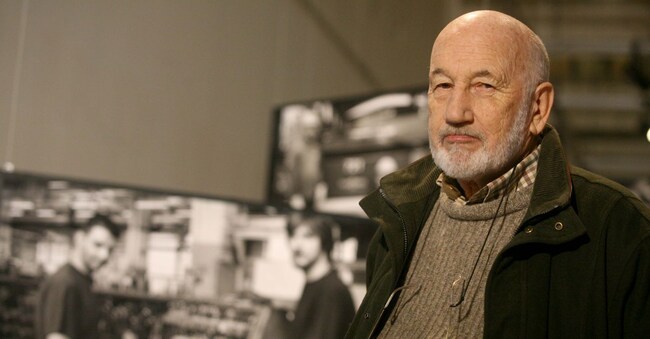
Gianni Berengo Gardin, one of the greatest Italian photographers of the 20th century, whose gaze spanned seven decades of history, fixing the visual memory of the country in black and white, has died at the age of 94 in Genoa. He was born in Santa Margherita Ligure (Genoa) on 10 October 1930, but considered Venice his true hometown: there he had studied and taken his first steps with the camera, which he would never leave. With more than two million negatives, more than 260 books published, over 360 solo exhibitions worldwide and a career consecrated by international awards, Berengo Gardin was much more than a photographer: he was an ethical witness, a poet of reality, a discreet but tireless observer of Italy's changing times. Berengo Gardin liked to call himself 'a craftsman', not an artist. He detested the idea of photography as an aestheticising art form, always preferring civil commitment to the search for a personal style: 'My work is not artistic, but social and civil. I don't want to interpret, I want to narrate'.
His gaze has always focused on man: in his daily gestures, at work, in moments of intimacy and in places of discomfort. From post-war peasant Italy to the spurts of modernisation, from the life of the gypsies to the industrial universe, from the urban suburbs to asylums, a field, the latter, in which he signed the most powerful reportage of his career. In 1969, together with Carla Cerati and under the guidance of Franco Basaglia, he produced 'Morire di classe' (Einaudi), a book that revealed for the first time the inhuman conditions in Italian asylums. It is a mute cry, made up of sharp and cruel images, which shakes the country and contributes to the cultural battle that will lead, in 1978, to the Basaglia Law. 'We only photographed with the consent of the patients,' he recounted, 'but we did not want to show the illness, rather the condition. This was the hallmark of his work: not shock, but awareness. After having lived in Venice, Rome, Lugano, Paris and finally Milan, where he settled in 1965, Berengo Gardin began a long career as a professional reportage photographer, which led him to collaborate with the most important Italian and international publications, including "Domus", "L'Espresso", "Time", "Stern" and "Le Figaro", but above all to devote himself to the form he loved most: the photographic book.
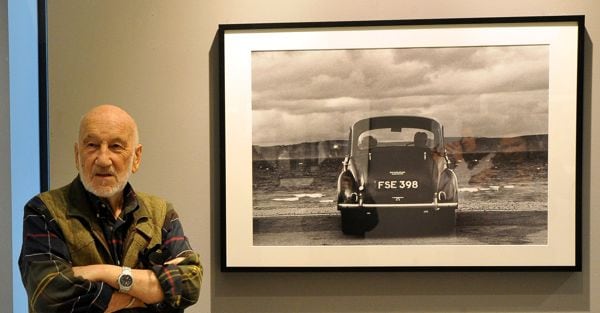
After an initial job as an editor for aviation magazines, he discovered photography by reading the volumes of the American Farm Security Administration and the books of Eugene Smith and Dorothea Lange. In his early twenties, he joined the famous photography club 'La Gondola' and was invited by Italo Zannier to join the Gruppo Friulano per una Nuova Fotografia. He later founded the photographic group 'Il Ponte' with his friends. His amateur photography achieved great success and many of his shots were published in the catalogues of important exhibitions and in specialised magazines all over the world. His official debut came in 1954 on the pages of the weekly magazine 'Il Mondo', edited by Mario Pannunzio, with whom he worked until 1965. From there he began a path that led him to work with prestigious organisations such as the Touring Club Italiano (1966-1983), the Istituto Geografico De Agostini, and companies that symbolised Italian industry, from Olivetti to Fiat, Alfa Romeo to IBM.
Berengo Gardin's photography is also a great urban and landscape story; he documents work, architecture. Fundamental works are 'Zingari a Palermo', 'India dei villaggi', the photographs of Renzo Piano's construction sites (from 1979 to 2012) and the commitment against the large ships in the Venice lagoon, a project exhibited in collaboration with the FAI in Milan and Venice in 2014 and 2015. His Venice remains a constant: he photographs it throughout his life, with a gaze that is always participatory and always critical. His first book, 'Venise des Saisons' (1965), was a tribute to his Venice: a non-touristic, intimate, everyday city of workers, children playing, craftsmen, fog and silences. Berengo Gardin was the most awarded and internationally recognised Italian photographer. In 1972 Modern Photography included him among the '32 World's Top Photographers', in 1982 art historian Ernst Gombrich cited him as the only photographer in his 'The Image and the Eye. Altri studi sulla psicologia della rappresentazione pittorica' (Einaudi). In 2008, he received the Lucie Award for Lifetime Achievement in New York, already awarded to giants such as Henri Cartier-Bresson, Gordon Parks and Elliott Erwitt; in 2009, the State University of Milan awarded him the Laurea Honoris Causa in History of Art Criticism; in 2014 he was awarded the Kapuściński Prize for reportage, while in 2017 he was inducted into the Leica Hall of Fame.
In 1975 Bill Brandt selected him for the exhibition 'Twentieth Century Landscape Photographs' at the Victoria and Albert Museum in London. In 2003 he was among the 80 photographers selected for the exhibition 'Les choix d'Henri Cartier-Bresson'. Among his more than 360 solo exhibitions in Italy and abroad, Berengo Gardin participated in Photokina in Cologne, the Montreal Expo in 1967 and the Milan Expo in 2015, the Venice Biennale and the famous exhibition "The Italian Metamorphosis, 1943-1968" at the Guggenheim Museum in New York in 1994. Recent solo exhibitions include in 2016 'True Photography. Reportage, images, encounters" at the PalaExpo in Rome, which traced his long career through major reportages and over 250 photographs, and in 2022 the extensive retrospective "L'occhio come mestiere" at the Maxxi in Rome.

