Growth Leader 2026

Photovoltaics comes of age: now the quality of the systems counts

It is no longer the amount of kilowatts installed that makes the difference, but how it is designed, operated and maintained. It is the season of competence

by Claudia La Via

3' min read

Translated by AI
Versione italiana

3' min read

Translated by AI
Versione italiana

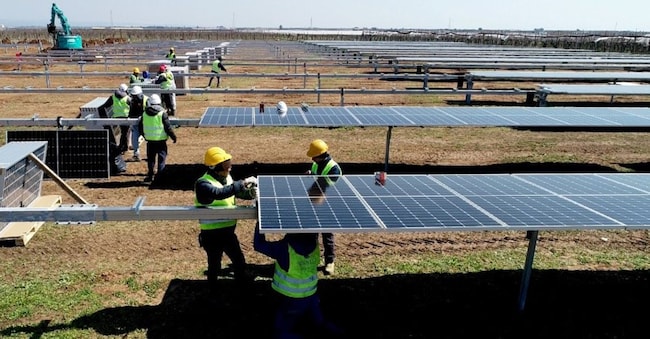
It is no longer a race to see who can add the most kilowatts. After the age of enthusiasm and incentives, Italian photovoltaics is entering a phase of maturity: today it is not how much is installed that makes the difference, but how it is designed, managed and maintained. It is the season of skills, quality and integrated supply chain - the same logic that is transforming plant engineering as a whole.

According to Terna, as of 30 September 2025, more than two million photovoltaic plants were connected in Italy, with a cumulative capacity of 41.1 gigawatts. The growth compared to the end of 2024 was 9% in number of plants and 11% in power. This is a solid figure, but one that marks a slowdown compared to the previous two years: in the first six months of 2025, new installations decreased by 15.9% compared to the same period in 2024.

Loading...

The industry, however, is not stopping: it is just changing direction. The new season for photovoltaics is measured in the quality of the systems, their integration with the grid and their ability to operate for years with stable and predictable returns.

It is a transition from an economy of quantity to an economy of skills. We need designers who can assess exposure and shading, technicians who are experts in inverters and storage, and maintenance engineers who know the logic of long-term performance. Photovoltaics is no longer an improvised profession: it is an industry with rules, responsibilities and margins that shift from installation to management.

It is on this front that the real competition of the future will be played out. The companies that grow are no longer those that install the most, but those that follow the entire life cycle of the system: authorisation, design, construction, maintenance and operation. Maintenance, once considered an ancillary cost, is now a strategic factor: remote monitoring, predictive diagnostics, scheduled cleaning, replacement of components before failure. This is where the value shifts.

One example is the Sicilian company Tresun, 23rd in the Sole 24 Ore-Statista's Leader Growth 2026 ranking and third in the Energy and Utilities section. Founded by Massimo Alfredo Lauria - now managing director - together with two other partners, the company, which was established in Belpasso, in the province of Catania, has grown in just a few years from a simplified company with a capital of 1,000 euro to a group with over 240 employees and a turnover of 18.6 million euro. "Photovoltaics is undergoing a transformation: it matters less how much power you install and more how you work," explains Lauria. "For us, it means valuing in-house expertise, built through continuous technical training and a strong sense of team membership." Although working on large-scale installations and with a structure of over two hundred employees, Tresun still claims an artisan culture of work. For Lauria, it is precisely that approach that makes the difference: manual precision, direct process control, and attention to detail that guarantees high performance and durable plants.

The strategic choice was to focus on operation and maintenance (O&M), the activity in which Tresun is now one of the Italian leaders. "We focused on O&M when almost nobody was doing it: not out of fashion, but out of market necessity. Over time it has become our strong point'. Managing plants means, explains Lauria, 'creating value, because the customer really notices the quality of your work when a plant stops and you manage to get it up and running again quickly'.

Today, the company covers the entire solar plant cycle, from engineering and construction to component regeneration. "We have chosen to specialise in activities that few do, such as inverter regeneration or the production of resin transformers with our subsidiary Pianotrafo: a concrete way of creating a circular economy in photovoltaics. In the in-house electronics laboratory, in fact, even materials that can no longer be used do not end up in landfills: they are sorted, recovered and put back on the market through the company's online platform. For Lauria, the direction is clear: "The ecological transition is not just about building new plants, but making existing ones last and efficient. This is the logic shared by the most solid companies in the sector: invest in technical quality, training and sustainability, building value over time.

Copyright reserved ©
Loading...

Brand connect

Loading...

Newsletter

Notizie e approfondimenti sugli avvenimenti politici, economici e finanziari.

Iscriviti