Physical AI, artificial intelligence takes shape in the factory
At Sps Italia 2026, collaborative robotics, drones, vision systems and AI agents tell the story of the transition from algorithms analysing data to technologies capable of observing, deciding and intervening in production processes
Artificial Intelligence in the factory is no longer just software that analyses data, generates reports or suggests decisions from a dashboard. The trajectory emerging from Sps Italia 2026, the exhibition of automation and digital for industry until 28 May at Fiere di Parma, is more concrete: AI is beginning to see, measure, inspect, dialogue with machines and guide robotic systems in the physical world of production.
It is the transition from the connected factory to the factory capable of learning and reacting. A transformation that takes shape around an increasingly recurring keyword in the show's programme: physical AI, artificial intelligence applied to robots, cobots, drones, vision systems, sensors and automation platforms. The point is no longer just to collect data from production lines, but to transform them into actions: to detect an anomaly, correct a parameter, alert an operator, guide an inspection, reduce a waste, make a critical environment safer.
The fourteenth edition of Sps Italia presents itself as an observatory on the technologies that are reshaping manufacturing and the key themes of the programme confirm this: AI agents, robotics and physical AI, Software-defined manufacturing, Industrial IoT and Esg. The interesting fact, however, is not the presence of AI per se, which has now become a recurring formula in every manufacturing sector. What is new is its shift from the plane of analysis to that of action. In the cases presented in the Focus AI area, industrial artificial intelligence enters video cameras, robots, drones, automation platforms, quality control systems and maintenance tools. It is no longer just a software layer that interprets what is happening in the factory: it becomes part of the physical process.
A first strand concerns AI that observes and interprets production. Among the concrete examples presented at the fair, for example, 40Factory brought three related but distinct developments to Parma. The first is the evolution of Mat, the Industrial IoT platform that collects, connects and makes machine data actionable. The second is Wilson.ai, in its double conversational and agentic dimension: on the one hand assistants capable of responding by drawing on the company's technical knowledge, such as manuals, diagrams, procedures and documents; on the other hand AI agents that monitor machine data, identify anomalies, suggest interventions and can act on defined processes. The third is Sentra, a new AI video intelligence solution designed to analyse industrial camera video streams in real time, detect process anomalies, identify objects and take measurements.
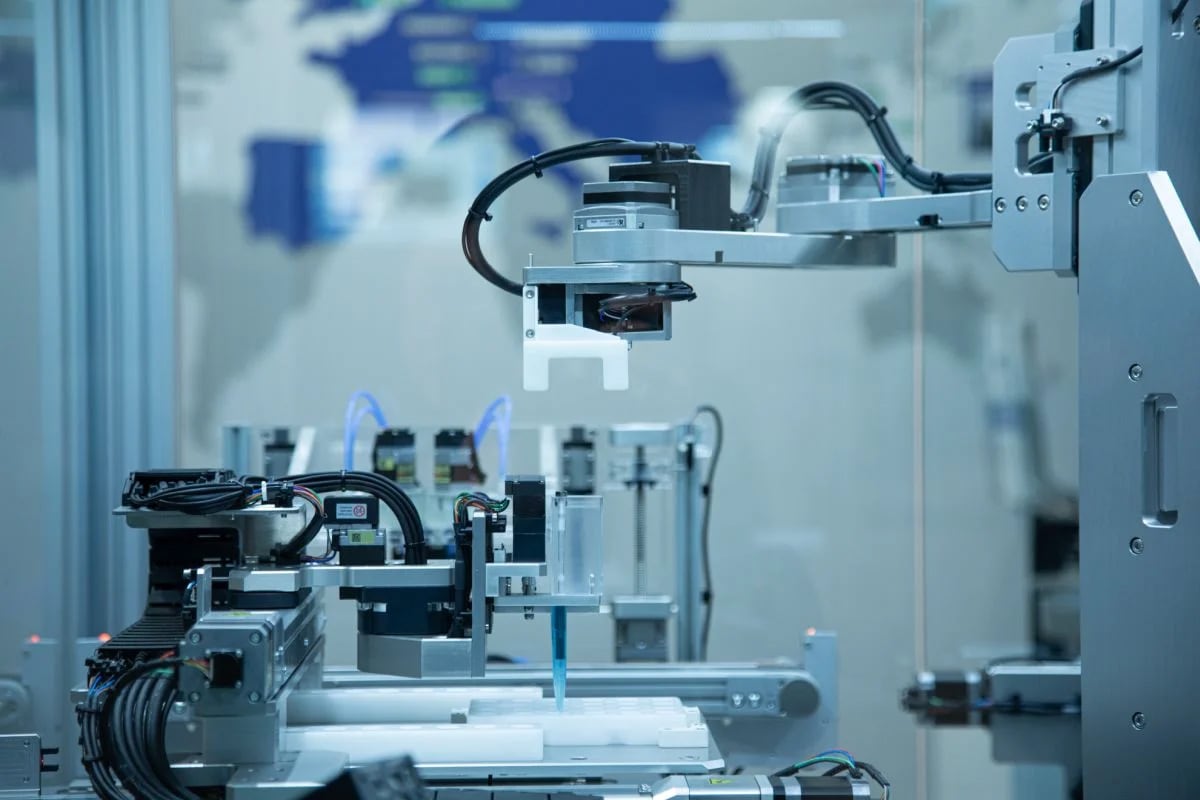
The camera, in this perspective, is no longer just a surveillance tool, but an intelligent sensor within the workflow. It is the same leap as in quality control. IDEA, an engineering company specialising in industrial automation, robotics and vision systems and describing itself as a 'technology tailor', presented a robotic cell for quality and metrological inspection for the manufacturing sector. The solution integrates three independent vision systems: an autofocus liquid optic for screen printing analysis, a system for 360-degree perimeter inspection and a telecentric station for centesimal measurements. The aim is to bring objectivity and speed to processes where aesthetics, precision and technical functionality must be controlled together.