
Piantedosi admits: there was a communication deficit with the Colle on the Strait Bridge
The Minister of the Interior throws water on the fire after the clash between Salvini and the Quirinale over special anti-mafia regulations and assures: on terrorism, the Italian prevention system is among the most advanced, by 2027 another 22,000 hires in the police forces

3' min read
Key points
3' min read
"The regulations on the Strait Bridge? There has been controversy over misunderstandings. There was probably a lack of communication, which I also attribute to the contribution of my personal activity. Our desire to erect a granite barrier against the infiltration of organised crime meant that we approved the rules in the Council of Ministers without respecting certain information circuits, since measures adopted as a matter of urgency are usually sent first to the Quirinale. We therefore made an error of method'.
Piantedosi admits: methodological flaws on the Strait Bridge
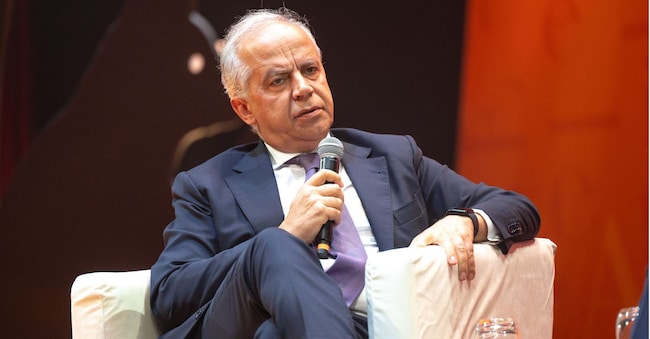
After the tensions between the Ministry of Infrastructure and the Quirinale, which demanded and obtained the deletion of the rule by which Deputy Prime Minister and Minister of Infrastructure Matteo Salvini wanted to introduce special anti-mafia controls for the Messina Strait Bridge with the aim of speeding up the timetable, Interior Minister Matteo Piantedosi took advantage of the stage at the Trento Festival of Economics to throw water on the fire. And, pressed by Tg2 director Antonio Preziosi, he reassures: 'In this circumstance there have been methodological flaws but we are all geared to creating the best system, and we will do so, to preserve the work from criminal interests'.
"After Washington risk of emulation, but our prevention system is very advanced"
.During the dialogue within the panel entitled 'poverty, concentration of wealth, immigration and security', the interior minister touches on all current topics, from immigration to the international crises in Ukraine and Gaza. And he admits that after the tragic events in Washington, with the killing of two employees of the Israeli embassy, 'certainly on our side there is to fear the emulation effect with respect to these episodes. But we have, due to the professionalism of the police and judiciary, a very advanced system for the prevention of phenomena of this type'. That is to say, a system - Piantedosi explains - which has the objective of "individuating, in advance, the subjects at risk of radicalization" and which "has allowed us, up to now, the expulsion of 197 people for reasons of public order and State security": "We try to anticipate much the identification of the dangers with the Committee of Strategic Analysis of terrorism where the exchange of information is updated. An all-Italian specificity that the world looks at with interest'.
"In Albania only the socially dangerous, 30 persons repatriated so far"
.With regard to the controversy on the centres for irregular immigrants strongly desired by Prime Minister Giorgia Meloni in Albania and subject of many measures to stop the transfers by the judiciary, Piantedosi recalls that "we are in the process of converting the decree law concerning Albania's CPR: net of the people released from detention, we have managed to repatriate 30 people" and denies that migrants are brought to Albania if they are only guilty of administrative irregularity: "This is not the case," the minister assures. We have repatriated people who were coming out of a prison sentence of several years for serious crimes, including rape, child pornography and whatever else. So we only confine in these centres people who are socially dangerous. For the rest, we are waiting, in the coming months, for the decision of the European Court of Justice and the European rules on the matter in June 2026 to be able to expand the use of the facility'.
The promise: by 2027 another 22,000 recruitments in law enforcement
Last but not least, a classic for Viminale officials, the promise of new recruits in the police force: if the government has already recruited about 30,000 personnel, which, however, have essentially covered the turn over, 'this year we are planning to hire, on the three police forces, about 14,000 personnel and by the end of the mandate at least another 22,000'. New forces to be utilised, Piantedosi assures us, for the control of the territory where there is most concern for citizens such as railway stations and hospitals.


