Security

Piantedosi: 'In Turin, subversive strategy against the State. Those who parade with the antagonists offer prospects of impunity"

The Home Affairs Minister's briefing in the Chamber. Hypothesis of police custody and protections for officers and citizens

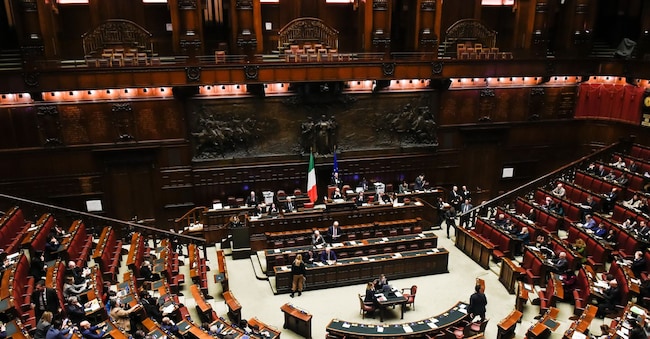
CAMERA DEI DEPUTATI, AULA, INFORMATIVA URGENTE DEL MINISTRO DELI INTERNI PIANTEDOSI  SULLA VICENDA  DI MOHAMMAD HANNOUN

3' min read

Translated by AI
Versione italiana

3' min read

Translated by AI
Versione italiana

"We are facing a strategy that aims to raise the level of confrontation with the institutions and that, through riots and violence, aims to compact the anarcho-antagonist galaxy and galvanise its adherents". With these words, Interior Minister Matteo Piantedosi spoke in the Chamber of Deputies, illustrating the Viminale report on the events that took place in Turin on 31 January.

According to Piantedosi, the picture that emerges 'allows us to say that we are registering a rise in the level of the clash that, in some ways and with variations, recalls the squadristic and terrorist dynamics that have characterised certain phases of our past'.

Loading...

Viminal: 'Unrest and violence as a target'

In his speech, the minister emphasised a central point: for the police forces, prevention work is highlighting that 'disturbances, violence, damage and devastation are, beyond the contingent motives announced from time to time, the real goal pursued on many occasions'.

A passage that shifts the focus from the declared reasons for individual mobilisations to the interpretation of a broader phenomenon: not isolated episodes, but a dynamic that - in the Viminale's reconstruction - would tend to reproduce itself in recurring ways.

"Anarcho-Antagonist Galaxy": the minister's reading

Piantedosi linked the events in Turin to a strategy that, in his words, would aim to recompose a political and militant area defined as the 'anarcho-antagonist galaxy', fuelling its internal cohesion and mobilisation capacity through the escalation of the clash.

The briefing to the Chamber, therefore, is part of a context of increasing attention by the Ministry of the Interior to the signs of radicalisation and to the evolution of street patterns, with a particular focus on devastation and damage.

Piantedosi: 'Organised violence' and 'subversive strategy'

In the harshest passage of the urgent report to Montecitorio on the clashes in Turin during the pro-Askatasuna demonstration, Interior Minister Matteo Piantedosi spoke of 'episodes of organised violence against the State' and against the forces of law and order, arguing that on these facts 'there can be no hypocrisy, silence or ambiguity', but 'a firm condemnation'. The minister added that, in his view, it is no longer a question of controversial ways of exercising the right to demonstrate, but rather of a 'systematic strategy of subversion of the democratic order'.

Piantedosi then recalled the reason for the mobilisation: the protest against the eviction of the Askatasuna social centre, defined as 'an operation to restore legality', which was, moreover, 'belated', and aimed - in his words - at 'restoring to public use' an asset 'illegally occupied'. A reference that directly links the riots to the issue of public order and the management of occupied spaces, at the centre of political and institutional confrontation.

Plantedosis: 'More filtering and prevention'

In the chapter devoted to prevention measures after the events in Turin on 31 January, Interior Minister Matteo Piantedosi announced to the Chamber of Deputies that the Viminale is working 'on the introduction of specific measures' to make 'even more effective filtering and prevention action', citing among the hypotheses the police arrest of 'potentially dangerous subjects' whose 'intentions and attitudes' are already known. According to the minister, similar instruments already exist in 'some European legal systems' without being read as an 'attack on democracy'.

Piantedosi also contested the criticism of those who would attribute the incidents to alleged 'prevention deficits', arguing instead that the violence was attributable to a 'precise criminal determination'. In the minister's reasoning, rules are also needed to protect 'not only the officers who are victims of aggression, but also all citizens', specifying, however, that the aim would not be to create 'shields' or forms of immunity. "A state" that does not protect the safety of citizens and does not adequately protect the police force "would fail in its most important function", he said, defining the police force as "a bulwark of democracy and freedom": "they do not ask for immunity", but - in the minister's words - they must not be "moving targets of delinquency" or operate under a "constant and systematic presumption of guilt".

Copyright reserved ©
  • Ivan Cimmarustigiornalista

    Luogo: Roma

    Lingue parlate: Italiano, inglese

    Argomenti: Sicurezza, giudiziaria, inchieste, giustizia tributaria

    Premi: Nel 2011 tra i vincitori del Premio Internazionale Antimafia Livatino-Saetta

Loading...

Brand connect

Loading...

Newsletter

Notizie e approfondimenti sugli avvenimenti politici, economici e finanziari.

Iscriviti