
Piazza Italia, judicial administration triggered
According to the Prato Public Prosecutor's Office, the company outsourced much of the garment manufacturing to two Chinese companies in Prato that exploited the workers and forced them to work in inhuman conditions

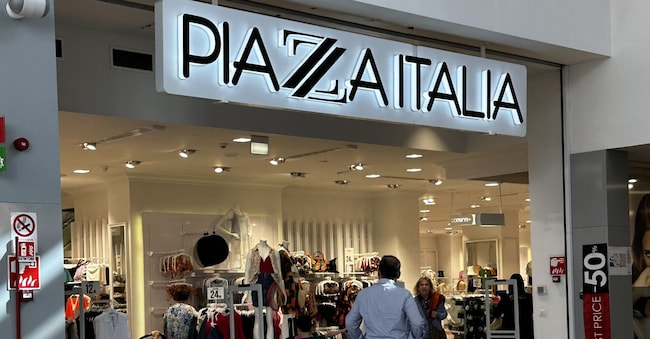
After the Milan Public Prosecutor's Office, the Prato Public Prosecutor's Office is also moving to counter the exploitation of workers in Chinese clothing companies, which also enriches Italian principals. The difference with Milan is that in Prato, the principals are not big luxury brands such as Armani, Dior, Valentino, Loro Piana, but big fast fashion brands, low-priced fashion produced in 48 hours, which are being prosecuted for the first time.
The Public Prosecutor's Office of Prato requested - and the Court of Florence granted - the preventive measure of judicial administration for the fast fashion company Piazza Italia, a low-price chain based in Nola (Naples) that has shops throughout Italy. In 2024 (last available balance sheet), Piazza Italia had a turnover of €343.7 million with a net profit of €31.9 million.
From 2022 to the present day, according to the Prosecutor's investigation, they outsourced a large part of the garment manufacturing to two Chinese companies in Prato that exploited the workers and forced them to work in inhuman conditions. The Chinese entrepreneurs are under investigation for illegal intermediation and labour exploitation.
According to the Public Prosecutor's Office led by Luca Tescaroli, the system allowed Piazza Italia large profit margins (300% compared to production costs, the magistrates assume). The accusation, as was already the case in Milan, is that of having culpably facilitated the labour exploitation implemented by the two Chinese companies that followed one another in time at the same address. The 'culpable inertia' and 'lack of vigilance' refer to the fact of never having verified the real entrepreneurial capacity of the subcontracting companies that employed undeclared workers, clandestine workers exploited for hours, paid starvation wages, kept to eat and sleep in dilapidated environments.
The investigators found no trace of checks carried out by Piazza Italia on supplier companies. The further consequence of this illegal system, the public prosecutor's office points out, is the distortion of the market: Piazza Italia was able to charge anti-competitive prices and was able to establish itself on the market to the detriment of other operators.

