
Piedmont’s Air Quality Plan gets underway; no driving ban for €160,0005
Regional Council gives the go-ahead to the Cirio Executive’s proposal – Call for proposals for local authorities’ anti-pollution measures to be published this week; biofuel card for diesel car drivers to be introduced by the end of the year

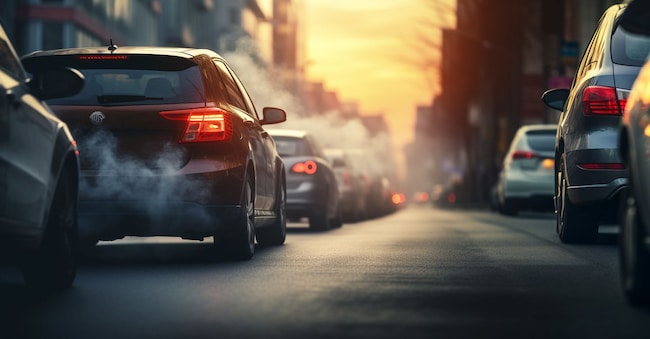
The legislative process concluded with a vote in the Regional Council, a step that should ‘cement’ the Piedmont Region’s decision not to ban Euro 5 vehicles from next autumn, whilst implementing an alternative plan to improve air quality and avoid further sanctions from Brussels. The measure concerns the cities of Turin and Novara, the only ones with over 100,000 inhabitants and therefore potentially affected by the requirement to phase out Euro 5 vehicles, as provided for in Decree-Law 73/2025 introduced by the Government last year.
A total of 50 million is available over the next two years, rising to around 100 million if measures for agriculture and heating are also taken into account. As early as this week, the scheme – funded with 30 million from European funds (ERDF) – will be launched, aimed at urban regeneration across all municipalities in Piedmont, to support projects designed to reduce levels of pollutants and fine particulate matter in the air. Later this year, the ‘Biofuel Card’ will be introduced, which will be issued to residents of Turin and Novara to encourage, through discounts, the use of biofuels – in particular HVO – in diesel-powered cars, with 7 million allocated annually over a two-year period, including for vehicles compliant with the Euro 6 standard (up to 6d-TEMP).
The President of the Piedmont Region, Alberto Cirio, describes this as a ‘crucial milestone for our Piedmont’. “We have been working with a group of experts for a year,” explains Marnati, the Regional Councillor for the Environment, “to identify alternative measures to the ban on Euro 5 vehicles, capable of improving air quality with measurable and verifiable results. This is an innovative approach that takes a holistic view of mobility.” A sort of ‘master plan’ for air quality, which is due to be implemented in the coming months.
Among the range of measures being implemented, a key priority is improving traffic flow, which is responsible for long queues and high levels of air pollution and particulate matter emissions. The project to install traffic sensors in areas of the city with the highest concentration of cars – starting with Turin – is worth 12 million million, with the aim of reducing queues and traffic jams by at least 30 per cent, according to estimates. The scheme, which will utilise an AI-based application, will be rolled out at around seventy junctions across Turin and several neighbouring municipalities, with signs indicating alternative routes. Equally high is the focus on supporting sustainable transport, with the Region committing to fund up to 90 per cent of cycle stations, whilst a dedicated call for proposals will support the ‘Bike to Work’ scheme, offering a cashback scheme for those who cycle to work.
“For the first time,” explains Marnati, “we are using European funds to improve air quality. Possible measures for local authorities include removing road surfacing to reduce the build-up of heat and pollutants, cycle lanes, urban afforestation and 30 km/h zones. At least three of these measures are highly innovative: fog cannon spraying to reduce concentrations of fine particulate matter, dust extraction in the busiest areas, and finally the use of photocatalytic paints that act as pollutant-breaking agents.”


