
Piedmont reopens call for investments, 40 million dowry
The government led by Alberto Cirio bets on EU funds to activate industrial policies - Already certified 300 million of expenditure
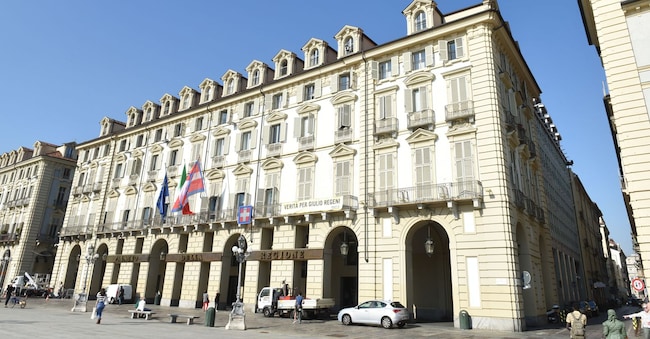
Calls for tenders for 320 million in 2025, two new strategic lines for 2026 and, shortly, the reopening of the investment attraction measure, one of the drivers of the Piedmont Region's industrial policy. Preparations are underway for the second edition of the 'Attracting and supporting the propensity to invest in the region' call, which should be reopened in the coming weeks.
The main measures include the call for energy efficiency and renewable energies (EUR 100 million), which closed in February 2025, the measure for the digitalisation of enterprises, with the budget increased from EUR 30 million to EUR 41 million to cover all applications, and the SME certification voucher, which was opened and closed in just a few hours on 15 October, with funds increased from EUR 8.4 million to EUR 16 million.
In a few weeks, the second edition of the Call for Investment Attraction (40 million) will be reopened, while the SWIch (research and development, 90 million), MATCHIN (placement of researchers, 5-8 million), the new edition of the SME digitalisation vouchers (20 million) and the call for the promotion of efficient district heating (12.75 million) are planned for 2026. All these measures are part of a European programme that allocates more than EUR 1.5 billion of ERDF funds to Piedmont for the seven-year period 2021-2027. To date, more than 300 million have already been certified.
Almost everything is ready, then, for the call for investment attraction. The first edition of the measure, a strategic one for the Giunta led by President Alberto Cirio, closed on 7 August last year with an endowment reshuffled to 60.3 million to cover the 58 admitted applications. In the second edition, the endowment will be 40 million, 35 million for Call A - attraction and development of new investments in all production sectors, hence productive investments and industrial reconversion and for the redevelopment and reconversion of disused industrial areas - and 5 million for Call B - aimed at increasing employment.
The 'SME Certification Voucher' call for proposals was one of the most successful initiatives during the year. Aimed at SMEs and micro-enterprises, it supported the achievement of voluntary certifications in quality, environment, safety, innovation, and sustainability.The call for applications, opened on 15 October, was closed on the same day due to exhaustion of resources in a few hours, with 968 applications submitted. So much so that the initial endowment of 8.4 million (8 million from ERDF PR + 400 thousand euro from the Chambers of Commerce) is currently being refinanced up to 16 million, precisely to cover the strong demand. The contribution, non-repayable, is 65% for micro-enterprises, 60% for small and 50% for medium-sized enterprises, up to a maximum of EUR 100,000 per individual company.


