
Pitti Filati, companies react to the downturn by investing in quality and technology
2025 was the third year of downturn for the Italian yarn industry, although less intense than previous years. From Cariaggi to Lineapiù, companies' strategies to respond to uncertainties

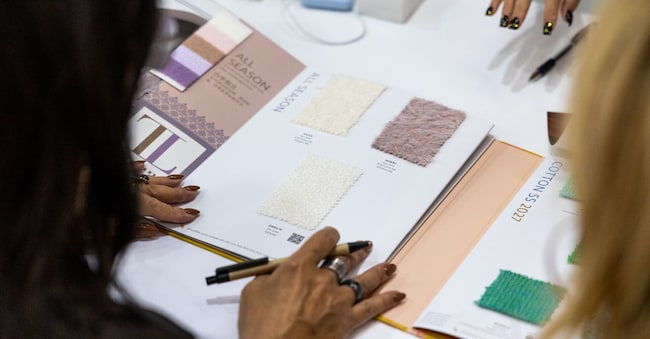
"The market is difficult, but we are not getting down". At the Pitti Filati exhibition, underway until 23 January at the Fortezza da Basso in Florence, the collections for the spring-summer 2027 of knitting yarns are on show, a sector in which Italian manufacturers are the leaders and in fact dominate the scene (of the 103 exhibitors, 67 are spinning mills, of which only nine are foreign).
2025 was the third year of decline for the Italian yarns industry, although less intense than the previous ones: turnover fell by 4.1% to just under 2.5 billion, with exports down 30% to 744 million, a fall of 5.4%. Imports fell even more (-7.9% to 721 million), so that the trade balance remained positive (+23 million). The year 2026 started with some hope of recovery, although commodity prices are rising and companies' forecasts remain cautious.
"The price of wool has risen by 10%,' explains Alfredo Botto Poala, owner of the Biella-based Zegna Baruffa Lane Borgosesia, 'and the price of other raw materials is also rising, which will force price lists to rise in the future. January started off quite well, now we will see". Zegna Baruffa will close 2025 on the same turnover levels as last year (74 million euro, 566 employees).
A slight downturn for the Filidarte Group of Prato (62 million aggregate turnover, 170 employees), promoted by the Ethica Group fund and formed by three companies, Lanificio dell'Olivo, Manifattura Sesia, and Servizi e Seta, led by Alberto Enoch, who explained at Pitti Filati: 'The 'fancy' yarns produced by Lanificio dell'Olivo are the ones that are suffering the most, and in fact we have revolutionised the collection by producing 27 new articles. For the rest, the group is implementing synergies on the commercial, administration and finance front, and on the production front. We are now evaluating the acquisition of a dyeing plant, and we are looking for managers to raise the group's skill level'.
The suffering of the 'fancy' yarns is being felt at the Lineapiù of Campi Bisenzio (Florence), which closed 2025 with a turnover of 22.5 million (-15%) and is now investing in two directions: 'On the one hand, the high-end range,' explains patron Alessandro Bastagli, 'on the other hand, more commercial and repeatable yarns to be more competitive. In 2026 the market will still be uncertain'.

