
Pitti Uomo in Florence provides a boost to the recovery

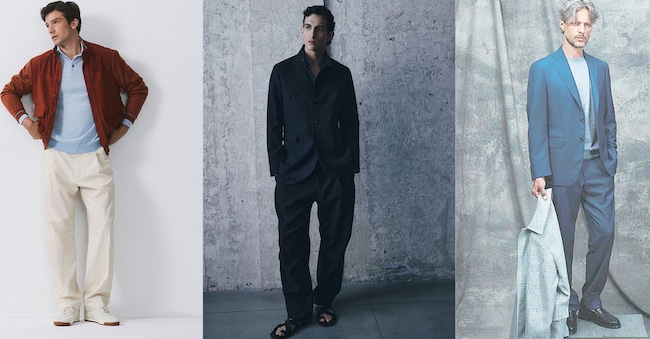
The news of the peace agreement between the US and Iran, which is due to be signed next Friday in Switzerland, brings a breath of fresh hope (also) to the fashion industry, which is gathering in Florence from today for the 110th edition of Pitti Uomo, the world’s leading men’s fashion show. A total of 740 brands are presenting their spring-summer 2027 collections, 45 per cent of which are from abroad. Buyers from all over the world are expected, though there is some uncertainty regarding those from the East, given that China and South Korea were the most disappointing markets in 2025 for the Italian menswear industry: exports to China (the fourth-largest export market after France, the US and Germany) fell by 13.1 per cent, whilst sales to South Korea (the 12th-largest export market) fell by 18.7 per cent.
The final figures for the menswear sector (source: Confindustria Moda) show a turnover of 11.1 billion euros in 2025 (-2.2 per cent); exports of 8.7 billion (-1.7 per cent); imports of 5.4 billion (+1.8 per cent); and a trade balance down to €3.2 billion. The Italian market is also in decline: household spending on men’s fashion fell by 2.3% in value terms. This marks the second consecutive year of weakness for the sector, albeit less severe than in 2024. The only product category to show growth remains leather clothing (+4.9%), whilst the sharpest decline is in shirts (-4.5%), which are increasingly being replaced by T-shirts. As always, Confindustria Moda also attempts to estimate production made in Italia (excluding the sale of imported products), which stands at 4.6 billion, representing 42 per cent of total turnover.
2026 began with no sign of a turnaround: in the January–February period, exports of men’s fashion (Istat data) fell by 2.9 per cent, whilst imports also dropped by 8.3 per cent. The most surprising figure is the 17.2 per cent increase in sales to the United Arab Emirates (which account for 2.9 per cent of the total), a rise that can be explained by the fact that the war in the Gulf began at the end of February. The winds of peace that have been blowing since last Sunday could reignite exports to that region. All other countries recorded negative growth in the first two months, with the exception of Spain (+2.1%), Hong Kong (+6.8%) and Poland (+7.1%). The Italian market – which accounts for 22–23 per cent of the menswear sector – has shown some signs of recovery, with menswear sell-out figures for January–February up by 3.9 per cent compared with the same period in 2025 (data from Sita Ricerche for Confindustria Moda), driven by ties (+20.8%), leather garments (+5.7%) and knitwear (+5.4%). For the first half of the year, ‘a moderately positive outlook prevails’: 42% of the companies surveyed expect an improvement in turnover compared with the same period in 2025; 33% expect a decline; the remaining 25% expect substantial stability. Looking at 2026 as a whole, the recovery appears to have been postponed. Only 17% anticipate growth, whilst 58% expect turnover to remain stable and 25% anticipate a decline. As always, Pitti Uomo will provide a better understanding of market trends and industry players’ expectations.
Pitti Immagine has organised an edition packed with events, presentations and fashion shows (Simone Rocha, Dsm Kei Ninomiya, Jiyong Kim, Sunflower) and international collaborations with agencies and associations from South Korea, Japan, China, France and Spain, which will bring a selection of designers from their respective countries to the fair. Pitti Uomo also remains the premier showcase for new projects and launches, such as that of the Florentine brand Roy Roger’s, which has created a mini clothing line under the Australian brand, reinterpreting the tennis aesthetic.

