After the accident

Plague alert in Russia; Trump: ‘I will speak to Putin shortly’. WHO chief: ‘There may be a second case’

According to US officials, Moscow has provided little information about the mysterious incident

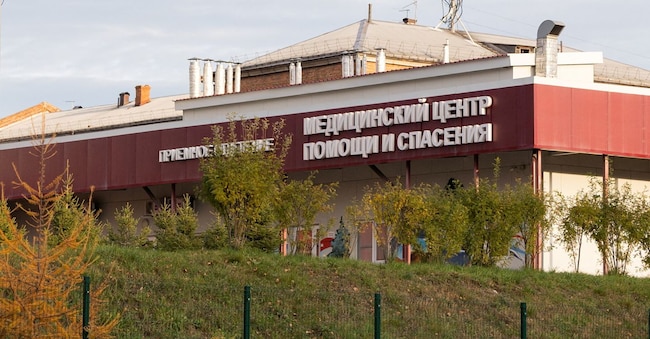
Il Centro medico per le malattie infettive nella città di Shelekhov nella regione di Irkutsk, in Russia REUTERS/Stringer/File Photo REUTERS

5' min read

Translated by AI
Versione italiana

5' min read

Translated by AI
Versione italiana

The case of the serious incident that occurred on 2 October in Siberia, where a 28-year-old researcher died of pneumonic plague a few days after breaking a test tube containing the bacterium, remains unresolved. Donald Trump is due to hold talks with his counterpart Vladimir Putin shortly regarding the plague alert in Russia. “I have a phone call scheduled very soon,” said the tycoon, speaking to the media upon his return to the White House.

Hours later, Moscow clarified Trump’s announcement. A telephone call between the Russian President, Vladimir Putin, and the US President, Donald Trump, has not yet been agreed, said Putin’s spokesperson, Dmitry Peskov, after Trump had announced yesterday evening that he was planning a telephone conversation ‘very soon’ with his Russian counterpart regarding the alarm over the alleged death from pneumonic plague in Siberia. “At present, in practical terms, the conversation has not been agreed, but if such an initiative were to take place, I have no doubt that it would be arranged in a practical manner,” said Peskov, as quoted by Interfax.

Loading...

Meanwhile, the US administration has also taken action, as reported by the Wall Street Journal: the US is stepping up pressure on Russia over the death at the Siberian laboratory researching pneumonic plague and the subsequent quarantine measures. In an official note, known as a démarche, the State Department has urged Moscow to fulfil its international obligations regarding health information sharing, warning that the failure to disclose details of a researcher’s death breaches international health obligations. According to US officials, Moscow has provided little information about the mysterious incident.

The Kremlin responded to this rumour late this morning, stating that it had no information regarding a diplomatic communication from the US to Russia in which pressure was allegedly being exerted to obtain more detailed information on the alleged death of a female researcher in Siberia from pneumonic plague. “I have no information on this matter,” replied spokesperson Dmitry Peskov to journalists’ questions regarding such a move, which, according to the Wall Street Journal, is said to have been made by Washington. This was reported by the Interfax news agency.

US Secretary of State Marco Rubio has, however, stated that the information provided by Moscow remains ‘still rather limited’. ‘We encourage Russia to be transparent and to share more information with the world, so that we can all respond accordingly and appropriately,’ he said. “Perhaps there is nothing to it. Perhaps it is something bigger than we think. We don’t know.” According to the State Department, Washington has officially requested further information from the Russian government and is also liaising with other countries to share the available data.

Yesterday, 6 October, the World Health Organisation (WHO) stated that the case poses a ‘very low’ risk outside Russia. The UN health agency reported that it was in contact with the Russian authorities following news of the death, last week, of a woman who worked at the Irkutsk Anti-Plague Research Institute for Siberia and the Far East.

On Monday, Trump stated that the US is willing to help Russia manage the situation. “It’s a serious disease. You know, it’s a disease that we used to be able to keep under control, but somehow those microbes have become stronger and smarter. They’re like an army,” Trump told reporters at the White House.

In a lengthy statement on X, WHO Director-General Tedros Adhanom Ghebreyesus said that the Organisation had requested further details on the ‘cause of the severe pneumonia’ that affected the researcher who died and on the ‘pathogen that necessitated the public health measures>.

The head of the WHO also reported that the WHO had sought information regarding ‘reports of a second employee suffering from pneumonia of unknown origin’, a likely reference to unconfirmed reports circulated by Russian media outlets concerning a second case.

The head of the WHO goes on to write: ‘From the very first media reports, the WHO has been actively monitoring the case concerning the death of a laboratory worker at the Irkutsk Anti-Plague Research Institute. The individual died on 2 October 2026 after being admitted to hospital with severe pneumonia. Initial media reports suggested a case of pneumonic plague resulting from alleged accidental exposure in the laboratory. In response to the verification request made by the WHO under the International Health Regulations, the Russian health authorities reported that no recent cases of plague had been recorded in the Irkutsk Oblast. They also informed the WHO that an epidemiological investigation had been launched, that prevention and control measures had been implemented, and that the identified contacts had undergone medical observation and diagnostic testing. Finally, they reported that no high-risk pathogens had been detected among the contacts and that the medical observation of all identified individuals had been completed”, he emphasised.

Loading...

In the last few hours, the Siberian authorities have confirmed that none of the deceased woman’s contacts have tested positive for the plague and that no special health measures have been taken in the region.

In the United States, meanwhile, the Centres for Disease Control and Prevention have stated on social media that the agency is closely monitoring reports. The agency emphasised that, although the case has not been confirmed, the plague can be treated with antibiotics. It also stated that, at present, there are no signs of a wider threat to the United States.

In a statement issued on Tuesday, the US Embassy in Russia reiterated that American citizens should not travel to the country and that those currently there should leave immediately. The advisory also noted that US government officials may face travel restrictions due to ‘health and safety concerns’.

China is also taking action. Beijing has issued its first official statements on the suspected case of pneumonic plague in Siberia, stating that it is cooperating with Russia as global health concerns mount. “China and Russia maintain close contact and constant cooperation in the prevention and control of infectious diseases, including the plague,” said Guo Jiakun, spokesperson for the Chinese Foreign Ministry, on Tuesday, in response to a question about whether Moscow had informed Beijing of the incident. These brief statements come during a week of national holidays in China; the news of the incident has received little coverage in the Chinese state media. Just over a month ago, the Irkutsk institute had concluded a joint exercise with China on managing emergencies linked to outbreaks of infectious diseases. On that occasion, Russian and Chinese participants had discussed methods for monitoring and containing the spread of diseases in their respective border regions.

The EU body has issued a reassuring statement. The European Centre for Disease Prevention and Control (ECDC) ‘is closely monitoring the situation’ and, at present, ‘based on the limited information currently available, there are no reports of secondary cases and no evidence of sustained human-to-human transmission that would cause further spread of the disease’.

Copyright reserved ©
Loading...

Brand connect

Loading...

Newsletter

Notizie e approfondimenti sugli avvenimenti politici, economici e finanziari.

Iscriviti