
Plant-based sales in Italia reach €669 million. But the growth trend is slowing
Good Food Institute: volumes have risen by 5.8%, but the sector needs to reach a wider audience

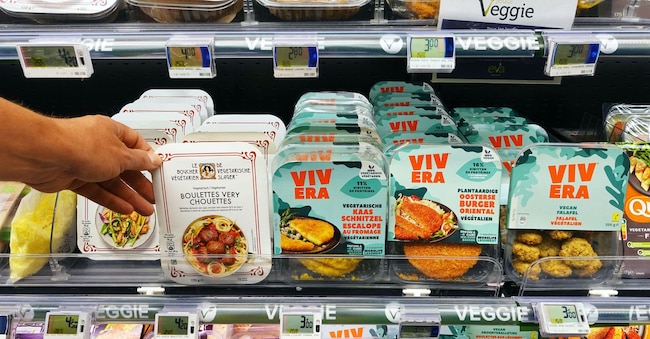
The Italian plant-based market is set to reach €669 million by 2025, with annual growth of 4.5% by value and 5.8% by volume. This is revealed in the Good Food Institute (Gfi) report on the Italian retail market for plant-based foods 2023–2025, based on Circana data and due to be published next week. The fact that volumes are growing faster than values is, according to Gfi Europe, a sign that demand is genuine, not inflated by inflation. In almost all categories, the average price per kilogram has actually fallen between 2023 and 2025, despite inflation.
With sales of €342 million in 2025 (51% of the total), plant-based drinks remain the leading segment. Sales volume grew by 6.2% compared to 2024, reaching 170 million litres, and the share of the total market (plant-based drinks and animal milk) rose to 8.5% by volume and 11.8% by value. There is a shift towards oat- and almond-based products, both of which are more expensive than soya and rice, which are losing market share. Oats rose from 27.5% to 33.7% of the volume between 2023 and 2025, with growth of 18% in 2025 alone. For Gfi Europe, this signals that in this now-mature category, taste matters more than price, which remains 45% higher than that of cow’s milk (with VAT on milk at 4% compared to 22% on drinks).
Meat substitutes (€234 million) are the second-largest category by value (+4.1%, a sharp decline compared with the +16.3% recorded in 2024). Unit sales reached 95.9 million, representing a 5% year-on-year increase. The market is dominated by burgers, accounting for almost 60% of sales volume. The average price per kilogram has fallen to €13.17 (-3% over two years). The Gfi Europe report highlights, by way of comparison, the parallel growth of tofu, tempeh and seitan, which in 2025 reached €40.1 million in value (+22% on 2024) and 4.12 million kg in volume (+73% compared to 2023).
Tofu, which alone accounts for three-quarters of this segment, cost an average of €8.35 per kg, significantly less than plant-based meat. However, in 2025, the sales volume of plant-based meat alternatives remained 4.3 times higher than that of tofu, tempeh and seitan combined.
With sales of €25.9 million, plant-based cheese alternatives are the smallest category, but also the one with the highest growth rates (particularly among spreadable products): +17.1% in value and +15.6% in volume in 2025 compared to 2024. However, their market share of total cheese sales remains marginal: 0.29% by volume.

