
Plant growth: from nature to design an explosion of innovation
Mushrooms, algae and blades of grass become the starting point for creating versatile, 3D printable and renewable materials, under the impetus of the latest green regulations.

Fungi, starches, algae, grass fibres: across sectors, material innovation is becoming increasingly plant-based. The causes of this change in the design world are diverse: the race to replace fossil plastic, regulatory pressure from Europe, the slow but perceptible evolution in consumer awareness, and the search for better product performance. Plant-based innovation helps to lower costs, improves the durability or strength of materials, brings new versatility, gives rise to new products and new markets. The acronym of the future is PLA, polylactic acid, the container term for bioplastics derived from maize starch or sugar cane instead of oil: they are biodegradable, compostable, renewable and 3D printable. A new world: at the European Bioplastics Conference a few months ago in Berlin, 14 new biopolymers were presented. The market shares are still low (1 per cent), but the growth forecast is a paradigm shift: 13 per cent in the next five years, compared to 3 per cent for traditional fossil polymers.
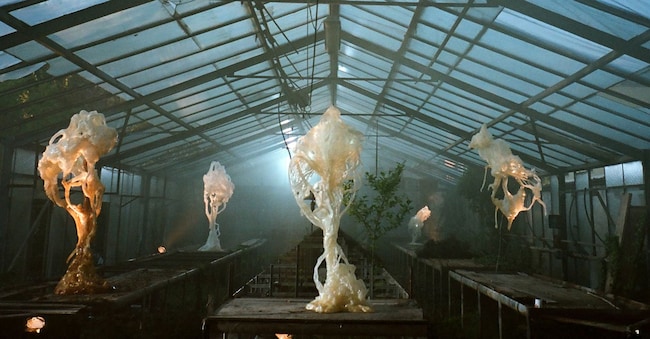
One of the advantages of PLA is its ability to decompose. However, it can only do so under controlled conditions and slowly. As is the case with paradigm shifts, however, things evolve very quickly. A good example is the Ghost Orchids project, a prototype between art and design from the Polish Łukasiewicz Research Network Institute for Engineering of Polymer Materials. Here, a bioproduct called POL-KOMP was invented, based on starch and coffee grounds, which contains microorganisms and enzymes capable of accelerating the decomposition of PLA even within domestic compost bins. We are on the borderline with art because the presentation took place in Alcova during Design Week by means of statues almost four metres high, created by artist Marcin Rusak, inspired by the blossoming of orchids, which in their second life will move from the galleries to agriculture, becoming a natural fertiliser. In the near future, it might not only be statues that will be made of this PLA, but also cutlery and crockery, medical media, packaging.

The supply chain from nature to design is experiencing an explosion of creativity and innovation that touches many sectors. The Dutch LoopLoop studio was set up in 2020 to explore the frontier of colouring metals with natural pigments instead of petroleum-based pigments, but using the same anodising processes as metal. The effect is positive not only from the point of view of reducing emissions, but also for the democratisation of design: bio-pigments can be used on a non-industrial scale. The philosophy is to create an ecosystem of designers, researchers, small manufacturers, sharing innovations in open source mode, without closing patents. The other novelty in the field of pigments is microalgae, a plant source that has the advantage of not requiring soil and being low water impact. The application has been known since the 1980s, but recently there has been a boom in research, start-ups and applications, ranging from coatings (such as spirulina paint) to textiles, via cosmetics and food (bio-colourants made from microalgae are also non-toxic).
Another protagonist of this paradigm shift is mycelium, the fungus filament, a market that is already on a commercial scale and expanding rapidly. Mycelium materials are derived from mushrooms grown on biological waste, are sustainable because they are natural, consume little soil and water, and do not need chemical additives.
Thanks to these characteristics, micelles for design aim to carve out market shares for construction, textiles, furniture, and automotive, where they can replicate the experience of leather for upholstery. The projection is to reach almost two billion dollars of turnover in 2033, thanks to the mix of public investments (such as those of the EU) and large incoming private players. Hyundai and KIA have created a spin-off, called Mycel, while in Europe there is the My-Fi project, which aims to bring Mycel to the fashion and automotive markets.

