
Plastics, research advances on materials from alternative sources
Industries cut Pfas and study cellulose bioplastics that are easy to compost

Key points
The race to replace fossil plastics with more sustainable materials has begun, but there is still a long way to go. In the meantime, global plastic production continues to rise and the summit of 183 UN countries to limit it with an ad hoc treaty failed last August in Geneva, under heavy pressure from the petrostates, led by Saudi Arabia. So today the world produces over 450 million tonnes of fossil plastic per year (about half of which is used once and then thrown away), twice as much as was produced in 2000, and the prospect is to triple this production to 1200 million tonnes by 2060, according to OECD forecasts.
Almost 400 million tonnes of waste
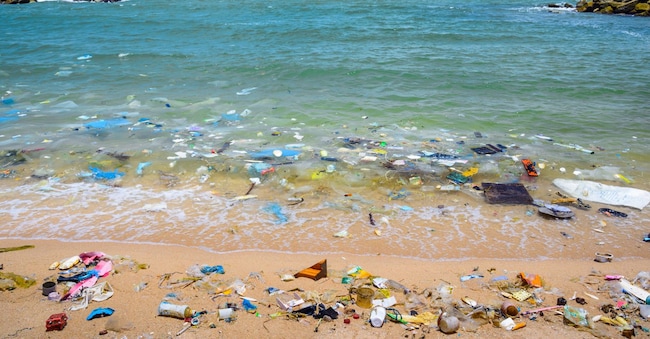
This mountain of non-biodegradable matter has generated almost 400 million tonnes of plastic waste this year (source: OECD), adding to the cumulative nine billion tonnes produced to date. Only 10 per cent of this waste is recycled, the rest remains in the environment and at least eight million tonnes a year end up in rivers and seas, with the well-known consequences for the species that inhabit them and ultimately for us humans. On the remote island of Lord Howe in the Tasmanian Sea, scientists have found that the bellies of local birds 'squeak to the touch', so full of microplastics are they.
Towards the abolition of Pfas
In the face of this disaster, however, something is moving. The first signal comes from the chemical multinationals, which have begun to quietly eliminate the production of Pfas, the so-called 'forever chemicals', as the risk of legal disputes is increasing and the EU is preparing to impose extensive restrictions on their use. Pfas are only a small fraction of the vast plastic market, but there are over 10,000 substances found everywhere, from clothes to frying pans. They are called 'forever chemicals' because of their persistence in the environment and in the human body, where they have been linked to increased rates of cancer and infertility. The US company 3M was among the first to act, announcing in 2022 that it would cut Pfas by 2025, and Germany's Basf has also said it will follow suit. According to a ChemSec survey, one third of manufacturers planned to end the use of Pfas.
Alternatives to fossil plastics
This is a first, relatively modest step. Other steps forward can be observed on the research front, where efforts to find alternatives to fossil plastics are accelerating. After the wave of bioplastics derived from food crops - starting with the famous Mater Bi, born from the pioneering efforts of Catia Bastioli and her Novamont - now is the time for cellulose derivatives. Unlike products based on the use of food crops, which often entail end-of-life problems, bioplastics derived from cellulose are easier to compost and have a very low environmental footprint, especially in the case of cellulose produced by bacteria, exploiting the natural process of fermentation of vegetable waste.
A versatile and compostable material
This family includes EcoFLEXY, a versatile, recyclable and fully compostable material created by Danish start-up Cellugy with funding from the European Commission. EcoFLEXY is a material that offers protection from air, water and grease and can be used in combination with paper and cardboard in food packaging, but has potential for many other applications, for example as a rheology modifier in cosmetics and as a coating agent in textiles, paints and inks. To the same family belongs Caramide, a new form of bio-based polyamide derived from 3-carene (a terpene by-product of cellulose), developed by the Straubing branch of the Fraunhofer Institute for Interfacial Engineering and Biotechnology. Due to its special chemical structure, Caramide is resistant to high temperatures, but also highly flexible, and suitable for numerous applications, from gears in mechanical engineering to safety glass, lightweight construction panels, foams, protective fabrics and surgical suture materials.

